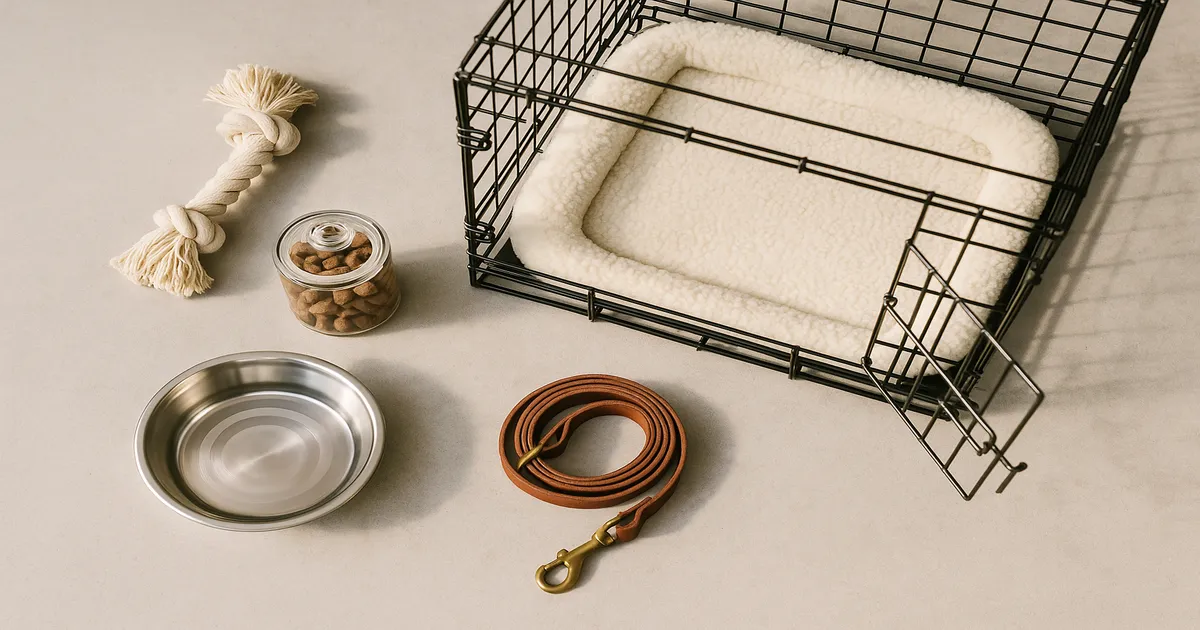
Quick Answer: The best crate training tips for a Boxer puppy come down to three things: choose a well-ventilated wire crate in the right size, exercise your pup before every crate session, and build positive associations gradually using treats and praise — never punishment. Boxers are smart, people-obsessed dogs that respond beautifully to consistency but fall apart with harsh methods. Start slow, stay patient, and your Boxer will learn to love their crate.
Figuring out the best crate training tips for a Boxer puppy can feel overwhelming when you’re dealing with a wiggly, bouncy, clown-faced dog who’d rather be velcroed to your leg than sitting quietly anywhere. But crate training is one of the most valuable skills you can give your Boxer. It keeps them safe, supports housetraining, and gives them a calm space to decompress. The key is working with the breed’s personality, not against it.
Crate Training a Boxer Puppy: Key Rules From Day One
Before diving into the step-by-step process, a few non-negotiables apply from the very first session:
- Never use the crate as punishment. It must always be a good place.
- Size it correctly — roomy enough to stand, turn, and lie down, but not so large your pup treats one corner as a bathroom.
- Exercise before crating. A tired Boxer is a cooperative Boxer.
- Keep sessions short and positive, especially in the first few weeks.
- Ventilation is non-negotiable. Boxers are brachycephalic (flat-faced), which makes them vulnerable to overheating. The crate must have excellent airflow and stay away from heat sources.
Understanding the Boxer Before You Start
The Peter Pan of Dog Breeds
Boxers originated in Germany in the late 1800s, descended from the Bullenbeisser hunting dog crossed with the Old English Bulldog. They were built for demanding work — big-game hunting, military messenger duty, police work. That working heritage shows up today as intelligence, drive, and a need for purpose.
What also shows up? Pure, unfiltered goofiness. Boxers stay puppy-like well into their third or fourth year, earning them the nickname “the Peter Pan of dog breeds.” The famous “kidney bean wiggle” — that full-body wag that contorts them into a C-shape — is basically their default greeting. It’s charming, but it also means you’re training a dog who’d rather play than sit still.
Boxers bond deeply with their families and will follow you from room to room without a second thought. This is endearing right up until you need to crate them. Their people-orientation means isolation feels genuinely distressing, which is why gradual desensitization — not just tossing them in and hoping for the best — is essential.
How Boxer Intelligence Affects Training
Stanley Coren ranks Boxers 48th out of 138 breeds in working and obedience intelligence — solidly above average, but with a catch. Boxers are independently minded. When they seem stubborn, they’re usually bored or testing whether you really mean what you said. Short, consistent training sessions beat long, repetitive ones every time.
Choosing the Right Crate for a Boxer Puppy
Size and Setup
Adult male Boxers typically reach 65–80 lbs (29–36 kg); females land at 50–65 lbs (23–29 kg). You don’t need to buy two crates as your puppy grows — buy one sized for the adult dog and use a divider panel to reduce the interior space. The rule of thumb: your puppy should be able to stand up fully, turn around, and lie down comfortably — but that’s it. Extra space invites a puppy to potty in one corner and sleep in another.
Wire Crate vs. Plastic Crate
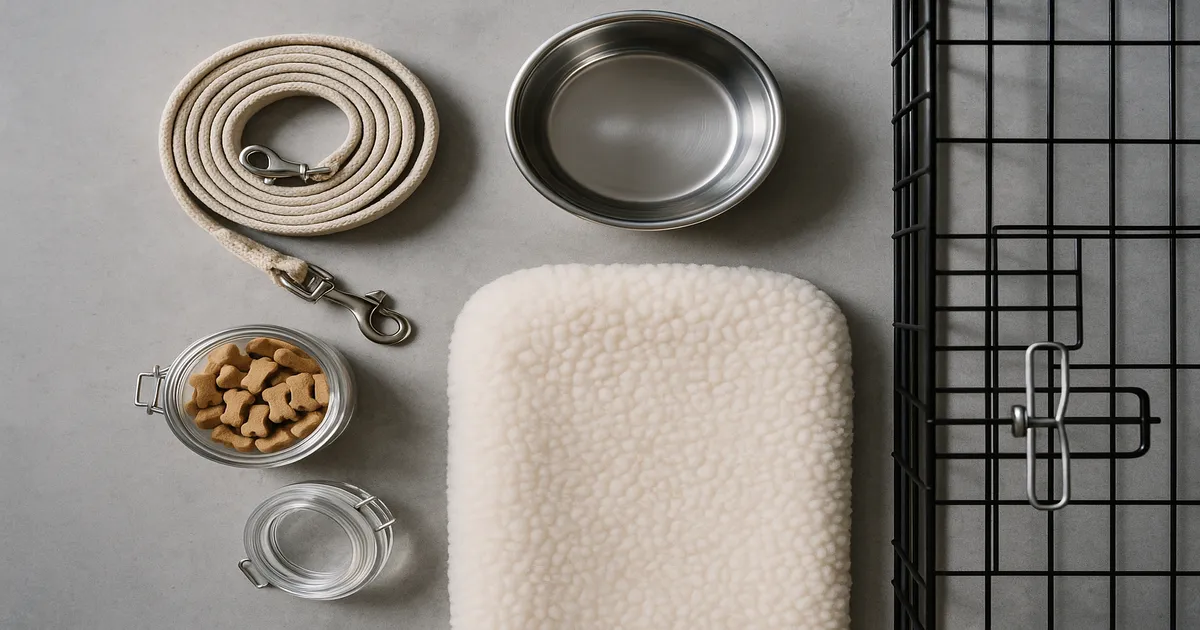
Wire crates are the better choice for Boxers for one simple reason: airflow. The open-panel design provides far superior ventilation compared to a plastic travel crate, which matters enormously for a brachycephalic breed. Wire crates also let your Boxer see what’s happening around them, which eases anxiety for such a social dog. A 42-inch wire crate with a divider panel works well for most Boxers. (MidWest Homes for Pets iCrate 42-inch)
Ventilation and Placement
Boxers have shortened muzzles and compressed airways — a condition called Brachycephalic Obstructive Airway Syndrome (BOAS). Inside a poorly ventilated crate, temperatures can spike quickly, turning an uncomfortable situation into a dangerous one. Keep the crate in a cool, well-ventilated room and never cover it with a thick blanket that blocks airflow.
Placement matters too. Put the crate somewhere your family actually spends time — a living room or bedroom corner works well. Tucking it in a basement or laundry room amplifies the isolation a people-oriented Boxer already struggles with.
Best Crate Training Tips: A Step-by-Step Schedule
Week 1 — Introduction and Positive Association
The goal this week is simple: the crate is the best place on earth. Don’t close the door yet.
- Place the open crate in your living area with a soft bed inside. (K9 Ballistics Chew Proof Elevated Dog Bed)
- Toss high-value treats inside throughout the day and let your pup wander in and out freely.
- Feed meals just inside the crate entrance, gradually moving the bowl further in over a few days.
- Drop in a Kong stuffed with peanut butter or kibble to build positive associations.
No pressure, no force. Let curiosity do the work.
Weeks 2–3 — Building Duration Gradually
Once your pup walks into the crate confidently, start closing the door — briefly.
- Lure your puppy inside with a treat and close the door for 30 seconds.
- Open the door before they show any stress. You’re building confidence, not testing limits.
- Gradually extend to 5, then 10, then 15 minutes.
- Always do this after a play or exercise session, never when your pup is bursting with energy.
Keep training sessions to 5–10 minutes given a Boxer puppy’s attention span.
Week 4 and Beyond — Establishing a Routine
By week four, most Boxer pups can handle 30–60 minute crate sessions during the day if properly exercised beforehand. Begin leaving the room for short periods while they’re crated. Extend duration incrementally — never jump from 30 minutes to 3 hours overnight.
Sample Daily Schedule for a 10-Week-Old Boxer Puppy
| Time | Activity |
|---|---|
| 7:00 AM | Wake up, outside immediately |
| 7:15 AM | Breakfast (3 meals/day under 6 months) |
| 7:45 AM | 5–10 min gentle play |
| 8:00 AM | Crate nap (30–45 min) |
| 9:00 AM | Outside, short play, 5-min training |
| 10:00 AM | Crate time |
| 12:00 PM | Lunch + play |
| 12:30 PM | Crate nap |
| 3:00 PM | Outside, play, enrichment |
| 5:30 PM | Dinner |
| 6:00 PM | Play and family time |
| 8:00 PM | Final outside trip |
| 8:30 PM | Crate for the night |
Puppies this age sleep a lot — that’s completely normal and healthy.
Exercise and Mental Stimulation: The Foundation of Crate Training Success
No training technique will make an under-exercised Boxer puppy settle happily in a crate. A pup who’s had a play session and a puzzle feeder will curl up and sleep. A pup who hasn’t will bark, dig, and chew their way through the next hour.
Age-Appropriate Exercise Guidelines
| Age | Exercise Recommendation |
|---|---|
| 8–12 weeks | 5–10 min gentle play, 3–4x/day |
| 3–6 months | 15–20 min, 2–3x/day |
| 6–12 months | 20–30 min, 2x/day (low-impact) |
Veterinary orthopedic specialists widely recommend no more than 5 minutes of formal exercise per month of age, twice daily, until growth plates close — around 18 months in Boxers. Over-exercising a young Boxer risks lasting joint damage that shows up years later. Keep sessions short, and avoid hard surfaces and forced running.
Mental Enrichment Tools That Help Boxers Settle
Physical exercise alone isn’t enough for a breed this intelligent. Mental enrichment can tire them out just as effectively — sometimes more so.
- Frozen Kongs stuffed with kibble mixed with peanut butter or plain yogurt
- Snuffle mats for nose work before crate time
- Puzzle feeders (start with Level 1 for young pups)
- 5-minute trick training sessions — “sit,” “down,” and “touch” are great starters
One more thing: Boxers overheat easily. Exercise in the early morning or evening in warm weather, and avoid activity above 80°F (27°C).
Positive Reinforcement: The Only Method That Works for Boxers
Why Punishment Backfires
Shoving a Boxer into a crate, scolding them for whining, or using the crate as a time-out will not produce a calm, confident dog. It will produce an anxious one. Boxers are sensitive to their owner’s emotional state and respond to harsh methods with behavioral regression — more whining, more resistance, more stress. The crate becomes something to fear rather than a place to rest.
Treats, Markers, and the ‘Crate’ Command
High-value treats are your most powerful tool. Small pieces of real chicken, cheese, or freeze-dried meat work far better than kibble when you’re asking for something new and slightly scary. The moment your Boxer steps into the crate, mark it — with a clicker or a clear verbal marker like “yes!” — and reward immediately. Timing matters: the reward needs to land within one or two seconds of the behavior.
Pick one cue word — “crate,” “bed,” or “place” — and use it every single time. Lure them in with a treat, say the word as they enter, then mark and reward. After dozens of repetitions, the word alone will send them trotting in. Boxers will absolutely exploit any ambiguity in your cues, so consistency here is everything.
Handling Whining Without Reinforcing It
This is where most people slip up. If you open the crate every time your Boxer whines, you’ve just taught them that whining opens doors. Wait for a pause — even two seconds of quiet — then reward that. If whining escalates into genuine panic (frantic clawing, difficulty breathing, excessive drooling), that’s a different situation requiring a slower desensitization approach, not toughing it out.
Separation Anxiety and Alone-Time Challenges
Boxers are among the breeds most prone to separation-related distress when not properly conditioned. This isn’t stubbornness — it’s genuine emotional distress. Plan for it from day one rather than discovering it after your Boxer has redecorated your living room.
How long can a Boxer puppy stay in a crate? Use the one-hour-per-month-of-age rule as your guide. A 3-month-old puppy can manage roughly 3 hours maximum. Don’t exceed 4–5 hours during the day for any puppy, regardless of age. Overnight durations can stretch to 6–7 hours with one bathroom break once your pup is past 10–12 weeks.
To build alone-time tolerance gradually:
- Practice short departures — leave for 2 minutes, come back, no drama.
- Vary your departure cues so your Boxer doesn’t start panicking the moment you pick up your keys.
- Keep hellos and goodbyes calm and low-key. Big emotional reunions actually amplify anxiety.
Normal protest looks like whining for a few minutes, then settling. Genuine separation anxiety looks like sustained frantic vocalization, destructive behavior, self-injury, or inability to settle at all. Note that Boxers have a characteristic “woo-woo” vocalization that’s completely normal breed communication — it can sound alarming but often isn’t distress. If you’re seeing true anxiety symptoms, consult a certified professional dog trainer or your veterinarian rather than pushing through alone.
Health and Safety During Crate Training
Overheating Warning Signs
Watch for these signs that your Boxer is too hot:
- Excessive, loud panting
- Heavy drooling
- Disorientation or unsteadiness
- Gum color changes (pale, blue, or bright red)
If you see any of these, get your dog out of the crate immediately, move them to a cool area, offer water, and contact your vet. Keep room temperature below 75°F (24°C) when possible.
Safe Crate Toys and Chews
Stick with toys your pup can’t break into swallowable pieces. Frozen Kongs are ideal — they keep puppies busy and can’t be destroyed quickly. Avoid rawhide, small rubber toys, or anything that splinters. Rope toys should only be used under supervision, not left in the crate. A durable puppy chew toy rated for strong chewers is a worthwhile investment.
When to Call Your Vet
If your Boxer shows signs of extreme distress consistently — not just in the first few sessions — talk to your vet. Also worth knowing: Arrhythmogenic Right Ventricular Cardiomyopathy (ARVC) is a heritable heart condition that affects a significant proportion of Boxers. If your dog faints, collapses, or shows unusual weakness during or after crate time, treat it as a veterinary emergency, not a training problem.
Frequently Asked Questions About Crate Training a Boxer Puppy
How long does it take to crate train a Boxer puppy?
Most Boxer puppies develop reliable crate comfort within 3–6 weeks of consistent training. Puppies introduced at 8–9 weeks often settle faster. The key variables are consistency, proper exercise before crating, and keeping every interaction with the crate positive.
What size crate does a Boxer puppy need?
Buy a crate sized for your Boxer’s adult weight — a 42-inch crate suits most Boxers — and use a divider panel to reduce the interior while your puppy is small. The space should allow your puppy to stand, turn around, and lie down, but not much more. Too much room undermines housetraining.
Why does my Boxer puppy cry in the crate?
Protest whining in the first few days is completely normal. Your puppy is communicating discomfort with something new. Wait for a brief pause in the whining before opening the crate, so you reward quiet rather than noise. If crying is intense and sustained from the start, slow down the introduction — you may have moved too fast.
Is crate training cruel for a people-oriented breed like a Boxer?
No — when done correctly, crate training genuinely benefits Boxers. A properly introduced crate gives them a safe, predictable space that reduces anxiety rather than causing it. The key phrase is “done correctly”: gradual introduction, positive associations, and appropriate duration are what make the difference.
Can I crate train an older Boxer who was never crated as a puppy?
Yes, though it takes more patience. Adult Boxers can absolutely learn to accept and enjoy a crate — the same gradual introduction process applies. Expect the process to take a bit longer, and be especially careful not to rush duration. Starting with the crate door open and feeding meals inside is a low-pressure way to begin.