Quick Answer: The safest way to introduce cats face to face is to treat it as the final step of a multi-week process — not the starting point. Your two best first moves right now: set up a dedicated safe room for the new cat today, and start swapping bedding between the cats immediately. For pheromone support, the Feliway MultiCat Diffuser is the top pick for reducing inter-cat tension, while Soft Paws Nail Caps are the smartest investment for protecting both cats during those first supervised meetings.
Figuring out how to best introduce cats face to face is one of the most common — and most mishandled — challenges in cat ownership. The instinct is to let them meet and “sort it out,” but that approach almost always backfires. Domestic cats are facultatively social animals descended from solitary territorial hunters, and a stranger cat is, by default, a threat. The face-to-face meeting only goes smoothly when it’s the last step of a carefully staged process. This guide covers the full introduction protocol, the tools that genuinely help, and honest reviews of everything worth buying — so you can set both cats up for a relationship that actually works.
How to Best Introduce Cats Face to Face: The Core Protocol
Never Rush to Face-to-Face Contact
The face-to-face introduction is the final and most volatile phase of a multi-step process. Before two cats ever lay eyes on each other in the same room, they need to have already exchanged scents through bedding swaps, eaten calmly near a closed door, and seen each other briefly through a barrier. Most introductions require a minimum of 2–4 weeks to reach that point safely. Senior cats or cats with prior trauma may need 2–3 months.
The protocol in order: separate → swap scents → barrier feeding → visual contact → physical contact only when both cats are calm. Skipping any phase doesn’t save time — it creates setbacks that cost you weeks.
Two things to do right now:
- Set up the safe room today. The new cat needs their own space — food, water, a litter box, and hiding spots — before they enter the home. This is non-negotiable.
- Start scent swapping immediately. Exchange bedding between the two cats daily from day one. It’s the lowest-effort, highest-impact thing you can do before any face-to-face contact happens.
Stress Signals to Watch in Both Cats
Monitor both cats throughout the process, not just the newcomer. Key stress signals include hiding, hissing, appetite loss, over-grooming, and changes in litter box use. A resident cat that stops eating or begins eliminating outside the box is telling you the introduction is moving too fast. Any cat that stops eating for more than 24–48 hours needs veterinary attention — prolonged anorexia can trigger hepatic lipidosis, a potentially fatal liver condition.
The Role of Counter-Conditioning
Counter-conditioning — pairing the other cat’s presence with something the cat loves — is the behavioral engine behind successful introductions. Feed both cats their most exciting food (freeze-dried chicken, tuna, high-quality wet food) near the closed door first, then near the barrier, then eventually in the same room. Reserve these high-value treats exclusively for introduction sessions so they keep their reinforcement value.
Matching Pace to Personality and Life Stage
A 12-week-old Ragdoll kitten and a 10-year-old Persian need a very different pace. High-energy breeds — Bengals, Abyssinians, young domestic shorthairs — are more likely to chase and overwhelm a newcomer. Senior cats, ill cats, and lower-energy breeds like Persians need a slower, lower-stimulation process. Life stage matters too: kittens under six months are the most socially flexible; adult cats between two and seven years have established territorial claims and need the full protocol without shortcuts.
When to Call a Professional
Go back one full phase any time hissing escalates to swatting or chasing, either cat refuses to eat near the barrier after several days, or any physical injury occurs. If you’ve been working the protocol for 4–6 weeks with no measurable progress, stop and consult a veterinary behaviorist or Certified Cat Behavior Consultant (CCBC). These situations are beyond what pheromone diffusers and puzzle feeders can fix.
At-a-Glance Comparison: Cat Introduction Tools and Aids
| Product | Best For | Introduction Phase | Price Range | Evidence Level | Key Limitation |
|---|---|---|---|---|---|
| Feliway Classic Diffuser | Reducing new cat’s individual stress | Phase 1 (safe room) onward | $$ | Strong | Less targeted at inter-cat tension |
| Feliway MultiCat Diffuser | Reducing conflict in shared spaces | Phase 3 (visual) onward | $$$ | Moderate–Strong | Pricier; results vary by cat |
| Comfort Zone MultiCat Diffuser | Budget pheromone support | Phase 3 onward | $ | Anecdotal–Moderate | Fewer clinical studies |
| Soft Paws Vinyl Nail Caps | Injury prevention during contact | Phase 4 (face-to-face) | $ | Anecdotal | Requires application skill |
| IRIS USA Wire Exercise Playpen | Controlled visual introduction | Phase 3 (barrier) | $$ | Anecdotal | Athletic cats can jump over |
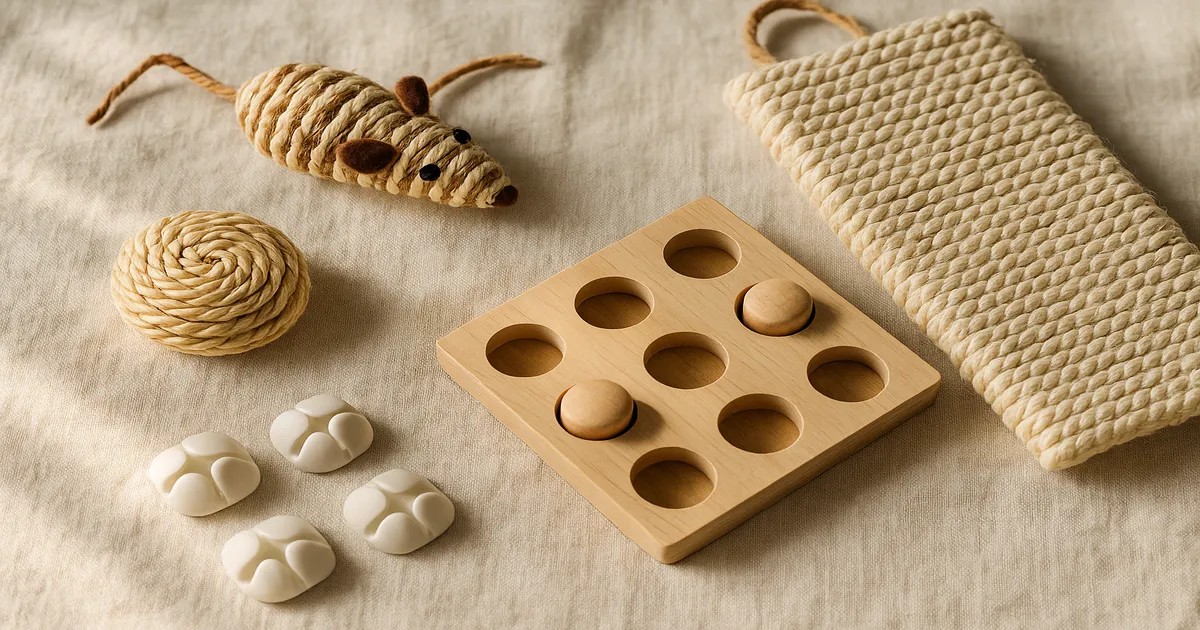
| Trixie Activity Board Puzzle Feeder | Enrichment and anxiety reduction | All phases | $ | Moderate | Clever cats solve it quickly |
Feliway Classic Diffuser
Feliway Classic replicates the F3 facial pheromone cats deposit when they rub their cheeks on objects — the chemical signal that says “this place is safe.” It’s the most extensively studied synthetic feline pheromone product available, with multiple peer-reviewed trials supporting its use in reducing hiding, urine marking, and reduced appetite during stress.
Deploy it in the new cat’s safe room from day one. Add a second diffuser in shared living areas before the face-to-face phase begins.
Key specs: Plug-in format · Covers up to 700 sq ft · 30-day refill
Pros
- Strongest evidence base of any feline pheromone product
- Easy to use — plug in and leave it
- Safe for all cats, kittens, and humans
- Widely available at pet retailers and online
Cons
- Designed for individual stress, not specifically inter-cat tension
- Requires consistent monthly refilling to maintain efficacy
- Ongoing refill cost adds up over a multi-week introduction
Best for: Any cat introduction — this is the first product to buy, placed in the safe room on day one.
Feliway MultiCat Diffuser
Where Feliway Classic addresses individual stress, Feliway MultiCat uses a synthetic version of the feline appeasing pheromone (C.A.P.) — the chemical mother cats produce to promote calm among kittens. That distinction matters. Clinical studies have shown meaningful reductions in conflict behaviors including hissing, chasing, and blocking in multi-cat households when this product is used consistently.
Place it in shared living areas — the main living room, hallways, anywhere both cats will eventually spend time — starting before Phase 3 begins.
Key specs: Plug-in format · Covers up to 700 sq ft · 30-day refill
Pros
- Purpose-built for inter-cat tension, not just general stress
- Clinically studied with documented reductions in conflict behavior
- Pairs well with Feliway Classic for a comprehensive approach
Cons
- More expensive than Classic and budget alternatives
- Results vary — some cats respond strongly, others show little change
- Not a substitute for the step-by-step behavioral protocol
Best for: Households where inter-cat tension persists beyond the initial introduction phase, or as an upgrade once the resident cat begins sharing space.
Comfort Zone MultiCat Diffuser
Comfort Zone MultiCat uses the same synthetic appeasing pheromone mechanism as Feliway MultiCat but costs significantly less — making it practical for owners managing a multi-week or multi-month introduction. It covers a similar area, uses the same plug-in format, and user reviews are generally positive, even if the clinical evidence base is thinner.
One note: some users find the scent slightly more noticeable than Feliway right after plugging in, though it fades quickly.
Key specs: Plug-in format · Covers up to 650 sq ft · 30-day refill
Pros
- Significantly lower cost than Feliway MultiCat
- Widely available at Petco, PetSmart, and Chewy
- Same general pheromone mechanism as the premium option
Cons
- Fewer clinical studies supporting efficacy
- Inconsistent results reported across individual cats
- Initial scent can be stronger than Feliway products
Best for: Budget-conscious owners who want pheromone support but can’t justify the Feliway MultiCat price long-term.
Soft Paws Vinyl Nail Caps
Swatting is almost inevitable during early face-to-face meetings — the question is whether it causes injury. Soft Paws are vinyl caps applied over trimmed claws that blunt the impact of a swat without removing the cat’s ability to use their paws normally. A single scratch during a first meeting can cause real injury and create a negative association that sets the introduction back by weeks. These caps are a small investment that protects against a disproportionately large setback.
Most cats tolerate them well after the first fitting. If you’re unsure about application, have your vet or groomer handle the first session.
Key specs: Sizes XS–L (including kitten) · Last 4–6 weeks · Available in clear and multiple colors
Pros
- Significantly reduces injury risk during face-to-face sessions
- Humane and non-permanent — no effect on claw structure
- Available in kitten sizes for introductions involving young cats
Cons
- Application requires practice; some cats resist strongly
- Caps can fall off and become a choking hazard for other pets
- Not a substitute for active supervision during sessions
Best for: The face-to-face introduction phase — especially when one or both cats is reactive or has a history of redirected aggression.
IRIS USA Wire Exercise Playpen
The critical step between door-only separation and full face-to-face access is the visual barrier phase — where cats can see and smell each other without physical contact. A freestanding wire exercise pen does this job far better than cracking a door open. The IRIS USA pen is sturdy, configurable into different shapes, and available in heights that deter most cats from jumping over during early sessions.
Set it up across a doorway or in an open area and conduct feeding sessions on opposite sides. This is counter-conditioning at its most practical.
Key specs: 8 panels · 24-inch and 36-inch height options · Folds flat · No tools required
Pros
- Allows fully controlled visual introduction with a physical safety buffer
- Versatile — reshapes to fit different spaces
- Reusable across future introductions or as general pet containment
Cons
- Athletic cats can clear even the 36-inch panels
- Takes up meaningful floor space in smaller apartments
- Requires active supervision during use
Best for: Phase 3 of the introduction protocol — the visual barrier stage before any unsupervised shared access begins.
Trixie Activity Board Puzzle Feeder
Puzzle feeders pull double duty during introductions. They slow eating (which reduces stress-related vomiting), provide mental stimulation that redirects attention away from the other cat, and work well as the high-value feeding tool during barrier sessions. The Trixie Activity Board offers five activity zones at varying difficulty levels — enough variety to hold most cats’ interest across a multi-week introduction.
Use one in the safe room for the new cat from day one, and a second in the main living area for the resident cat.
Key specs: 5 activity zones · Suitable for wet and dry food · Dishwasher safe · Non-slip base
Pros
- Reduces boredom and anxiety in isolated cats
- Supports the natural hunt-eat-groom behavioral cycle
- Inexpensive and easy to clean
- Works as a positive reinforcement tool during barrier feeding sessions
Cons
- Clever cats solve it quickly and lose interest — rotate with other feeders
- Not sufficient as the sole enrichment source during isolation
- Wet food dries and sticks in crevices if not cleaned promptly
Best for: The isolation phase in the safe room — and as a resident cat enrichment tool throughout the introduction period.
Our Verdict: Best Cat Introduction Tools by Use Case
Best Overall Introduction Aid: Feliway MultiCat Diffuser Purpose-built for inter-cat tension with clinical evidence behind it. Place it in shared spaces before Phase 3 begins and keep it running through the full introduction period.
Best Budget Pheromone Option: Comfort Zone MultiCat Diffuser Uses the same mechanism as Feliway MultiCat at a meaningfully lower price. The evidence base is thinner, but it’s worth trying before going without pheromone support entirely.
Best for Injury Prevention: Soft Paws Vinyl Nail Caps A single bad swat can undo weeks of careful work. These are a small upfront investment that protects against a disproportionately costly setback during first contact sessions.
Best Structural Barrier Tool: IRIS USA Wire Exercise Playpen Far more controlled than cracking a door open, and more versatile than a fixed baby gate. This is the right tool for the visual introduction phase.
Best Enrichment During Isolation: Trixie Activity Board Puzzle Feeder Low cost, high impact. Buy two — one for the safe room, one for the resident cat’s main living area.
Best for High-Stress or Reactive Cats: Feliway Classic + Feliway MultiCat Combined Run Feliway Classic in the safe room and Feliway MultiCat in shared spaces simultaneously. This dual-pheromone approach covers both individual stress and inter-cat tension — it’s the setup veterinary behaviorists most commonly recommend for anxious or reactive cats.
No product replaces the protocol. Pheromone diffusers, nail caps, and puzzle feeders support the process — they cannot shortcut it. If you’ve been working a proper introduction for 4–6 weeks with no measurable progress, or if any session has resulted in injury or complete appetite loss, stop and contact a veterinary behaviorist or Certified Cat Behavior Consultant (CCBC). Some introductions genuinely require professional guidance, and recognizing that early saves everyone — cats included — a lot of stress.
Frequently Asked Questions: How to Best Introduce Cats Face to Face
How long does it take to introduce two cats face to face?
Most introductions take a minimum of 2–4 weeks before a safe, calm face-to-face meeting is realistic — assuming both cats are eating normally near the barrier and showing no escalating stress signals. Senior cats or cats with prior trauma may need 2–3 months. The cats set the pace, not the calendar.
What should I do if my cats hiss during their first face-to-face meeting?
Hissing and growling during an initial meeting are normal threat-communication behaviors — not a sign the introduction has failed. Separate the cats calmly without punishing either one, and return to the previous phase for several more days before trying again. The problem isn’t hissing; it’s allowing hissing to escalate to swatting or chasing, which is when lasting negative associations form.
Can I speed up the cat introduction process?
Rushing is the single most common reason introductions fail. If both cats are eating calmly near the barrier and showing relaxed body language, you can move through phases slightly faster than the minimum timeline. What you cannot do is skip phases entirely — going from scent-only separation directly to face-to-face contact reliably produces setbacks that cost more time than the shortcut saved.
Do pheromone diffusers like Feliway actually work?
The evidence supports pheromone diffusers as a useful adjunct — not a solution. Multiple peer-reviewed studies show Feliway Classic reduces stress-related behaviors, and clinical data on Feliway MultiCat shows meaningful reductions in inter-cat conflict. They reduce baseline anxiety; they don’t resolve underlying territorial dynamics. Think of them as making the environment quieter so the behavioral work you’re doing can actually land.
How do I know when my cats are ready for unsupervised time together?
Look for specific green lights: both cats eating calmly near each other without tension, mutual nose touches or grooming attempts, and consistently relaxed body language — slow blinks, loose posture, tail held up or neutral. Don’t rely on the absence of hissing alone. When in doubt, wait another week.