Quick Answer: At 10 months, your dog jumps on new people because their impulse-control brain centers are still developing — not because they’re dominant or badly behaved. The fastest fix combines adequate exercise before guests arrive, consistent ignore-and-reward training, and a clear protocol that every visitor follows without exception. Expect real improvement in 4–8 weeks with daily practice, but understand that biological maturity won’t arrive until 12–24 months.
If you’re trying to figure out how to stop your 10-month-old dog from jumping on new people, you’re in good company. This is one of the most common frustrations of dog adolescence — and one of the most fixable. The realistic part: it takes consistency, a little patience, and getting your guests on board.
Why Your 10-Month-Old Dog Jumps on New People
Ten Months Is Peak Adolescence
Think of your dog right now as the canine equivalent of a 13–15-year-old human: lots of energy, big feelings, and a brain that genuinely struggles to regulate impulses. The prefrontal cortex equivalent — the impulse-control center — won’t fully mature until 12–18 months in small breeds and 18–24 months in large breeds. Your dog isn’t ignoring you out of stubbornness. They’re working with incomplete hardware.
Intact males face an extra hurdle: testosterone peaks around 9–12 months, amplifying arousal and impulsivity right when you’re trying to teach calm greetings. The second fear period (roughly 6–14 months) also makes social behavior more intense and unpredictable during this window.
Jumping Is Affection, Not Dominance
Jumping started when your dog was a tiny puppy licking their mother’s face to trigger feeding. It’s a greeting ritual — excitement and affection, not a power play. The American Veterinary Society of Animal Behavior (AVSAB) formally discredited dominance-based explanations for common dog behaviors in 2008. Punishing your dog as if they’re challenging your authority misses the point entirely and can damage trust.
How You (and Your Guests) Accidentally Reinforced It
Most dogs jump because it worked. Every one of these common reactions counts as a reward for a people-oriented dog:
- Pushing the dog away (physical contact = jackpot)
- Saying “no,” “down,” or their name (verbal attention = reward)
- Making eye contact (social engagement = reward)
- Laughing or smiling (emotional engagement = reward)
- Allowing jumping “just this once” (the most damaging one — more on this below)
Breed Traits That Make Jumping Worse
Sporting breeds (Labs, Goldens, Spaniels), herding breeds (Border Collies, Australian Shepherds), terriers, and Molosser breeds (Boxers, Rottweilers, Great Danes) all show particularly persistent jumping. Selective breeding for close human cooperation created dogs that are wired to seek physical proximity. For large breeds, this stops being a manners problem and becomes a safety issue — a 90 lb (41 kg) dog jumping on a child or elderly person can cause real injury.
The Three-Pillar Fix: Exercise, Training, and Guest Management
Pillar 1 — Exercise: Tire Them Out Before Guests Arrive
Meeting your dog’s exercise needs before expecting impulse control is the single most underused tool in managing adolescent jumping. A physically spent dog simply cannot sustain enthusiastic jumping.
Daily minimums at 10 months by breed type:
| Breed Category | Daily Minimum | Good Activities |
|---|---|---|
| High-energy (Border Collie, Aussie, Vizsla) | 90–120 min | Off-leash running, agility, fetch |
| Sporting (Lab, Golden, Spaniel) | 60–90 min | Swimming, fetch, hiking |
| Working (Husky, Malinois, Doberman) | 90–120 min | Structured work, long runs |
| Terrier (Jack Russell, Airedale) | 45–75 min | High-intensity bursts, digging games |
| Hound (Beagle, Basset, Greyhound) | 45–60 min | Scent work, leashed walks |
| Toy (Chihuahua, Pom, Maltese) | 20–40 min | Indoor play, short walks |
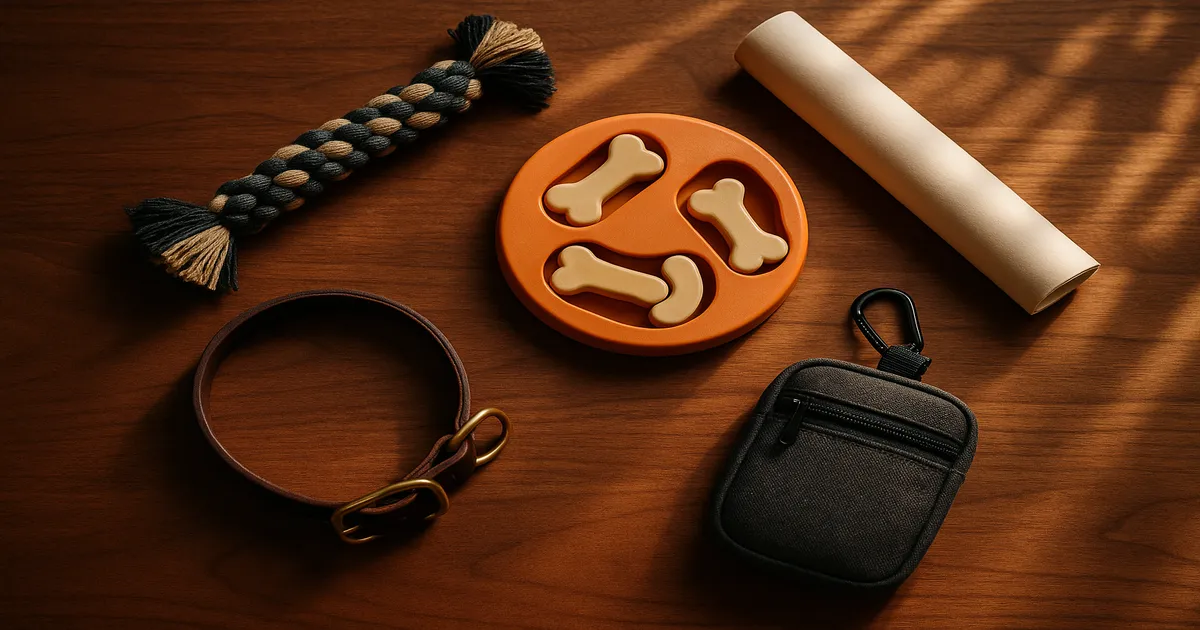
Mental fatigue is equally important. Ten minutes of nose work creates roughly the same tiredness as 30 minutes of physical exercise. Puzzle feeders, (Nina Ottosson Dog Tornado) snuffle mats, and frozen stuffed Kongs (KONG Classic) are your best tools here. Research published in Veterinary Record (2019) found that mental enrichment reduced attention-seeking behaviors more reliably than physical exercise alone.
Pre-visitor protocol:
- 30–60 minutes before arrival: Vigorous breed-appropriate exercise (fetch, a run, off-leash play)
- 15 minutes before arrival: Provide a puzzle feeder, frozen Kong, or bully stick
- 5 minutes before arrival: Practice “place” or “mat” in a calm, low-distraction setting
Follow this sequence consistently and you can expect a 60–75% reduction in jumping incidents before formal training even kicks in.
Pillar 2 — Training: How to Stop Your Dog Jumping on New People
Remove every reward for jumping. The moment your dog’s front paws leave the ground, turn your back, cross your arms, and go completely silent. No eye contact, no “no,” no pushing. Nothing. The behavior has to become the most boring thing your dog can possibly do.
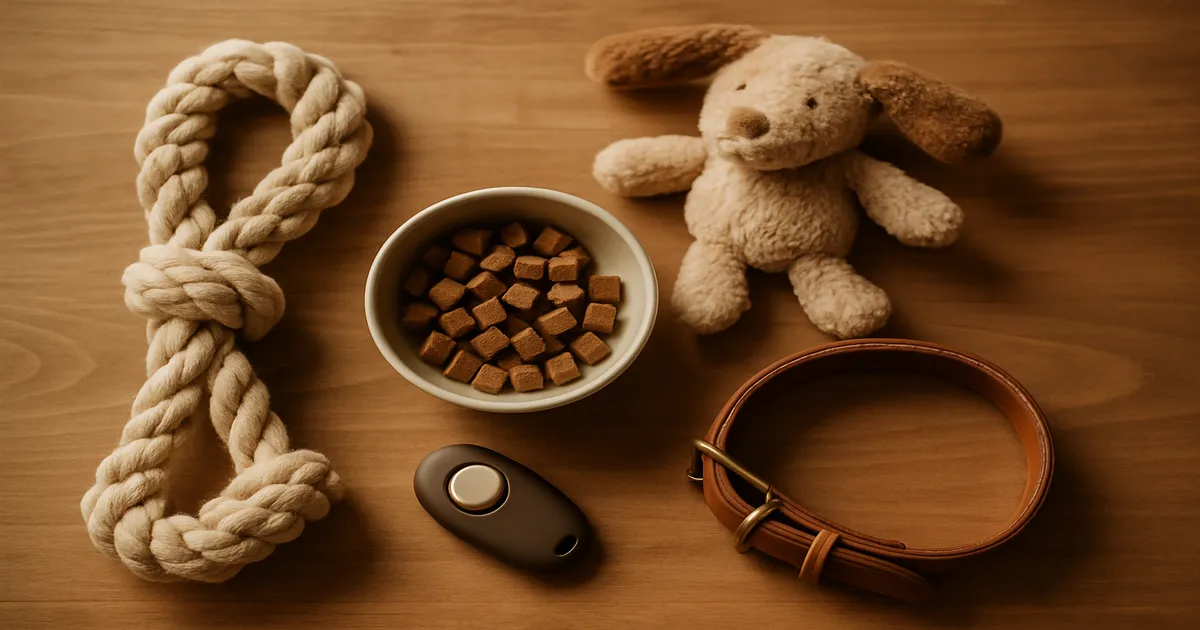
The four-on-the-floor method works like this: the instant all four paws return to the ground — even for a split second — mark it with a calm “yes” and deliver a treat at hip level (not above their head, which encourages jumping back up). Keep your energy low. Excitement at the reward stage can re-trigger jumping.
The pattern:
- Dog jumps → you turn away, zero reaction
- Dog’s paws hit the floor → calm “yes” + treat delivered low
- Dog jumps again → repeat from step 1
Teach an incompatible behavior. A dog cannot simultaneously sit and jump. Once your dog has a reliable sit, ask for it the moment a guest approaches — before jumping even starts. Reward generously. This gives your dog something to do with their excitement rather than just suppressing it. Start with low-distraction practice (a family member approaching repeatedly), then build up to real visitors only after the behavior is solid.
Add a “place” command for arrivals. Train your dog to go to a specific mat and stay there when the doorbell rings. By the time you release them, the initial excitement spike has passed. Train this separately first, then gradually fold it into your greeting routine.
Pillar 3 — Guest Management: The Step Most People Skip
Your training is only as consistent as the least compliant person who walks through your door. One guest who lets jumping slide — even once — triggers variable ratio reinforcement, the same mechanism that makes slot machines addictive. If jumping works sometimes, your dog will try harder and more persistently than if it never works at all.
Before guests enter, say: “Please turn away and ignore him completely if he jumps. Don’t say anything, don’t push him. When all four paws are on the floor, you can calmly greet him.” It feels awkward to brief your friends. Do it anyway.
Management Tools to Use While Training Is in Progress
Management prevents your dog from rehearsing jumping — and every unreinforced jump actually speeds up extinction, while every successful jump sets you back.
Baby gates keep your dog in an adjacent room during initial greetings. (Carlson Extra Wide Walk-Through Pet Gate) Release them only once guests are settled and the excitement peak has passed.
Tethering — attaching a 4–6 foot leash to a heavy piece of furniture or wall anchor — means your dog physically cannot reach guests until they’re calm. Guests approach only when four paws are on the floor.
Front-clip harnesses or head halters reduce the physical force of jumping during on-leash greetings and give you more control without causing discomfort. (PetSafe Easy Walk Harness) Keep the leash loose — tension actually increases arousal in many dogs.
Crate resets are legitimate when your dog’s arousal is too high to train effectively (spinning, barking, unable to focus). A few minutes in a covered crate with a frozen Kong brings arousal down to a trainable level. Think of it as pressing pause, not punishment.
Health Considerations: Why Stopping Jumping Also Protects Your Dog
At 10 months, most medium and large breed dogs still have open growth plates — the soft cartilaginous areas near the ends of long bones where growth occurs. These close at approximately 12–14 months in medium breeds, 14–18 months in large breeds, and up to 18–24 months in giant breeds. Repetitive jumping and hard landings on open plates increases the risk of physeal fractures and contributes to long-term joint problems.
Labs, Goldens, German Shepherds, and Rottweilers are among the breeds with the highest rates of hip and elbow dysplasia — OFA data shows approximately 19.8% of Labs show signs of hip dysplasia. High-impact activity before skeletal maturity can accelerate symptom onset in genetically predisposed dogs.
If your dog yelps, limps, or seems reluctant to jump down from heights, get a vet check before assuming it’s behavioral. Also worth a conversation with your vet: spay/neuter timing. UC Davis research (Torres de la Riva et al., 2013; Hart et al., 2020) suggests delaying these procedures in large breeds until 12–24 months may reduce joint disorder risk.
Frequently Asked Questions
How long does it take to stop a 10-month-old dog from jumping on new people?
With daily practice and consistent guest compliance, most owners see significant improvement in 4–8 weeks. Full reliability — where your dog chooses not to jump even with an excited, unpredictable guest — can take 3–6 months. The timeline depends almost entirely on how consistently everyone enforces the rules.
Why does my dog jump on guests but not on me?
You’ve inadvertently trained a discrimination. Your dog has learned that jumping on you doesn’t work, but jumping on visitors sometimes does. New people are also more exciting by novelty alone. Apply the same consistent ignore-and-reward approach to every person your dog interacts with and the gap closes quickly.
Should I knee my dog in the chest to stop jumping?
No. Kneeing, stepping on paws, or grabbing the dog’s paws can cause physical injury, damage trust, and often backfire by increasing arousal. They also don’t teach your dog what to do instead. The AVSAB and APDT both recommend positive reinforcement-based methods as safer and more effective.
Why has my dog’s jumping gotten worse lately?
Two things are happening simultaneously. The behavior has a longer reinforcement history — more repetitions, more deeply ingrained. And adolescent neurological changes (testosterone peaks, the second fear period, general arousal increases) amplify the behavior right around 9–12 months. This is normal. It does improve with maturity and training, but it won’t resolve on its own without intervention.
Can I fix this without a professional trainer?
Yes, for most dogs. Consistent ignoring, four-on-the-floor rewards, guest briefing, and the pre-visitor exercise protocol work for the majority of owners who apply them consistently. If your dog is large and poses a safety risk, if jumping is combined with nipping or extreme anxiety, or if you’ve been working on it for months without progress, a certified professional dog trainer (CPDT-KA) or veterinary behaviorist is worth the investment.