Quick Answer: Caring for a Standard Poodle means committing to 60–90 minutes of vigorous daily exercise, professional grooming every 6–8 weeks, and serious mental enrichment — this is one of the smartest breeds alive, and boredom is your biggest enemy. They’re affectionate, highly trainable, and remarkably long-lived (12–15 years) for a large dog, but they need to be treated as full family members, not backyard dogs.
Learning how to care for a Standard Poodle properly will save you a lot of frustration — and your furniture. These dogs are athletic, emotionally sensitive, and intellectually demanding in the best possible way. Get the basics right and you’ll have one of the most rewarding companions in dogdom.
Standard Poodle Care at a Glance
| Stat | Details |
|---|---|
| Height | Over 15 inches (38 cm) at the shoulder |
| Weight | 40–70 lbs (18–32 kg) |
| Lifespan | 12–15 years |
| Energy Level | High (moderate-high after age 4) |
| Shedding | Minimal |
| Trainability | Exceptional |
| Grooming Needs | High — professional grooming every 6–8 weeks |
Key care requirements at a glance:
- Exercise: 60–90 minutes of vigorous activity daily for adults
- Grooming: Daily brushing (minimum 3–4×/week), professional grooming every 6–8 weeks
- Mental stimulation: As critical as physical exercise for this breed
- Health watch: Predisposed to bloat (GDV), Addison’s disease, and hip dysplasia
- Annual grooming cost: $800–$1,500+
Is a Standard Poodle Right for You?
Standard Poodles adapt well to family life, including homes with children and other dogs. They’re one of the best choices for allergy-sensitive households thanks to their low-shedding coat. Apartment living is possible — but only if you’re committed to meeting their exercise needs every single day. What they genuinely can’t tolerate is being left alone for long stretches or living a sedentary life.
Breed History and Temperament
Origins as a Working Dog
The Standard Poodle traces its roots to Germany, where it was called the Pudelhund — literally “splash-in-water dog” — bred to retrieve ducks and waterfowl. France later refined and popularized the breed so thoroughly that it became the national dog of France, known there as the Caniche (“duck dog”). The breed appears in European artwork as far back as the 15th and 16th centuries, including works attributed to Albrecht Dürer and Rembrandt.
Standard Poodles were also used as truffle hunters in Spain and Germany, military dogs across Europe, and circus performers — a résumé that tells you everything about their intelligence and versatility. That famous “poodle clip” wasn’t a fashion statement; hunters shaved the hindquarters to reduce drag in water while leaving hair over joints and vital organs for warmth and protection.
Personality and Temperament
In Stanley Coren’s The Intelligence of Dogs, the Standard Poodle ranks second only to the Border Collie among all breeds. They learn new commands in fewer than five repetitions and obey a known command on the first attempt roughly 95% of the time. They’re also natural problem-solvers — some individuals figure out door handles, anticipate daily routines, and pick up sequences of tasks without being explicitly taught.
That intelligence cuts both ways. A bored Standard Poodle will find its own entertainment, and you won’t like the results.
Despite their regal bearing, these dogs have a genuine clownish streak. They’re high energy in the first two to three years, then typically settle into a more manageable moderate-to-high pattern by age four. When adequately exercised, they have a solid “off switch” and can relax calmly indoors.
Standard Poodles are deeply people-oriented and bond with the whole family, not just one person. They’re generally excellent with children — patient, playful, and sturdy enough to handle active kids. With strangers, they’re typically reserved at first, then warm once they’ve made their own assessment. Separation anxiety is a real risk if they’re routinely left alone for long periods, so treat your Standard Poodle as an active household member from day one.
Exercise and Mental Stimulation
How to Care for a Standard Poodle’s Activity Needs
Daily exercise requirements shift across life stages:
- Puppies (under 18 months): Follow the 5-minute rule — 5 minutes of structured exercise per month of age, twice daily. A 4-month-old gets 20 minutes twice a day. This protects developing joints.
- Adults: 60–90 minutes of vigorous exercise daily, ideally split into two sessions.
- Seniors (8+ years): 30–45 minutes of moderate activity daily, adjusted for individual health.
Swimming is arguably the ideal exercise — it’s low-impact, full-body, and taps directly into their water-retrieving heritage. Most Standard Poodles take to it naturally. Other great options include fetch, jogging (wait until 18–24 months for skeletal maturity), hiking, agility, and dock diving.
Mental Enrichment: Don’t Skip It
A tired body doesn’t equal a tired mind with this breed. Mental enrichment needs to be built into every day. Good options include:
- Puzzle feeders and food-dispensing toys — a rotating toy like the Nina Ottosson Dog Tornado keeps mealtimes engaging
- Nose work and scent detection training
- Short obedience and trick sessions (15–20 minutes, once or twice daily)
- Hide-and-seek and find-it games
- Canine sports: agility, rally obedience, tracking
If you’re seeing destructive chewing, excessive barking, hyperactivity that won’t settle, or compulsive pacing, add exercise and enrichment before assuming a behavioral problem.
How to Groom a Standard Poodle
Understanding the Coat
The Standard Poodle’s single-layer, continuously growing coat is what makes it low-shedding — but low-shedding is not the same as low-maintenance. Shed hairs get trapped in the curls rather than falling to the floor, which means matting is a constant risk without regular upkeep.
Brushing Routine
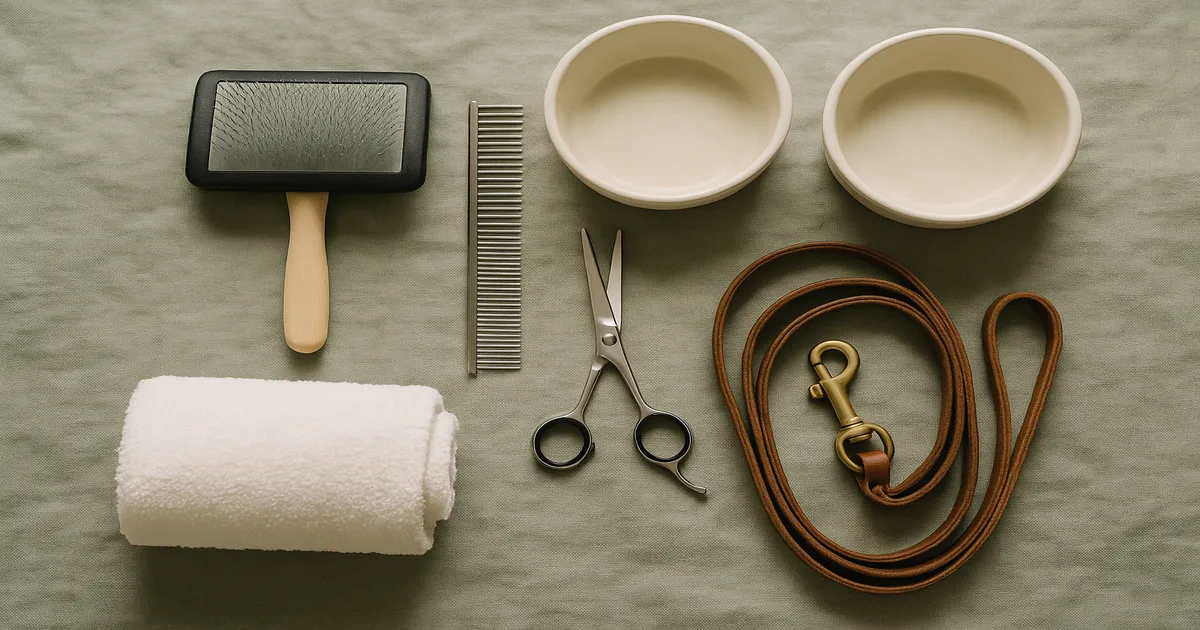
Daily brushing is the gold standard; three to four times per week is the realistic minimum. Use a slicker brush for general brushing, then follow up with a metal comb to check for tangles close to the skin — the Chris Christensen Big G Slicker Brush paired with an Andis Steel Greyhound Comb is a combination many professional groomers rely on. Work in sections from the skin outward (line brushing) to prevent deep mats from forming.
Pay extra attention to high-friction areas: behind the ears, armpits, groin, and anywhere a collar or harness sits. Start brushing puppies at 8 weeks to build tolerance early.
Professional Grooming and Clip Styles
Plan on professional grooming every 6–8 weeks. A full appointment typically includes a bath, blow-dry, haircut, nail trim, ear cleaning, and anal gland expression. Budget $800–$1,500+ annually depending on your location and clip style.
Popular clip styles:
- Puppy clip — even length all over; practical and popular with pet owners
- Sporting clip — short all over with a slightly longer top-knot; great for active dogs
- Lamb clip — uniform length, slightly longer than the puppy clip
- Continental clip — the classic show cut with shaved hindquarters and pom-poms; required for AKC conformation showing
Bathing, Nails, Ears, and Teeth
Bathe every 3–6 weeks using a pH-balanced dog shampoo and conditioning rinse. Always brush thoroughly before bathing — water tightens existing mats and makes them nearly impossible to remove. Blow-dry completely to prevent skin infections. Chris Christensen Ice on Ice Shampoo is a popular choice among Poodle owners for keeping the coat soft between professional appointments.
Trim nails every 3–4 weeks. Standard Poodle nails are often dark, making the quick hard to see — take small amounts at a time, or use a rotary grinding tool if your dog tolerates it. The Dremel 7300-PT is a widely used option that’s quieter than many grinders.
Ear care is non-negotiable. Floppy ears combined with hair growth inside the ear canal creates a perfect environment for infection. Clean ears every one to two weeks with a vet-approved solution, and watch for odor, dark discharge, head shaking, or scratching.
Brush teeth two to three times per week minimum using dog-specific toothpaste — daily is better. Virbac CET Enzymatic Toothpaste is a vet-recommended option that comes in flavors dogs actually accept. Most Standard Poodles need a professional dental cleaning under anesthesia every one to two years.
Common Health Problems in Standard Poodles
Bloat (GDV)
Gastric Dilatation-Volvulus is the most acute life-threatening condition Standard Poodles face. The stomach fills with gas and twists on itself, cutting off blood supply. It’s fatal without emergency surgery and can progress from onset to crisis within hours. Deep-chested breeds like the Standard Poodle have a lifetime risk estimated at 24–42%.
Symptoms: distended abdomen, unproductive retching, restlessness, and rapid deterioration. If you see these signs, go to an emergency vet immediately. Preventive gastropexy (surgical tacking of the stomach) is increasingly recommended and is often performed at the time of spay or neuter — ask your vet about it seriously.
Addison’s Disease
Standard Poodles are significantly overrepresented in Addison’s disease diagnoses — an estimated 1.5–2% of the breed is affected. Addison’s is a failure of the adrenal glands to produce essential hormones, causing lethargy, vomiting, weakness, and potentially life-threatening collapse during stress. It’s manageable with lifelong hormone replacement therapy.
Hip Dysplasia and Eye Conditions
OFA data shows approximately 12–14% of Standard Poodles tested have hip dysplasia. Reputable breeders should have OFA or PennHIP certification on both parents. Progressive Retinal Atrophy (PRA) — specifically the prcd-PRA variant — causes gradual, irreversible blindness and has a known genetic component in Poodles. DNA testing is available, and responsible breeders test all breeding dogs.
Other Conditions to Know
Sebaceous Adenitis (SA) is an inflammatory skin disease that destroys sebaceous glands, leading to hair loss, scaling, and secondary infections. Standard Poodles are one of the most commonly affected breeds. Idiopathic epilepsy, hypothyroidism, and dilated cardiomyopathy (DCM) are also seen in the breed.
When buying a puppy, ask for health documentation on both parents covering: hips, elbows, ophthalmologist evaluation, cardiac evaluation, sebaceous adenitis skin biopsy, and thyroid function.
Feeding a Standard Poodle
How Much to Feed
Feeding amounts vary by weight, age, and activity level — always follow the guidelines on your food’s packaging and adjust based on body condition. As a general framework:
- Puppies: Three meals daily up to 6 months, then transition to two meals
- Adults: Two meals daily totaling roughly 3–4 cups of a high-quality dry food for a 50–65 lb dog (varies by formula)
- Seniors: Slightly reduced calories with attention to joint-supportive nutrients
Choosing the Right Food and Reducing Bloat Risk
Look for a large-breed formula with a named protein source as the first ingredient. Purina Pro Plan Large Breed Adult Chicken & Rice is a widely recommended option with strong veterinary backing.
Given the GDV risk, how you feed matters as much as what you feed:
- Feed two to three smaller meals daily rather than one large meal
- Use a slow-feeder bowl to reduce eating speed — the Outward Hound Fun Feeder Slo Bowl is an affordable, effective option
- Avoid vigorous exercise for at least one hour before and after meals
- Avoid raised food bowls — research has not confirmed they reduce bloat risk, and some studies suggest they may increase it
Toxic foods to avoid: grapes, raisins, xylitol, onions, garlic, macadamia nuts, and chocolate. For supplements, glucosamine and chondroitin support joint health, and omega-3 fatty acids (fish oil) support coat quality and reduce inflammation. Nutramax Cosequin DS Plus MSM is a commonly recommended joint supplement for large breeds. Always check with your vet before adding supplements.
Training and Living with a Standard Poodle
Training a Highly Intelligent Breed
Positive reinforcement isn’t just recommended for Standard Poodles — it’s essential. This breed is emotionally sensitive, and punishment-based methods backfire badly, creating anxiety and eroding trust. What works: reward-based training with treats, praise, and play; short sessions (10–15 minutes) rather than long repetitive drills; and enough variety to hold their interest.
Because they learn so fast, it’s easy to accidentally teach bad habits. Be consistent from day one — what’s cute in a puppy becomes a problem in a 60 lb adult.
Socialization
Start socialization at 8 weeks and make it a priority through the first year of life. Expose your puppy to different people, environments, sounds, surfaces, and animals in positive, low-pressure situations. Well-socialized Standard Poodles are confident and adaptable. Under-socialized ones can become reactive or anxious — a real problem given their sensitivity.
Cost of Ownership
Be prepared for a real financial commitment:
- Purchase price: $1,500–$3,000+ from a reputable breeder (avoid pet stores and puppy mills)
- Annual grooming: $800–$1,500+
- Food: $600–$1,200/year depending on brand and size
- Routine veterinary care: $300–$600/year, more if health issues arise
- Pet insurance: $50–$100/month — strongly recommended given the breed’s health risks
Frequently Asked Questions About Standard Poodle Care
How much exercise does a Standard Poodle need each day? Adults need 60–90 minutes of vigorous exercise daily, ideally split into two sessions. Puppies should follow the 5-minute-per-month-of-age rule to protect developing joints.
Are Standard Poodles good for people with allergies? They’re one of the better choices for allergy-sensitive households because their curly coat traps shed hair rather than releasing it into the air. No dog is truly hypoallergenic, but Standard Poodles produce less airborne dander than most breeds.
How often does a Standard Poodle need professional grooming? Every 6–8 weeks for a full clip, plus brushing at home three to four times per week minimum. Skipping home brushing between appointments leads to matting that can require a full shave-down.
Can Standard Poodles live in apartments? Yes, if — and only if — their exercise needs are met every day. The breed adapts to smaller spaces well, but they cannot adapt to a sedentary lifestyle.
What is the biggest health risk for Standard Poodles? Bloat (GDV) is the most immediately life-threatening condition. Feed multiple small meals, avoid exercise around mealtimes, and talk to your vet about preventive gastropexy. Addison’s disease and hip dysplasia are the other major breed-specific concerns to monitor.