Quick Answer: To get a puppy to stop digging, start by identifying why they’re doing it — boredom, instinct, escape attempts, and anxiety all need different fixes. The most effective approach combines increased exercise, mental enrichment, and redirecting the behavior to an approved digging zone. Physical deterrents can help, but they work best alongside addressing the root cause, not instead of it.
Figuring out how to get a puppy to stop digging is one of the most common frustrations new dog owners face — and one of the most misunderstood. Digging isn’t defiance. It’s a deeply wired, self-rewarding behavior that puppies find genuinely satisfying, which is exactly why scolding them after the fact does absolutely nothing.
The good news: most digging is very fixable once you understand what’s driving it.
Why Puppies Dig: Understanding the Root Causes
Digging Is a Natural Instinct, Not Bad Behavior
Wild canids — wolves, foxes, jackals — dug for survival: to pursue prey, create dens, and cache food. Selective breeding didn’t eliminate that drive; in many breeds, it amplified it. Understanding this is step one, because it changes how you respond.
The 7 Core Motivations Behind Puppy Digging
1. Predatory/instinctual drive The puppy smells something underground — a rodent, insects, earthworms — and simply cannot help themselves. This is the hardest type to redirect because it’s not a learned behavior; it’s a biological imperative.
2. Boredom and under-stimulation The most common cause in high-intelligence breeds. A mentally under-challenged puppy will invent their own entertainment, and digging is extremely satisfying. The good news: this type responds quickly to more enrichment.
3. Escape attempts Typically triggered by something on the other side of the fence — another dog, an interesting smell, or simply the lure of freedom. Intact males are significantly more likely to escape-dig, especially when a female in estrus is nearby.
4. Thermal regulation Double-coated breeds like Huskies and Malamutes dig shallow, body-sized depressions in cool soil or shade. It’s their version of air conditioning.
5. Anxiety and stress relief Digging that clusters around specific triggers — your departure, loud noises, confinement — points to anxiety rather than boredom or instinct.
6. Attention-seeking Some puppies learn that digging gets a reaction. Even scolding counts as attention, which means any response can reinforce the behavior.
7. Food caching Give a puppy a high-value bone and they may try to bury it for later. This usually stops when you manage where and when high-value treats are given.
How to Identify Which Type of Digging Your Puppy Is Doing
| Behavioral Signature | Likely Motivation |
|---|---|
| Frantic nose-to-ground digging, intense focus | Predatory/instinctual |
| Random locations, combined with chewing or barking | Boredom |
| Exclusively along fence lines or under gates | Escape attempt |
| Shallow depressions in shade, especially in summer | Thermal regulation |
| Digging when left alone or after loud noises | Anxiety |
| Digging in front of you with eye contact | Attention-seeking |
| Deliberate digging after receiving a treat or bone | Food caching |
Breed Matters: Which Puppies Are Hardest to Stop from Digging
Terriers: Born to Dig
The word terrier comes from the Latin terra, meaning earth. That’s not a coincidence. Terrier breeds were developed specifically to pursue prey underground — Jack Russells following foxes into burrows, Scottish Terriers hunting badgers, Border Terriers keeping pace with horses on fox hunts. Digging isn’t a bad habit for these dogs; it’s their entire ancestral job description. Owners of Jack Russells, Airedales, and Norfolk Terriers should expect digging to be a lifelong management challenge rather than something to fully eliminate.
Dachshunds, Beagles, and Scent Hounds
The Dachshund’s name literally means “badger dog” in German. They were bred to dig into badger dens, and their compact, muscular bodies are built for exactly that. They’re among the most persistent diggers of any breed. Importantly, frantic digging puts real strain on their elongated spine — Dachshunds have a lifetime risk of intervertebral disc disease (IVDD) of around 19–24%, and owners should actively discourage high-impact digging sessions and watch for signs of back pain such as reluctance to move, yelping, or a hunched posture.
Beagles will dig under fences to follow a scent trail. Once their nose is engaged, recall becomes nearly impossible, making secure fencing and physical deterrents especially important.
Huskies, Malamutes, and Double-Coated Working Breeds
These breeds dig for comfort, not mischief. Their ancestors lived in extreme cold and dug to regulate body temperature — an instinct that persists in suburban backyards. Providing shaded rest areas, cooling mats, and paddling pools is often more effective than training alone for this motivation.
High-Energy Herding and Sporting Breeds
Border Collies, Australian Shepherds, and Corgis were bred to work all day. When they don’t have a job, they create one. These dogs respond exceptionally well to mental enrichment because their digging is almost always boredom-driven.
Breed Digging Tendency Quick-Reference
| Breed | AKC Group | Digging Tendency | Primary Motivation |
|---|---|---|---|
| Jack Russell Terrier | Terrier | Extreme | Instinct/prey drive |
| Dachshund | Hound | Extreme | Instinct/prey drive |
| Scottish Terrier | Terrier | High | Instinct/prey drive |
| Siberian Husky | Working | High | Thermal regulation/escape |
| Beagle | Hound | High | Scent/escape |
| Border Collie | Herding | Moderate–High | Boredom/energy |
| Labrador Retriever | Sporting | Moderate | Boredom |
How to Get a Puppy to Stop Digging: Exercise and Enrichment First
The Exercise-Digging Connection
A well-exercised puppy is dramatically less likely to excavate your garden. Physical and mental fatigue reduce the drive to seek out self-stimulating behaviors — and digging is one of the most self-rewarding outlets a bored puppy can find.
The standard guideline is 5 minutes of structured exercise per month of age, twice daily. A 4-month-old puppy needs roughly 20 minutes of structured exercise twice a day. Free play in the yard can be longer, but avoid high-impact activities — running on hard surfaces, jumping, steep stairs — in puppies under 12–18 months while their growth plates are still developing.
By breed category:
- High-energy breeds (terriers, herding, working): 60–120+ minutes daily
- Moderate-energy breeds (retrievers, spaniels, hounds): 45–90 minutes daily
- Lower-energy breeds (Basset Hounds, Bulldogs): 20–40 minutes daily
Best Activities to Tire Out High-Energy Diggers
- Flirt poles — 5–10 minutes can match 30+ minutes of regular exercise in energy expenditure
- Fetch and frisbee — classic and effective for sporting and herding breeds
- Agility training — combines physical and mental challenge in one session
- Sniff walks — let the puppy lead with their nose; mentally exhausting in the best way
Mental Enrichment That Reduces Digging Urges
Physical exercise alone isn’t enough for intelligent breeds. A Border Collie that runs for an hour but hasn’t used its brain will still dig. Try:
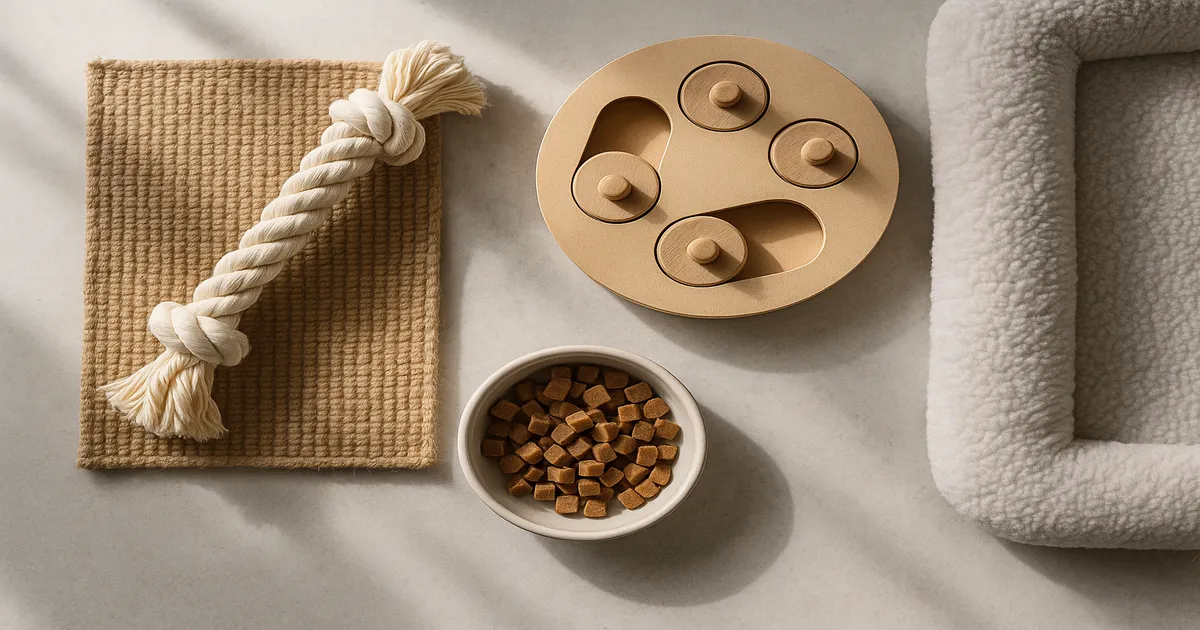
- Puzzle feeders at mealtimes instead of a bowl — they slow eating and engage problem-solving (Nina Ottosson Dog Tornado)
- Nose work games — particularly effective for scent hounds and terriers because it channels the olfactory drive that triggers digging
- Short training sessions — 3–5 sessions of 5–10 minutes daily builds focus and tires a puppy out more than you’d expect
If you have a terrier or Dachshund, consider AKC Earthdog trials. These structured events let dogs navigate underground tunnels to locate quarry — a completely legal, constructive outlet for the exact instinct that’s destroying your garden.
Step-by-Step Training Techniques to Stop Puppy Digging
The Redirect-and-Reward Method
This is the foundation of any positive, effective anti-digging program: