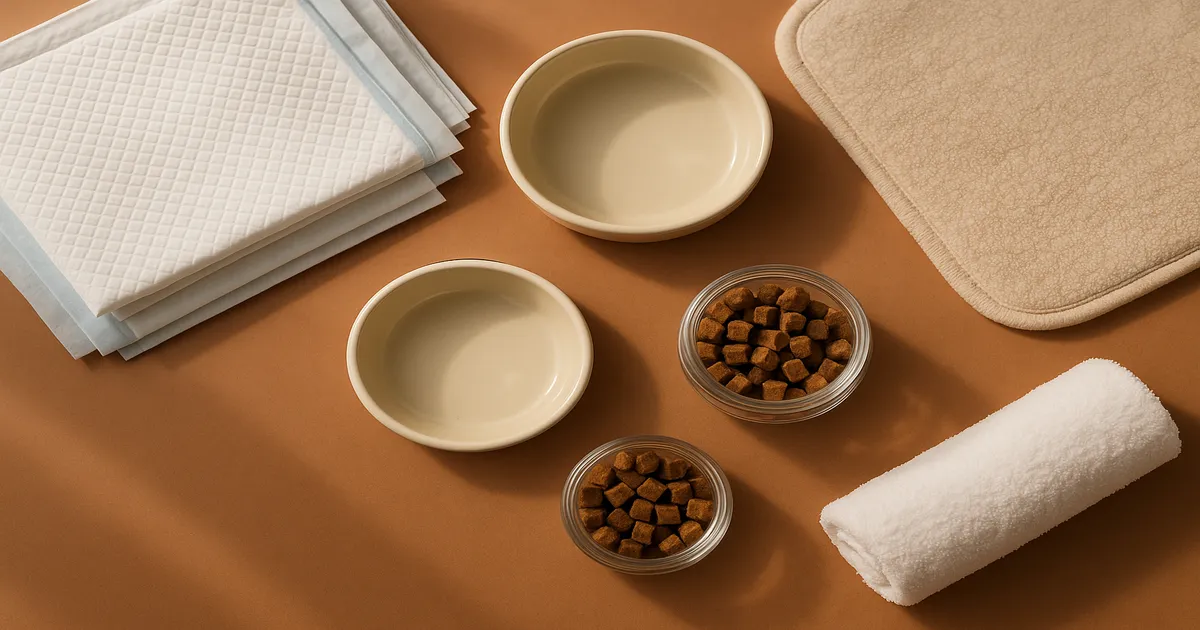
Quick Answer: Yes, you can absolutely pee pad train an older dog. Senior dogs retain strong learning ability and many adapt within days to weeks depending on breed. The process requires consistency, positive reinforcement, and patience — but it works reliably well.
Figuring out how to pee pad train an older dog is one of the most common challenges senior pet owners face — and the good news is that age is rarely the barrier people expect. Whether your dog has developed arthritis, is recovering from surgery, or is showing early signs of canine cognitive dysfunction, pee pads can be a genuine lifeline for both of you.
Can You Pee Pad Train an Older Dog?
A 2022 study published in Scientific Reports confirmed that older dogs retain strong associative learning ability. They may need 10–20% more repetitions than younger dogs and respond best to shorter sessions of 5–10 minutes, but the fundamentals of learning are fully intact. The “old dogs can’t learn new tricks” idea simply isn’t supported by science.
When Pee Pad Training Makes Sense for Senior Dogs
The most common reasons owners turn to pad training include:
- Osteoarthritis — affects up to 80% of dogs over age 8, making outdoor trips painful
- Canine Cognitive Dysfunction (CCD) — affects 28% of dogs aged 11–12 and up to 68% of dogs aged 15–16
- Urinary incontinence — impacts roughly 20% of spayed females
- Chronic kidney disease (CKD) — causes frequent urination that can’t always wait for a walk
- Post-surgical recovery — strict confinement often requires a fully indoor elimination solution
Realistic Timelines by Breed Type
| Breed Type | Examples | Typical Timeline |
|---|---|---|
| Highly trainable | Border Collie, Poodle, Golden Retriever, Labrador | 3–7 days |
| Moderate trainability | Beagle, Bulldog, Boxer, Siberian Husky | 1–3 weeks |
| Independent/stubborn | Basset Hound, Shiba Inu, Dachshund | 3–6 weeks |
Health Conditions That Make Pee Pad Training Necessary
Osteoarthritis and Mobility Limitations
Arthritis is the single biggest driver of pad training in senior dogs. Many arthritic dogs show reluctance to go outside — especially in cold weather, rain, or when stairs are involved. If your dog hesitates at the door, whimpers when squatting, or takes a long time to rise after lying down, arthritis is worth discussing with your vet before you start any training program.
Canine Cognitive Dysfunction and House Soiling
CCD is essentially the canine equivalent of dementia. Dogs with CCD may forget their housetraining, wander away from the door, or simply lose track of where they are. House soiling in a previously reliable dog is one of the hallmark signs — and it’s neurological, not defiance. Punishment won’t help and will only increase anxiety.
Urinary Incontinence and Kidney Disease
Hormone-responsive incontinence is particularly common in spayed females. CKD compounds the problem by causing polyuria — affected dogs may need to urinate every one to two hours. Pads don’t replace veterinary treatment, but they make daily management far more realistic.
Post-Surgical Recovery
Conditions like intervertebral disc disease (IVDD), degenerative myelopathy, and hip dysplasia all create situations where outdoor elimination becomes difficult or impossible. Dachshunds face IVDD in roughly 19% of cases over their lifetime, and post-surgical recovery for these dogs almost always requires indoor pad access.
See a Vet Before You Start
Any new house soiling in a previously housetrained dog warrants a vet visit first. Sudden changes can signal a UTI, diabetes, CKD, or neurological disease — conditions that need diagnosis and treatment, not just a training workaround. Get a clean bill of health (or a management plan) before you begin.
Choosing the Right Pee Pad Setup
Disposable vs. Washable Reusable Pads
Disposable pads with pheromone attractants are the easiest starting point. The attractant scent cues your dog’s elimination instincts and speeds up training. Washable reusable pads are more economical and eco-friendly long-term, but need laundering at 140°F (60°C) to eliminate bacteria. For most owners, starting with disposables and transitioning to washables once the behavior is established is the practical middle ground.
Pad Size, Placement, and Quantity
Standard pads measure 17×24 inches — fine for dogs under 40 lbs. For larger seniors, use extra-large pads at 24×36 inches. A dog who frequently misses the pad is often just using an undersized one.
Placement matters more than most people realize. Dogs naturally gravitate toward corners and edges, so placing pads against a wall dramatically increases accuracy. Keep pads:
- Near your dog’s sleeping area (especially important for CCD dogs)
- Away from food and water bowls
- In the same location every single time — consistency is everything
Start with two to three pads in different areas your dog frequents. Too many options create confusion; too few create accidents when the one pad is already soiled.
Litter Box Inserts for Small Breeds
For dogs under 20 lbs, a low-sided litter box insert with a pad inside offers clear physical boundaries that reduce misses. The raised edges give a defined “this is the spot” signal that a flat pad on an open floor sometimes doesn’t provide.
How to Pee Pad Train an Older Dog: Step-by-Step
Step 1: Establish a Consistent Elimination Schedule
Senior dogs do best with 4–6 pad opportunities daily. Build your schedule around these natural windows:
- Within 15–20 minutes after exercise
- 20–30 minutes after meals
- Immediately after waking from sleep or a nap
- Before bed
Predictability is the foundation. The more consistent your timing, the faster your dog learns.
Step 2: Introduce the Pad with Positive Reinforcement
Lead your dog to the pad calmly — no excitement, no pressure. The moment they eliminate on it, mark the behavior immediately with a cheerful “yes!” and offer a high-value reward. Think small, soft, and smelly — something your dog genuinely gets excited about. (Zuke’s Mini Naturals Chicken Recipe) Keep sessions to 5–10 minutes. If nothing happens, no correction — just try again at the next scheduled window.
Step 3: Use Scent Cues and a Verbal Command
Choose a cue like “go potty” and say it consistently every time you lead your dog to the pad. You can also place a small piece of a previously soiled pad underneath a fresh one to activate the attractant response using familiar scent. This is especially helpful for dogs who seem confused about the pad’s purpose.
Step 4: Supervise, Confine, and Gradually Expand Freedom
During training, keep your dog in a smaller space where you can watch for pre-elimination signals — circling, sniffing, squatting. Use a playpen or baby gates. As reliability improves over days or weeks, gradually expand access to the rest of the home.
Step 5: Handle Accidents Without Punishment
Never scold or punish your dog for accidents. Senior dogs — especially those with CCD or incontinence — cannot connect punishment to an earlier elimination event. It creates anxiety without improving behavior.
Clean accidents immediately with an enzymatic cleaner. (Nature’s Miracle Advanced Stain and Odor Eliminator) Standard household cleaners don’t break down uric acid crystals, which means your dog can still smell the spot and is likely to return to it.
Step 6: Transition Gradually from Outdoor Trips
If your dog is used to going outside, don’t cut outdoor trips abruptly — that creates anxiety. Instead, shift the balance from outdoor to indoor over one to two weeks. Keep at least one short outdoor trip daily if mobility allows; the fresh air and mental stimulation are still valuable.
Grooming and Hygiene for Pad-Training Senior Dogs
Sanitary Trims for Long-Coated Breeds
Long-coated breeds like Shih Tzus, Maltese, and Lhasa Apsos need the hair around their hindquarters, inner thighs, and belly trimmed every 4–6 weeks. Soiled coat in these areas causes skin irritation quickly and makes pad training far messier than it needs to be.
Nail Care for Indoor Dogs
Dogs who spend most of their time indoors on pads don’t naturally wear their nails down on pavement. Trim nails every 3–4 weeks rather than the 6–8 weeks typical for active outdoor dogs. Overgrown nails alter gait and have been documented to worsen arthritis pain. A rotary nail grinder is often easier for sensitive seniors to tolerate than clippers.
Checking for Urine Scalding
Incontinent dogs are at real risk of urine scald — a painful skin condition caused by prolonged contact with urine. Check your dog’s inner thighs, belly, and paws daily. Redness, hair loss, or raw skin warrants a prompt vet call. A pet-safe barrier balm can help protect vulnerable skin between checks. (Vetericyn Plus Antimicrobial Hydrogel)
Pad Hygiene
Change disposable pads after each use, or at minimum every 4–6 hours. Most senior dogs won’t use a heavily soiled pad and will find another spot — which defeats the purpose. Clean the surrounding floor regularly with an enzymatic cleaner to remove residual uric acid.
Nutrition Tips That Support Pee Pad Training
Feeding Schedules Make Elimination Predictable
What goes in on a consistent schedule comes out on a consistent schedule — and that predictability is exactly what pad training relies on. Feed at the same times every day; twice daily works well for most seniors. Post-meal elimination happens within 20–30 minutes, so you can build your pad schedule directly around mealtimes. Free-feeding makes elimination timing unpredictable and significantly complicates training.
Avoid sudden food changes during training, as they cause loose stools that are nearly impossible to manage with pads. If a diet transition is needed, do it gradually over 7–10 days.
Key Nutrients for Senior Dogs
Contrary to older advice, senior dogs generally need more protein, not less — aim for 25–30% on a dry matter basis to preserve muscle mass. Omega-3 fatty acids (EPA/DHA) at 40–100 mg/kg body weight per day support both joint health and cognitive function. For dogs with CCD, antioxidants and MCTs (medium-chain triglycerides) have shown measurable cognitive benefits in research. (Purina Pro Plan Bright Mind Adult 7+ Chicken & Rice Formula)
Hydration and Incontinence
Don’t restrict water to reduce accidents — it can worsen kidney disease and cause dangerous dehydration. Instead, manage timing: offer water at set intervals, note when your dog typically drinks, and schedule a pad opportunity 30–60 minutes later.
Frequently Asked Questions About How to Pee Pad Train an Older Dog
How long does it take to pee pad train an older dog?
Most seniors show meaningful progress within one to three weeks. Highly trainable breeds like Golden Retrievers and Poodles often adapt in as little as 3–7 days, while independent breeds like Shiba Inus or Basset Hounds may need 3–6 weeks of consistent work. A fixed daily schedule makes the biggest difference regardless of breed.
Can a senior dog with incontinence be pee pad trained?
Yes — pee pads are one of the most effective management tools for incontinent dogs. The goal shifts slightly: rather than teaching the dog to choose the pad, you’re positioning pads where accidents are most likely to occur. Combining pad placement with veterinary treatment — such as phenylpropanolamine for hormone-responsive incontinence — gives the best results.
Where is the best place to put a pee pad for an older dog?
Place pads in corners or against walls, near your dog’s sleeping area, and away from food and water bowls. For dogs with CCD, having a pad visible from the bed reduces confusion. Consistency of location matters most — moving the pad around is one of the most common reasons training stalls.
What if my older dog refuses to use the pee pad?
First, check pad size — undersized pads are a frequent culprit. Next, try a pheromone attractant spray if you’re using unscented pads. For scent hounds like Beagles who become too fixated on the attractant without eliminating, switch to unscented pads and rely on scheduled timing instead. If refusal persists, rule out a medical issue with your vet.
Should I still take my older dog outside if I’m using pee pads?
Yes, if mobility allows. Outdoor trips provide mental stimulation, fresh air, and physical exercise that support overall health and actually help pad training by regulating the gastrocolic reflex. The goal of pad training is to give your dog a reliable indoor option — not to eliminate outdoor time entirely.