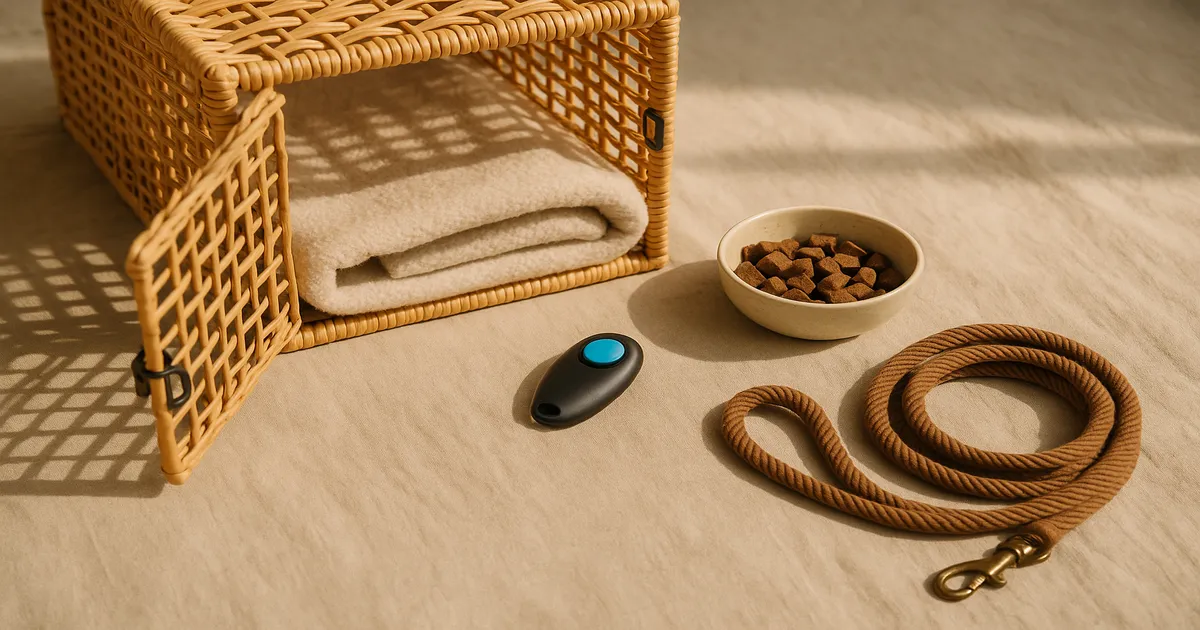
Quick Answer: Kennel training a puppy means teaching them to see their crate as a safe, comfortable den — not a punishment. Start by choosing the right crate size, introduce it gradually with treats and meals, then build up the time your puppy spends inside at their own pace. Most puppies adapt within 1–3 weeks when you’re consistent.
Learning how to kennel train your puppy is one of the most valuable things you can do in those first weeks together. Done right, it gives your puppy a calm retreat they actually want to use, speeds up housetraining dramatically, and prevents the kind of destructive behavior that comes from an unsupervised puppy with too much house to roam. The process isn’t complicated, but the order of steps matters.
How to Kennel Train Your Puppy: The Core Process
Kennel training — also called crate training — works because it taps into something dogs are already wired for. All domestic dogs descend from den-dwelling ancestors, so an enclosed, cozy space feels instinctively safe rather than confining, provided you introduce it the right way. You’re not trapping your puppy; you’re giving them a room of their own.
Here’s the process at a glance:
- Choose the right crate size — big enough to stand, turn around, and lie down; not so big they use a corner as a bathroom
- Introduce it without pressure — door open, treats tossed inside, no forcing
- Build duration gradually — seconds to minutes to hours, always ending before distress
- Pair it with a consistent daily schedule — meals, potty breaks, and crate time at predictable times
- Move to overnight crating once your puppy is comfortable during the day
Most puppies make real progress within 1–3 weeks of consistent effort. Breed, temperament, and how early you start all play a role. A 9-week-old Labrador introduced to a crate immediately will usually adapt faster than an independent Siberian Husky who meets one at 5 months.
Choosing the Right Crate Size and Type
How to Measure Your Puppy for the Correct Crate Size
The golden rule: your puppy should be able to stand without hunching, turn around comfortably, and stretch out to lie down. Any bigger than that, and they may designate a far corner as their bathroom.
| Size Category | Adult Weight | Crate Size |
|---|---|---|
| Toy | Under 12 lbs (5.4 kg) | 18–22 inches (46–56 cm) |
| Small | 12–25 lbs (5.4–11.3 kg) | 24 inches (61 cm) |
| Medium | 26–60 lbs (11.8–27.2 kg) | 30–36 inches (76–91 cm) |
| Large | 61–100 lbs (27.7–45.4 kg) | 42 inches (107 cm) |
| Giant | 100+ lbs (45.4+ kg) | 48–54 inches (122–137 cm) |
Rather than buying multiple crates as your puppy grows, buy one sized for their adult weight and use the included divider panel to shrink the space. Move it back gradually as they grow — this saves money and keeps the crate at the right functional size throughout puppyhood.
Wire vs. Plastic vs. Soft-Sided Crates
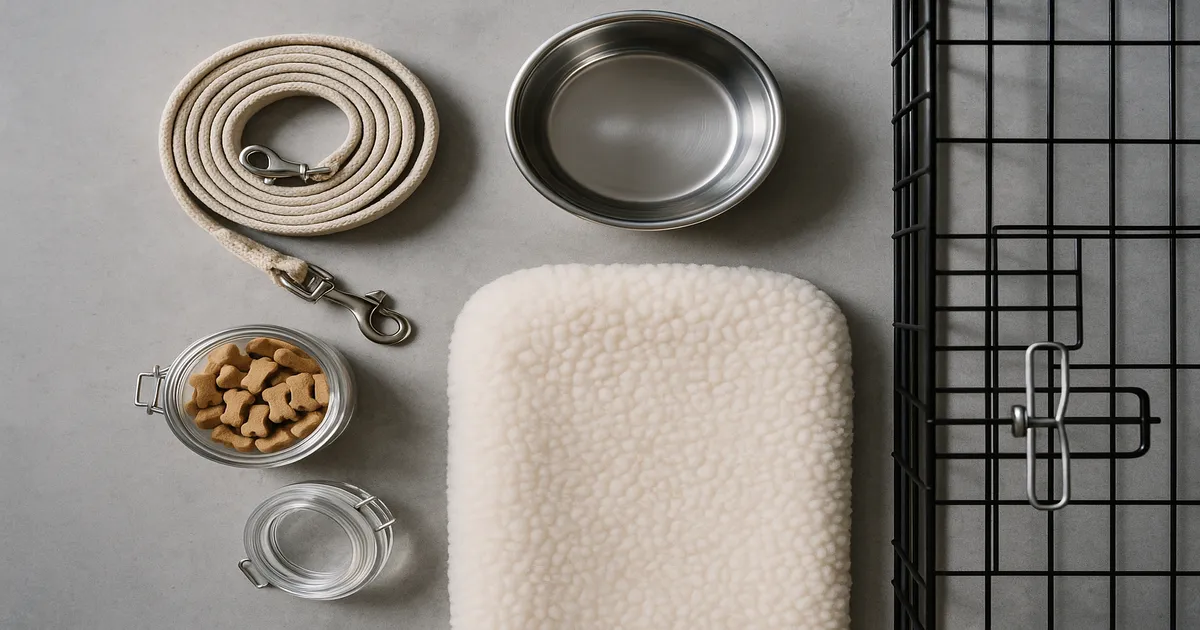
Wire crates are the most versatile choice for most puppies — great ventilation, collapsible for storage, and most come with a divider panel. A well-made option like the MidWest Homes for Pets iCrate fits this bill well. Plastic or airline-style crates feel more den-like because of the solid walls, which some puppies genuinely prefer, and they’re the right call for travel. Soft-sided crates look appealing but are only appropriate for dogs who are already reliably calm in a crate — a determined puppy will chew or claw their way out in minutes.
For flat-faced breeds like Bulldogs, Pugs, and French Bulldogs, always choose wire over plastic. These breeds are prone to Brachycephalic Obstructive Airway Syndrome (BOAS) and overheat much faster than other dogs. Never cover their crate with a solid blanket, and keep it away from warm spots in the house.
Step-by-Step Kennel Training Process
Step 1 — Introduce the Crate Without Pressure
Place the crate in a room where your family spends time — not an isolated laundry room. Leave the door open and toss a few treats or a piece of kibble inside. Let your puppy investigate on their own terms. Don’t push them in, don’t block the exit, and don’t make a big deal of it either way.
Step 2 — Feed Meals Near and Inside the Crate
Over the next few days, move your puppy’s food bowl progressively closer to the crate, then just inside the door, then all the way to the back. Meals are powerful positive associations. By the end of this phase, your puppy should be walking in without hesitation.
Step 3 — Practice Short Sessions With the Door Closed
Once your puppy eats comfortably inside, close the door for the duration of the meal — typically 1–2 minutes. Release them calmly when they’re done. No big celebration, no dramatic reunion. Calm in, calm out.
Step 4 — Extend Duration Gradually
Now you start building real crate time. Work up from 5 minutes to 30 minutes to an hour. A stuffed Kong filled with xylitol-free peanut butter or plain yogurt keeps your puppy occupied and turns the crate into a place where good things happen. Always end the session before your puppy starts to panic or whine persistently — ending on distress teaches them that fussing works.
Step 5 — Overnight Crate Training
For the first week or two, place the crate in your bedroom at night. Your puppy can hear and smell you, which dramatically reduces nighttime crying. Use the “one hour per month of age, plus one” rule to estimate how long they can hold their bladder — a 2-month-old needs a potty break roughly every 3 hours. Set an alarm rather than waiting for crying.
Building a Kennel Training Schedule
Sample Daily Schedule by Age
8–12 weeks
- 6:00 AM — Wake up, immediate potty break
- 6:15 AM — Meal, short play
- 7:00 AM — Crate nap (1–1.5 hours)
- 8:30 AM — Potty, play
- Repeat every 1.5–2 hours through the day
- 4 meals total; crate overnight with 1–2 nighttime potty breaks
3–4 months: 3 meals per day; crate stretches of 2–3 hours; potty break every 2–3 hours
4–6 months: 3 meals per day; crate stretches of 3–4 hours; potty break every 3–4 hours
6–12 months: 2–3 meals per day; crate stretches up to 4–5 hours; most puppies sleep through the night by 4–5 months
How Long Can a Puppy Stay in a Crate?
The guideline is one hour per month of age during the day, with a practical maximum of 4–5 hours for adult dogs. A 3-month-old puppy shouldn’t be crated for more than 3 hours at a stretch. Exceeding these limits doesn’t just cause accidents — it causes frustration and can create a negative association with the crate that’s hard to undo.
Scheduled meals are equally important. Free-feeding makes elimination unpredictable, which makes housetraining nearly impossible. Feed at set times and you’ll know almost exactly when your puppy needs to go outside. The last meal of the day should be 3–4 hours before bedtime, and water can be picked up 1–2 hours before sleep (check with your vet, especially in warm climates or for very active puppies).
Exercise and Enrichment Before Crate Time
The 5-Minute Rule
Veterinary consensus recommends 5 minutes of structured exercise per month of age, up to twice daily. A 3-month-old gets 15 minutes of leash walking at a time. Puppies’ growth plates don’t fully close until 12–18 months (up to 24 months in giant breeds), and over-exercising before that point can cause lasting joint damage.
Here’s something many new owners underestimate: a 15-minute training session can tire a puppy as effectively as a 30-minute walk. Mental fatigue is real. Before crate time, try a snuffle mat that engages natural foraging instincts , a puzzle feeder (Nina Ottosson Dog Tornado), or a short 3–5 minute obedience session. Border Collies, Poodles, and German Shepherds especially need mental work daily — physical exercise alone won’t prevent crate frustration in these breeds.
Common Kennel Training Problems and How to Fix Them
Puppy Crying and Whining in the Crate
Some whining at the start is completely normal — it’s protest, not panic. If your puppy whines briefly and then settles, ignore it. Rushing in to comfort them teaches them that noise gets results. However, if whining escalates and doesn’t stop after 20–30 minutes, reassess: the session may be too long, the introduction too rushed, or your puppy may genuinely need a potty break.
Accidents Inside the Crate
Before assuming it’s a training problem, rule out a medical cause. UTIs are common in puppies and cause an inability to hold the bladder — a previously clean puppy suddenly having accidents warrants a vet call. Also check that the crate isn’t too large. If there’s room to eliminate in one corner and sleep in another, many puppies will use it.
Puppy Refusing to Enter the Crate
Never force your puppy into the crate. If they’re refusing, you’ve moved too fast. Go back to Step 1 — door open, treats scattered inside, zero pressure. Upgrade to higher-value rewards like small pieces of cooked chicken. Shorter, more frequent positive sessions rebuild the association faster than longer ones.
True Separation Anxiety vs. Normal Protest
Normal protest whining peaks quickly and fades as the puppy settles. True separation anxiety looks different: sustained escalating panic, self-injury (bloody paws from scratching), and an inability to settle even when the owner is visible. Clinical separation anxiety affects an estimated 17% of dogs and requires a veterinary behaviorist — crate training alone won’t resolve it and can make things worse without proper guidance.
Health and Safety Inside the Crate
A few quick checks before you close that door:
- Bedding: Use a washable, chew-resistant mat. For puppies prone to joint issues or large breeds, orthopedic foam padding adds meaningful comfort and can improve crate acceptance.
- Placement: Keep the crate in a family area during the day, in your bedroom at night. Avoid heat vents, radiators, and direct sunlight — overheating is a real risk, especially for flat-faced breeds.
- Medical red flags: UTIs, intestinal parasites (Giardia, Coccidia), and hip or elbow dysplasia can all look like crate training failure. If something feels “off,” a vet visit before doubling down on training is always the right call.
Frequently Asked Questions About Kennel Training a Puppy
How long does it take to kennel train a puppy?
Most puppies show real comfort with their crate within 1–3 weeks of consistent, positive training. Puppies introduced during the socialization window (3–14 weeks) typically adapt fastest. Independent or anxious breeds may take longer, but almost every puppy can be successfully crate trained with patience.
Should I put my puppy in a crate at night?
Yes — overnight crating is one of the most effective housetraining tools you have. Place the crate in your bedroom initially so your puppy can hear and smell you. Young puppies need a potty break every 2–3 hours overnight, so set an alarm rather than waiting for crying. Most puppies can sleep through the night by around 4–5 months of age.
How do I stop my puppy from crying in the crate?
Make sure the session isn’t too long for their age, and that they’ve had exercise and a potty break beforehand. Brief protest whining is normal — don’t rush in, as this rewards the behavior. If whining is sustained and escalating rather than tapering off, the crate may be too large, the introduction too rushed, or your puppy may need more gradual duration-building.
How long can a puppy stay in a crate during the day?
One hour per month of age — so a 3-month-old shouldn’t be crated for more than 3 hours at a stretch. The practical maximum for adult dogs is around 4–5 hours. Exceeding these limits leads to accidents, frustration, and negative associations that are hard to reverse.
Is it cruel to kennel train a puppy?
When done correctly, no — it’s one of the most humane things you can do for a puppy. Dogs are den animals by instinct, and a properly sized crate provides genuine security. What is harmful is using the crate as punishment, leaving a puppy inside for excessive periods, or skipping the gradual introduction process. A well-crate-trained dog typically seeks out their crate voluntarily for rest.