Quick Answer: Caring for a 3-month-old Malamute puppy in a hot climate takes deliberate management — but it’s absolutely doable. Keep exercise to cool early-morning and evening hours, never shave the coat, provide constant access to fresh water and shade, limit walks to 15 minutes twice daily, and schedule a vet visit within the first week.
Caring for a 3-month-old Malamute puppy in a hot climate is one of the more demanding things you can take on as a dog owner — but thousands of people do it successfully every year. The key is understanding why this breed is vulnerable to heat and building your daily routine around that reality from day one.
Can a 3-Month-Old Malamute Thrive in a Hot Climate?
Yes — with the right setup. Malamutes are adaptable dogs, and a well-managed hot-climate life beats a poorly managed cool one. What you cannot do is ignore the heat and hope for the best.
Key priorities at a glance:
- Never shave the coat — it insulates against heat, not just cold
- Exercise only before 8 AM or after 6 PM — no outdoor activity from 10 AM–4 PM
- 15-minute walks, twice daily maximum — growth plates are still open
- Fresh, cool water at all times — add ice cubes during peak heat
- Vet visit within the first week — establish a baseline and discuss PennHIP screening
Understanding Your Malamute Puppy’s Arctic Heritage
The Alaskan Malamute is one of the oldest sled dog breeds on earth, developed over thousands of years by the Mahlemut Inuit people of northwestern Alaska. These dogs hauled heavy freight across Arctic terrain in temperatures as low as -60°F (-51°C). They weren’t pets — they were survival equipment.
That heritage is remarkable, but it comes with a biological reality: every system in your puppy’s body is optimised for cold. Heat dissipation is not a strength of this breed. Acknowledging that upfront will shape every decision you make.
Size and growth at 3 months: Adult males reach about 85 lbs (38.5 kg) and 25 inches (63.5 cm) at the shoulder; females typically reach 75 lbs (34 kg) and 23 inches (58.4 cm). Your puppy is growing toward those numbers fast, which is exactly why over-exercise right now can cause lasting orthopedic damage.
Expect intense energy bursts followed by long, deep naps. Don’t mistake the naps for low energy — your puppy is building bone, muscle, and brain simultaneously.
Temperament: Malamutes are pack-oriented, affectionate, and famously independent. That independence isn’t stubbornness — it’s a deeply ingrained survival instinct that helped sled dogs make autonomous decisions in the field. Training requires motivation and creativity, not repetition and volume. They’re also highly vocal (expect howling and “woo-woo” conversations starting now) and have a strong prey drive. Both traits are manageable with early, consistent work.
Heat Safety: How to Care for Your Malamute Puppy in a Hot Climate
Recognising Heat Stress and Heatstroke
Heatstroke can kill a puppy in minutes, and Malamutes are more vulnerable than most breeds. Know these warning signs cold.
Watch for:
- Excessive, frantic panting
- Heavy drooling or thick, ropy saliva
- Glazed or unfocused eyes
- Vomiting or diarrhoea
- Stumbling, weakness, or collapse
- Gums turning bright red, pale, or grey
If you suspect heatstroke: Move your puppy to a cool, shaded area immediately. Apply cool (not ice-cold) water to the paw pads, groin, and neck. Offer small sips of water if they’re conscious. Get to an emergency vet without delay — do not wait to see if they improve on their own.
The 7-Second Pavement Test
Pavement absorbs and radiates heat well beyond the air temperature. At 77°F (25°C) ambient, asphalt can reach 125°F (52°C) — hot enough to cause burns in 60 seconds. Press the back of your hand flat on the pavement and hold it for 7 seconds. If you pull away before the count is up, it’s too hot for your puppy’s paws. Stick to grass, dirt paths, or shaded surfaces.
Creating a Cool Environment
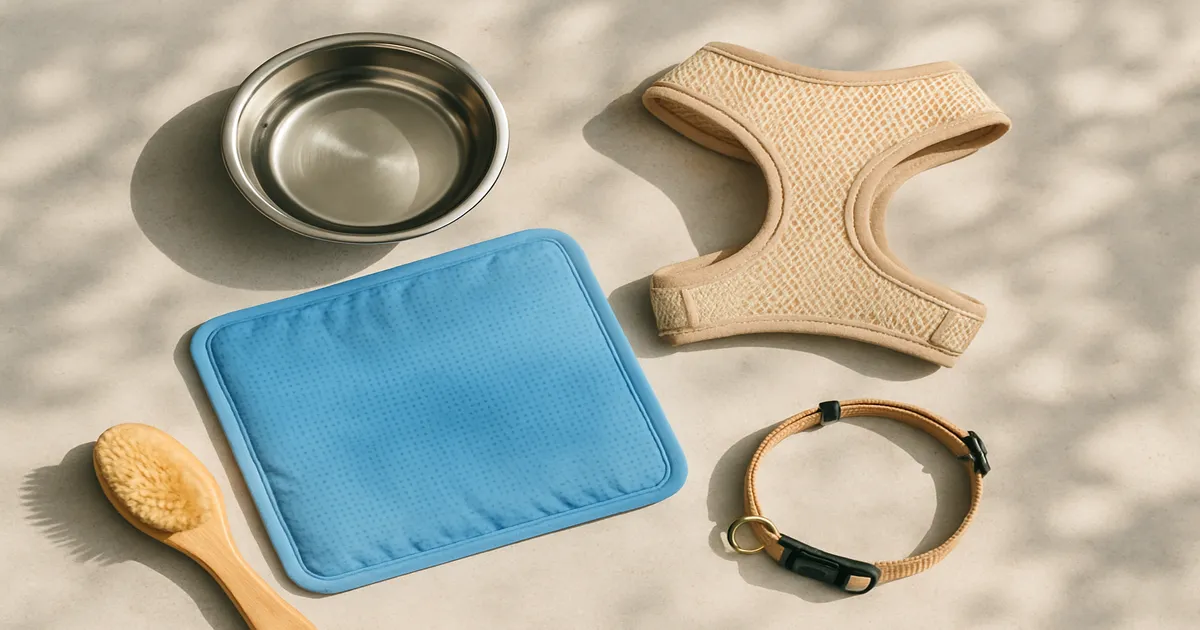
Air conditioning is a necessity for a Malamute in a hot climate, not a luxury. Keep indoor temperatures at or below 75°F (24°C) during the hottest months. Add cooling mats at your puppy’s favourite rest spots (Green Pet Shop Self-Cooling Pet Pad) and elevated cots that allow airflow underneath . A box fan positioned at floor level makes a real difference. Outdoors, natural tree shade is best, but a shade sail works well if you don’t have it.
Keep your puppy completely indoors between 10 AM and 4 PM. No exceptions.
Hydration
A rough guideline is 1 oz of water per pound of body weight per day — but in hot weather your puppy will need considerably more. Keep at least two water stations available, one indoors and one in any outdoor area they access. Drop ice cubes into the bowl during peak heat, rinse and refill at least twice daily (warm, stale water gets ignored), and freeze low-sodium chicken broth in ice cube trays for a hydrating treat.
Exercise Guidelines for a Hot-Climate Malamute Puppy
Growth Plates: Why This Matters So Much
Malamute growth plates don’t close until 18–24 months. Before they close, the cartilage at the ends of the long bones is soft and vulnerable. Forced, repetitive, or high-impact exercise during this window can permanently damage joints and worsen genetic predispositions to hip dysplasia and OCD. This isn’t overprotective advice — it’s basic puppy physiology.
The widely accepted guideline is 5 minutes of structured leash walking per month of age, twice daily. At 3 months, that’s 15 minutes per session, twice a day — and that’s the ceiling, not the target. Free play in a safely fenced yard is fine because your puppy self-regulates; it’s sustained, forced exercise that causes damage.
What’s Safe at 3 Months
Allowed:
- Short flat walks on grass or shaded paths before 8 AM or after 6 PM
- Free play in a fenced yard during cool hours
- Supervised shallow-water swimming — great for joints and temperature regulation
- Gentle fetch and tug on soft grass
Avoid entirely:
- Jogging, hiking, or any sustained running
- Repeated stair climbing or jumping on/off furniture
- Walking on hot pavement or concrete
- Any outdoor activity between 10 AM and 4 PM
Sample Daily Routine
| Time | Activity | Duration |
|---|---|---|
| 6:00 AM | Morning walk (coolest part of day) | 15 min |
| 7:00 AM | Breakfast + Kong or puzzle feeder | 20 min |
| 9:00 AM | Indoor training session | 10 min |
| 12:00 PM | Indoor play + frozen enrichment toy | 20 min |
| 4:00 PM | Indoor training session | 10 min |
| 7:00 PM | Evening walk (after heat breaks) | 15 min |
| 8:00 PM | Dinner + calm indoor play | — |
Mental Stimulation Indoors
A mentally understimulated Malamute will redecorate your home — and not in ways you’ll appreciate. During the long indoor hours of a hot-climate day, mental enrichment is what keeps your puppy sane and out of trouble.
Rotate through these to keep things fresh:
- Frozen Kongs stuffed with xylitol-free peanut butter or wet food (Kong Classic Dog Toy)
- Snuffle mats and lick mats for nose work
- Puppy puzzle feeders at Level 1 difficulty (Nina Ottosson Dog Brick)
- 5–10 minute training sessions covering sit, stay, recall, and leash manners — these tire a puppy out faster than a walk
- Scent games: hide kibble or treats around the house for your puppy to find
Grooming Your Malamute’s Double Coat in Hot Weather
Never Shave a Malamute
This is the most common mistake hot-climate owners make, and it’s genuinely harmful. The double coat works as insulation in both directions — the dense undercoat traps a layer of cool air against the skin while the guard hairs reflect UV radiation. Shaving removes that protection entirely. It can also trigger post-clipping alopecia, where the coat grows back patchy, with incorrect texture, or not at all. Leave the coat alone.
At 3 months your puppy still has a soft, fluffy single-layer coat. The adult double coat develops between 6 and 18 months and can look a bit messy during the transition — that’s completely normal. The puppy coat is already prone to matting behind the ears, in the armpits, and around the hindquarters, so start brushing now.
Brushing and Bathing
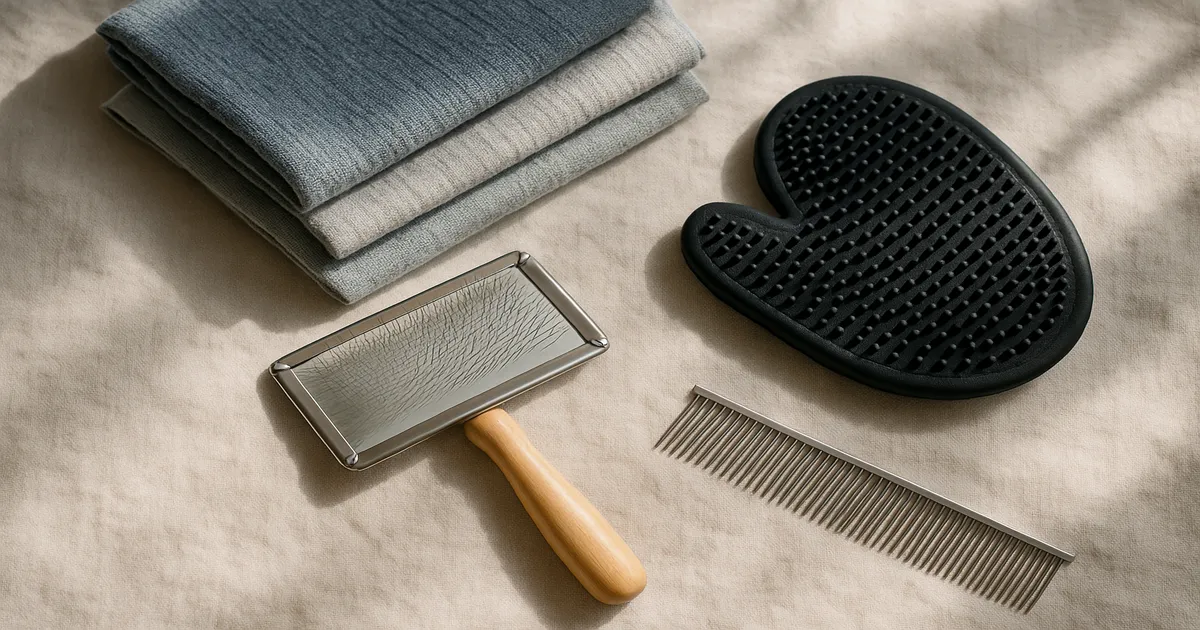
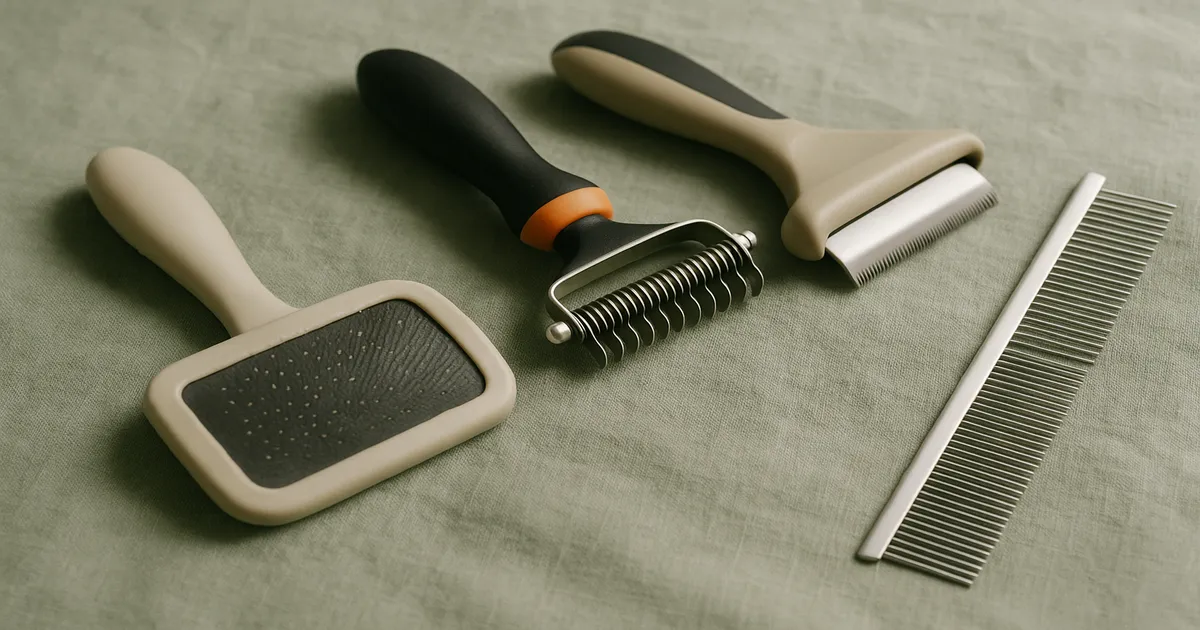
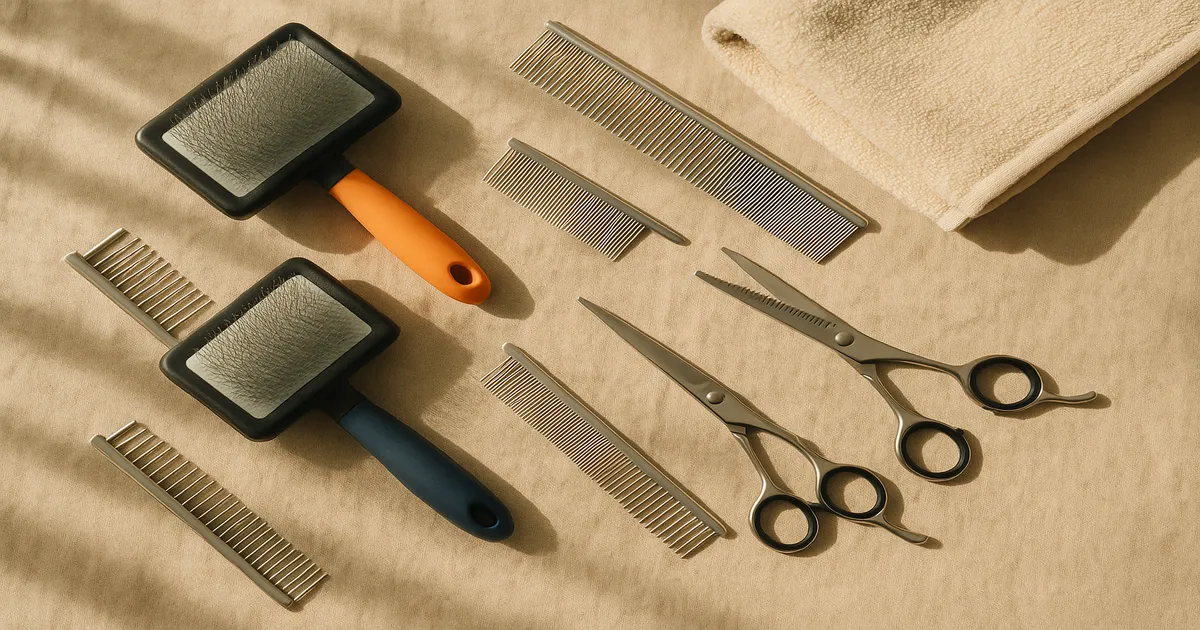
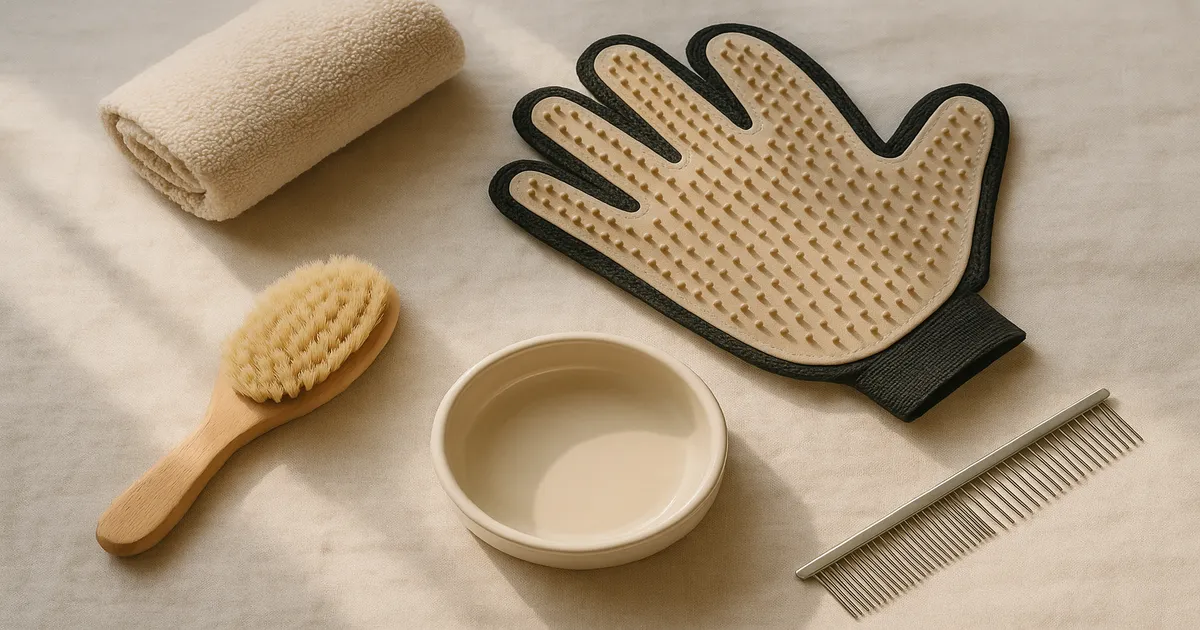
Brush 3–4 times per week at this stage to prevent mats and get your puppy comfortable with grooming before the adult coat arrives. Use an undercoat rake for density (Chris Christensen Butter Comb) and a slicker brush for surface finishing . Always lightly mist a dry coat with water or detangling spray before brushing to prevent breakage.
In a hot climate, bathe every 4–6 weeks rather than the standard 6–8. The extra frequency removes allergens, sweat residue, and the skin irritants that heat and humidity accumulate. The single most important rule: dry the coat completely. A damp undercoat breeds hot spots, bacterial infections, and a musty “coat funk” from yeast overgrowth. Use a high-velocity pet dryer and budget 1–3 hours for the full process .
Check and clean ears every 2–4 weeks — hot, humid conditions raise the risk of yeast and bacterial infections. Watch for odour, redness, or excessive scratching. Trim nails every 3–4 weeks and start paw-handling desensitisation now.
Health Issues to Watch in a Hot-Climate Malamute Puppy
Hip dysplasia affects approximately 19–22% of Malamutes tested by the OFA. Keep your puppy lean, avoid high-impact exercise, and feed a large-breed puppy formula that controls calcium and phosphorus ratios. PennHIP evaluation can be done as early as 16 weeks — ask your vet about timing.
OCD (osteochondritis dissecans) typically appears as lameness in one front leg around 4–8 months, linked to rapid growth and calcium over-supplementation. Panosteitis — sometimes called “growing pains” — causes shifting leg lameness between 5 and 18 months. It’s self-limiting but painful enough to warrant vet-prescribed pain management.
Zinc-responsive dermatosis is a Malamute-specific genetic condition causing crusty, scaly lesions around the face, muzzle, and paw pads. Heat stress can trigger or worsen flare-ups. If you notice crusty skin around your puppy’s nose or eyes, see your vet — zinc supplementation is effective but must be vet-guided.
Day blindness (cone degeneration) impairs vision in bright light. In a sunny climate this is more than academic — a dog that can’t see well outdoors is disoriented and stressed. A genetic test is available; ask your breeder for documentation.
Alaskan Malamute Polyneuropathy (AMPN) causes progressive weakness and exercise intolerance, with symptoms typically appearing between 3 and 18 months. Reputable breeders test breeding pairs. If your puppy shows unusual weakness or stumbling beyond what the heat explains, raise AMPN with your vet.
Hypothyroidism is common in the breed and affects metabolism, coat quality, and energy levels. It’s manageable with daily medication once diagnosed. Schedule a vet visit within your puppy’s first week — establish a baseline, confirm vaccination schedules, and address parasite prevention for your specific climate. With good care, Malamutes live 10–14 years.
Feeding Your 3-Month-Old Malamute in a Hot Climate
Feed a large-breed puppy formula — this matters more than most owners realise. These foods control calcium and phosphorus ratios, which directly affect bone development. Regular puppy food can drive the rapid bone growth linked to OCD and hip dysplasia. Look for an AAFCO statement confirming the food is complete and balanced for large-breed puppies . Do not add calcium supplements unless your vet explicitly prescribes them.
At 3 months, feed 3–4 small meals daily to support steady energy, reduce bloat risk, and match your puppy’s small stomach capacity. Follow the feeding guide on your chosen food as a starting point, then adjust based on body condition — you should be able to feel (but not easily see) the ribs.
Xylitol warning: If you’re using peanut butter in frozen Kongs, check the label. Xylitol is toxic to dogs and increasingly common in “natural” peanut butter brands. Plain, unsalted peanut butter with no added sweeteners is safe.
To boost hydration during hot weather, mix a spoonful of wet food into kibble, offer frozen low-sodium broth ice cubes alongside meals, and consider water-rich toppers like plain cooked chicken or cucumber slices.
Training and Socialisation at 3 Months
Act Now — The Socialisation Window Is Closing
The primary socialisation window closes around 14 weeks. At 3 months, you have a narrow runway left. Expose your puppy to as many new people, sounds, surfaces, animals, and environments as possible — and make every experience positive with treats and calm praise. Gaps in socialisation at this stage are genuinely hard to fill later.
Training a Malamute: What Actually Works
Malamutes are intelligent dogs with a clear “what’s in it for me?” approach to compliance. Force-based methods backfire badly with this breed — they either shut down or push back. Positive reinforcement (reward what you want, redirect what you don’t) is not just the kindest approach; it’s the most effective one.
Keep sessions short — 5 to 10 minutes maximum — and end on a success. Priority behaviours at this age are recall, sit, stay, and loose-leash walking. A solid recall is especially important for a breed with a strong prey drive. Practice it daily, indoors and out, and make coming back to you the best thing that happens in your puppy’s day.
Frequently Asked Questions
Can a Malamute puppy live outside in a hot climate? No. A 3-month-old Malamute should live indoors with air conditioning. Brief supervised outdoor time during cool hours is fine, but this breed cannot safely spend extended time outside in heat. Even adult Malamutes in hot climates need reliable indoor access.
How do I know if my Malamute puppy is too hot? Watch for heavy panting that doesn’t slow down after rest, drooling more than usual, glazed eyes, or reluctance to move. If you see any of these signs, move your puppy indoors immediately, offer cool water, and contact your vet if symptoms don’t resolve within a few minutes.
Should I get a paddling pool for my Malamute puppy? Yes — a shallow paddling pool is one of the best investments you can make. Many Malamutes love water, and supervised splashing is excellent for cooling down and gentle joint-friendly exercise. Keep the water shallow (belly height), change it daily, and always supervise.
When can I increase my Malamute’s exercise? Gradually, as your puppy grows. The 5-minutes-per-month rule applies until growth plates close — typically 18–24 months for this breed. At 6 months you can move to 30-minute sessions; at 12 months, 60 minutes. Always adjust for heat and watch for signs of fatigue.
Is it safe to take my Malamute puppy to puppy classes in summer? Yes, provided the classes are held indoors with air conditioning. Puppy classes are one of the best socialisation tools available, and the mental stimulation is valuable. Avoid outdoor classes during warm months, and always bring water.