Quick Answer: The average dog sheds somewhere between 5 and 100+ grams of fur per week indoors, depending on breed, season, and health. A 65 lb Labrador drops roughly 10–20 grams weekly under normal conditions and up to 100 grams during a seasonal coat blow. How much pet hair dogs shed indoors per week varies widely, but smart grooming, nutrition, and home management can cut visible fur by more than half.
If you’ve ever pulled a dust bunny from under the sofa and wondered whether your dog is molting or just dramatically expressing itself, you’re not alone. Dog shedding is one of the most common complaints among pet owners — and one of the least understood. The actual numbers might surprise you.
How Much Pet Hair Do Dogs Shed Indoors Per Week?
Veterinary dermatology research suggests the average medium-to-large dog sheds approximately 50–100 milligrams of hair per kilogram of body weight per day. Run that math across a week and the figures become genuinely eye-opening.
| Breed | Typical Weight | Est. Weekly Shed (Normal) | Est. Weekly Shed (Peak Blow) |
|---|---|---|---|
| Siberian Husky | 45–60 lbs (20–27 kg) | 15–30 g | 50–150 g |
| German Shepherd | 50–90 lbs (23–41 kg) | 12–25 g | 40–120 g |
| Labrador Retriever | 55–80 lbs (25–36 kg) | 10–20 g | 30–100 g |
| Golden Retriever | 55–75 lbs (25–34 kg) | 10–20 g | 30–100 g |
| Beagle | 20–30 lbs (9–14 kg) | 5–10 g | 15–30 g |
| Pembroke Welsh Corgi | 25–30 lbs (11–14 kg) | 6–12 g | 20–50 g |
| Standard Poodle | 40–70 lbs (18–32 kg) | 1–3 g | 1–3 g |
| Basenji | 22–24 lbs (10–11 kg) | <1 g | <2 g |
For scale: a standard cotton ball weighs about 0.5 grams. During a peak coat blow, a Labrador may shed the equivalent of 60–200 cotton balls in a single week. That’s not hyperbole — that’s just Tuesday.
Important caveat: No large-scale peer-reviewed study has precisely quantified weekly indoor fur deposition across breeds under controlled household conditions. These figures are well-informed estimates drawn from veterinary dermatology literature and hair growth cycle research — not laboratory-confirmed measurements.
The raw gram count only tells part of the story. Fine, light fur from a Samoyed becomes airborne and settles on every surface. Short, coarse Lab fur embeds itself in upholstery and resists vacuuming. Breed, coat type, season, health, and grooming routine all shift the real-world number dramatically — which is what the rest of this article unpacks.
Why Dogs Shed: The Biology Behind the Fur
The Four Phases of the Canine Hair Growth Cycle
Every strand of your dog’s fur passes through four distinct phases:
- Anagen (Active Growth): Hair grows actively from the follicle. How long this phase lasts determines maximum coat length — it’s why Poodles grow long coats while Beagles stay short.
- Catagen (Transition): Growth slows and the follicle begins to shrink. This phase lasts days to weeks.
- Telogen (Resting): The hair is fully grown but still attached. The follicle sits dormant, sometimes for months.
- Exogen (Shedding): The old hair releases and falls out. New anagen growth begins simultaneously.
In low-shedding breeds like Poodles and Bichons, the anagen phase is extraordinarily long and the exogen phase is minimal — hairs simply don’t reach the point of shedding very often. In double-coated breeds, the cycle is faster and more synchronized, which is why the fur seems to arrive all at once.
Seasonal Coat Blow vs. Year-Round Shedding
Double-coated breeds evolved to sync their exogen phase with changes in daylight (photoperiod) and temperature. When day length shifts in spring and fall, thousands of follicles enter the exogen phase simultaneously — that’s the “coat blow” that leaves Husky owners questioning their life choices. It’s not a malfunction; it’s an ancient temperature-regulation mechanism inherited from wild canid ancestors.
Here’s the twist: dogs kept indoors under artificial lighting and climate control often lose those clear seasonal cues. Without distinct photoperiod signals, the hair growth cycle becomes less synchronized. Instead of two dramatic seasonal blows, many indoor dogs shed more continuously year-round — lighter than a true coat blow, but it never really stops.
How Much Fur Do Dogs Shed Per Week? A Breed-by-Breed Breakdown
Extreme Shedders: Huskies, Malamutes, and Samoyeds
These Arctic breeds were built for brutal winters, and their coats reflect that. A Siberian Husky carries a dense two-layer coat that insulates in temperatures as low as -60°F. During normal periods, expect 15–30 grams of shed fur per week. During coat blow, that number can hit 50–150 grams — a volume that feels almost physically impossible until you’re pulling it off the carpet in sheets.
Alaskan Malamutes and Samoyeds follow a similar pattern. The Samoyed’s famously fluffy white coat sheds in tufts that float through the air and collect in corners like snowdrifts.
Heavy Shedders: German Shepherds, Labs, and Golden Retrievers
German Shepherds are sometimes called “German Shedders” by their devoted owners — and not without reason. The AKC notes the breed sheds year-round and heavily twice a year. Labs and Goldens aren’t far behind; both carry dense, water-resistant double coats that shed consistently. Since the Labrador Retriever held the top spot on the AKC popularity list for 31 consecutive years, there’s more Lab fur in American homes than from any other breed.
Moderate Shedders: Beagles, Corgis, and Boxers
Beagles shed a steady 5–10 grams per week year-round — not dramatic, but persistent. Pembroke Welsh Corgis look fluffy and are surprisingly heavy shedders for their size, particularly during seasonal transitions. Boxers have short, smooth coats and shed less visibly, though the short hairs they do drop tend to weave themselves into fabric and resist removal.
Low and Minimal Shedders: Poodles, Bichons, and Basenjis
Standard Poodles may shed as little as 1–3 grams per week — roughly 10 to 50 times less than a comparably sized Husky at peak shedding. Their single-layer curly coat grows continuously rather than cycling through rapid exogen phases. Bichon Frisés and Basenjis are similarly low-maintenance from a shedding standpoint, though Bichons require regular clipping to prevent matting.
What Triggers Heavier Shedding?
Seasonal Changes
Even in indoor dogs, the shift from winter to spring remains the single biggest shedding trigger. Longer days signal the body to release the dense winter undercoat. If your dog’s shedding spikes in March or October, that’s biology doing exactly what it should.
Stress and Cortisol
Cortisol — the primary stress hormone — accelerates the telogen and exogen phases of the hair growth cycle. Anxious dogs, chronically under-stimulated dogs, and dogs experiencing situational stress (vet visits, thunderstorms, new environments) shed measurably more than their relaxed counterparts. If your dog’s shedding seems tied to emotional state, that’s not a coincidence.
Health Conditions That Cause Abnormal Fur Loss
Some shedding is a symptom, not just a nuisance. Conditions that can cause abnormal fur loss include:
- Hypothyroidism — one of the most common causes of excessive shedding in middle-aged dogs
- Allergies (environmental or food-related) — often accompanied by skin irritation or itching
- Parasites — fleas, mites, and mange cause localized or generalized hair loss
- Cushing’s disease — elevated cortisol from an adrenal or pituitary tumor causes symmetrical hair thinning
See a vet if you notice: patchy bald spots, inflamed or flaky skin, a sudden dramatic increase in shedding outside of coat blow season, or shedding accompanied by lethargy or weight changes.
Nutrition and Coat Quality
A dog on a poor-quality diet will shed more than the same dog on a nutritionally complete one. Hair is made primarily of keratin, a structural protein, so adequate dietary protein is the foundation of coat health. Deficiencies in omega-3 fatty acids, zinc, or biotin can cause brittle, weakened hairs that shed prematurely. Improving nutrition often produces a visible reduction in shedding within 8–12 weeks. Adding a daily omega-3 supplement can make a noticeable difference for heavy shedders. (Zesty Paws Pure Wild Alaskan Salmon Oil)
Grooming Strategies That Genuinely Reduce Indoor Fur
How Often Should You Brush a Heavy Shedder?
- Double-coated breeds during shedding season: 3–7 times per week
- Double-coated breeds during maintenance periods: 2–3 times per week
- Short-coated moderate shedders (Beagle, Boxer): 1–2 times per week
- Low-shedding single-coat breeds: Weekly to fortnightly
Consistency matters more than duration. A 10-minute session three times a week beats a 45-minute marathon once a month.
The Best Deshedding Tools for Double-Coated Breeds
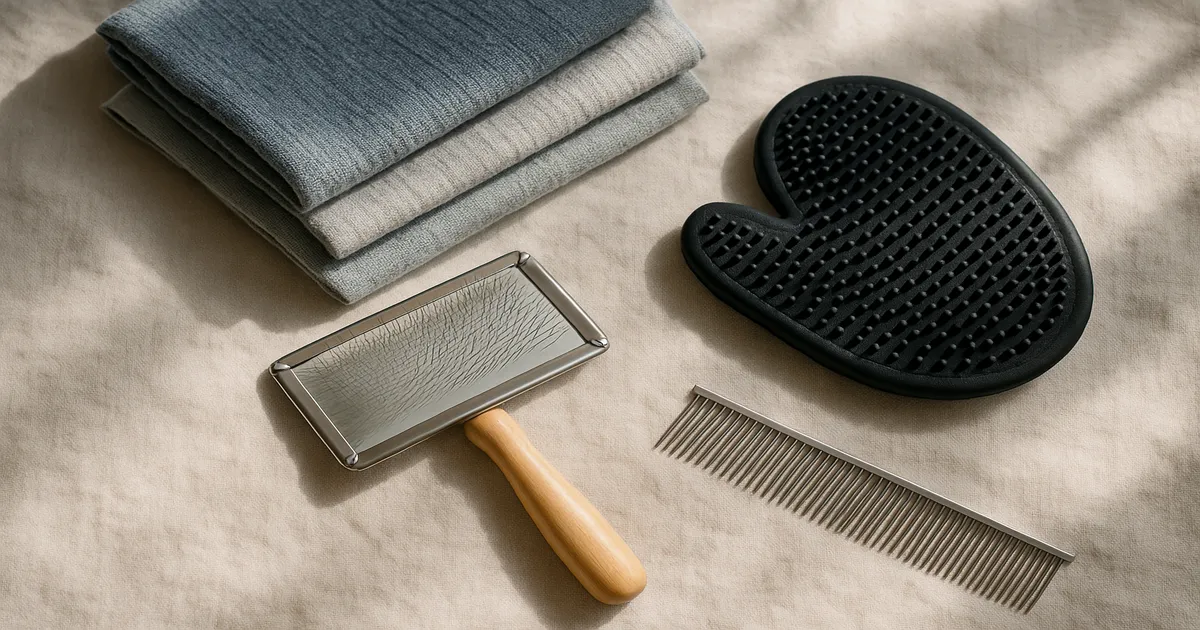
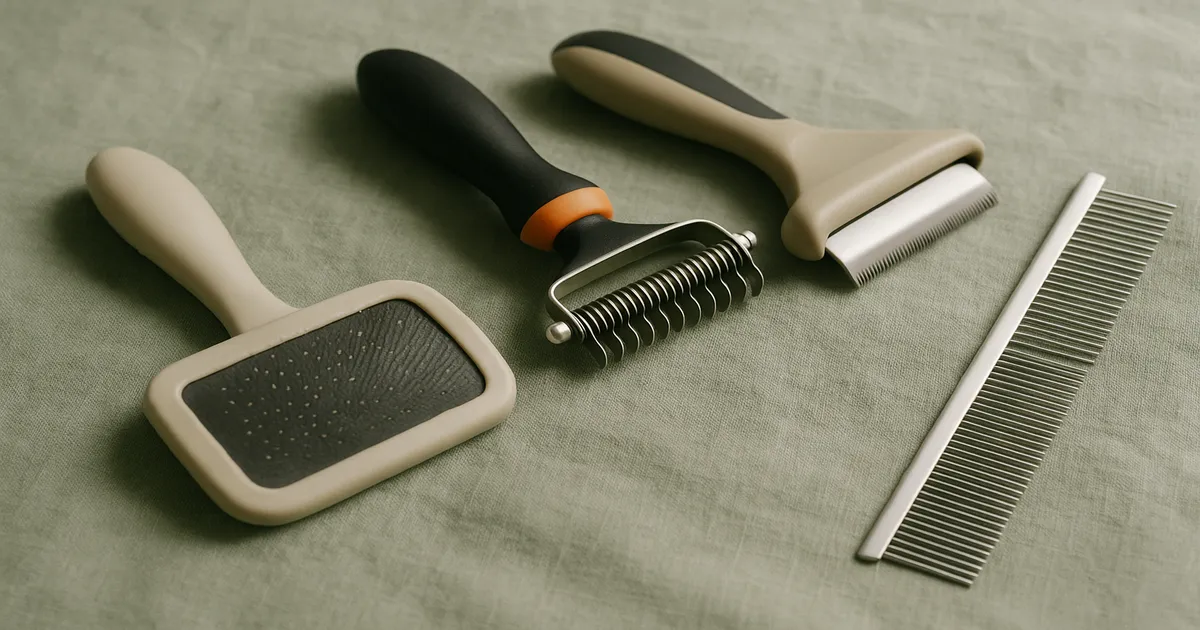
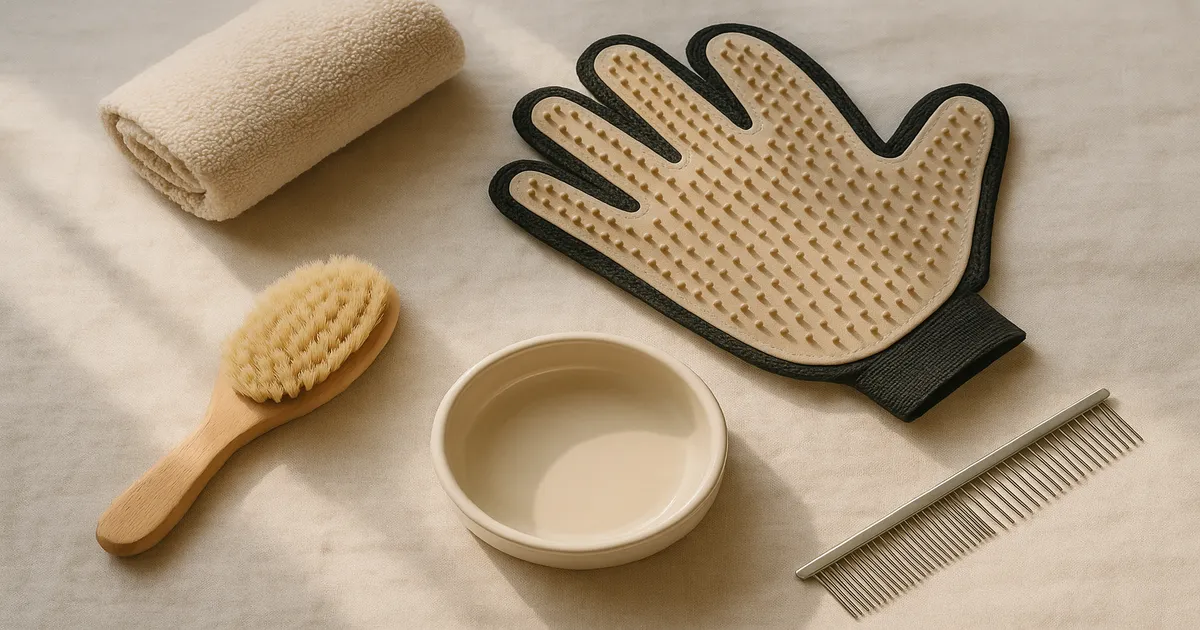
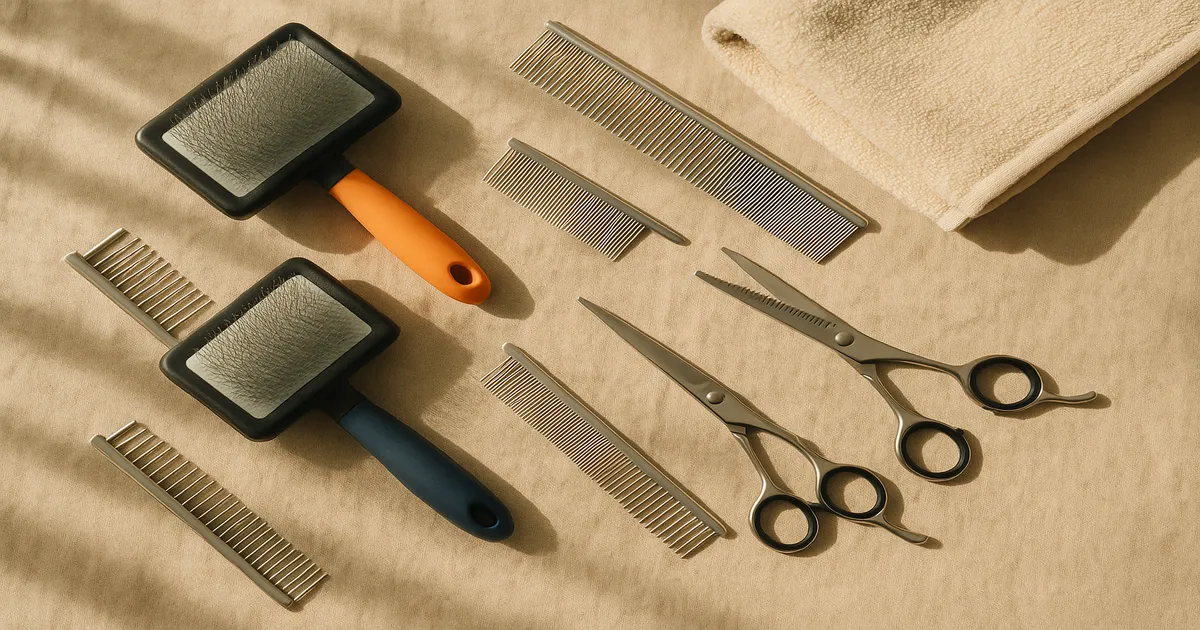
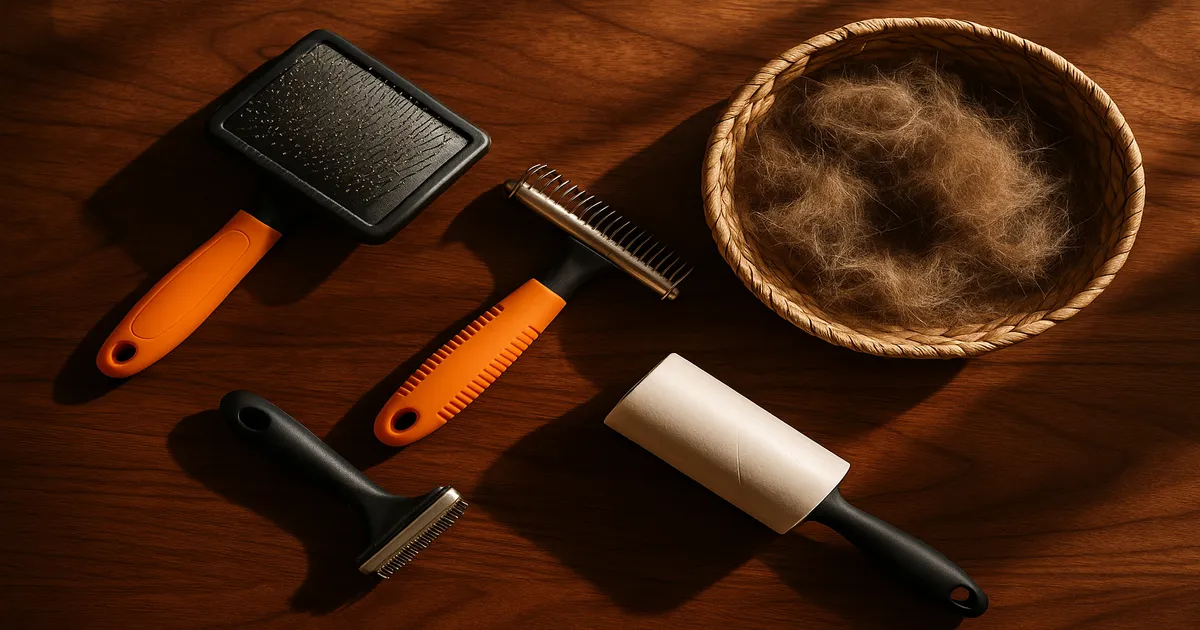
The right tool makes an enormous difference. An undercoat rake reaches through guard hairs to pull out loose undercoat — essential for Huskies and Malamutes. A slicker brush removes surface tangles and loose guard hairs and works well for daily maintenance. Groomer surveys suggest that regular deshedding tool use reduces loose fur by 60–80%; some manufacturers claim up to 90% with correct technique.
Bathing Routines That Remove Dead Undercoat
Water penetrates the undercoat in a way that dry brushing simply can’t. A warm bath loosens dead fur from the follicle, making the post-bath brush-out far more effective. For heavy shedders, bathing every 4–6 weeks with a deshedding shampoo and conditioner — followed immediately by a thorough brush-out — can remove more undercoat in one session than weeks of dry brushing alone.
Groom Outdoors Whenever Possible
This sounds obvious but is widely ignored: brush your dog outside. Every strand of fur you remove outdoors is a strand that never enters your home. Birds will often use the collected fur for nesting material, which is a pleasant bonus. Make outdoor brushing a non-negotiable habit during coat blow season and you’ll notice an immediate difference indoors.
Managing Pet Hair Indoors: Practical Strategies
Vacuuming Frequency and the Right Equipment
Heavy shedders warrant vacuuming every day or every other day — weekly simply isn’t enough to stay ahead of the accumulation. Look for a vacuum with a motorised brush roll (essential for pulling embedded short hairs from carpet), strong suction, and HEPA filtration. (Dyson Ball Animal 3) Canister vacuums often outperform uprights on hard floors, while uprights with motorised heads tend to win on carpet.
Air Purifiers for Airborne Fur and Dander
Vacuuming handles what’s on the floor, but fine fur particles and dander become airborne and circulate continuously. A HEPA air purifier in the main living area captures these particles before they settle on surfaces — especially valuable for anyone in the household with allergies.
Furniture Covers and Quick-Clean Hacks
A washable throw over your dog’s favourite spot is the single most effective furniture strategy. When it’s covered in fur, toss it in the wash. Designating specific “dog zones” and rewarding your dog for using a comfortable bed there reduces the surface area you need to clean.
For quick cleanups:
- A rubber glove dampened with water and rubbed across upholstery pulls fur off fabric better than most lint rollers
- A damp sponge works similarly on hard surfaces
- Dryer sheets rubbed over furniture create a light static charge that lifts fine hairs before vacuuming
- Keep a lint roller near the front door for a quick pass before leaving the house
Wash dog bedding at least once a week — twice during heavy shedding seasons. Use 140°F (60°C) to remove fur, dander, and bacteria effectively, and shake the bedding outside before loading it into the machine.
Frequently Asked Questions
Q: Is it normal for my dog to shed year-round? Yes, especially for indoor dogs. Artificial lighting and stable indoor temperatures disrupt the natural photoperiod signals that trigger distinct seasonal coat blows. The result is lower-level, continuous shedding rather than two dramatic seasonal events.
Q: Can I stop my dog from shedding completely? No. All dogs shed to some degree — even “hypoallergenic” breeds like Poodles and Bichons shed minimally. You can significantly reduce the amount of fur that ends up in your home through consistent grooming, good nutrition, and regular vacuuming, but you cannot eliminate shedding entirely.
Q: How do I know if my dog is shedding too much? Seasonal increases are normal. See a vet if you notice patchy bald spots, inflamed or flaky skin, a sudden spike in shedding outside of coat blow season, or shedding accompanied by lethargy, weight changes, or excessive scratching.
Q: Does stress really make dogs shed more? Yes. Cortisol accelerates the exogen (shedding) phase of the hair growth cycle. Dogs that are chronically anxious, bored, or under-stimulated shed measurably more than dogs whose physical and mental needs are consistently met. Daily exercise, training sessions, and enrichment toys all help lower baseline stress. (KONG Classic Dog Toy)
Q: What’s the fastest way to reduce pet hair in my home right now? Start brushing your dog outdoors daily, add a HEPA air purifier to your main living area, and put a washable throw over your dog’s favourite furniture spot. Those three changes alone will produce a noticeable improvement within a week.