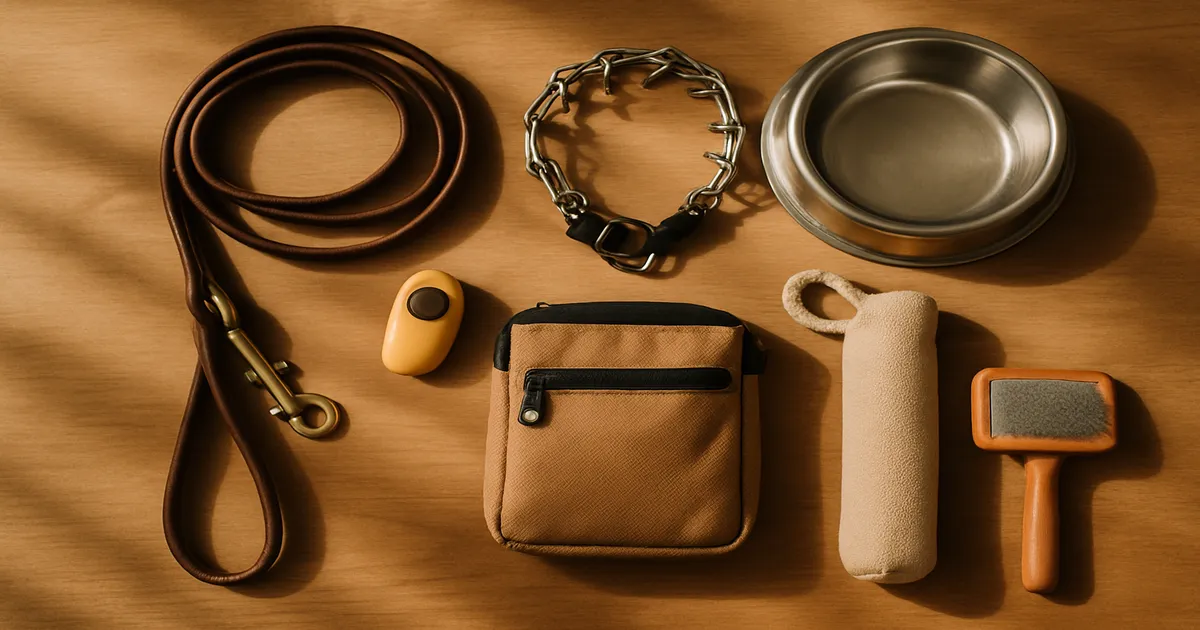
Quick Answer: German Shepherds rank #3 in canine intelligence — behind only the Border Collie and Poodle — and can learn a new command in fewer than 5 repetitions. The best dog training tips for German Shepherds all point to the same foundation: start at 8 weeks, use positive reinforcement consistently, and socialize early. Their intelligence means they pick up bad habits just as fast as good ones, so consistency is everything.
German Shepherds are one of those rare breeds where the ceiling on what you can teach them is set by you, not the dog. You’re working with a breed purpose-built for cooperation with humans — and that’s a genuine advantage. The challenge is that the same intelligence demands structure, patience, and follow-through. Skip those, and your GSD will write their own rules and enforce them.
Dog Training Tips for German Shepherds: The Essentials
What Makes German Shepherds So Trainable?
Dr. Stanley Coren’s research in The Intelligence of Dogs placed the German Shepherd third in canine intelligence. In practical terms, a GSD can learn a new command in under 5 repetitions and will obey a known command on the first attempt 95% of the time or better. That’s why they’re the gold standard for police work, search and rescue, and service dog roles.
That intelligence is a double-edged sword. A GSD that figures out how to open the treat cabinet or manipulate a soft-hearted family member isn’t being cute — it’s being a German Shepherd. They learn what works, and they remember it.
Key principles to start with:
- Begin training the day your puppy comes home (8 weeks old)
- Use positive reinforcement: treats, praise, and play
- Keep sessions short — 10–15 minutes, 3–5 times daily
- Enforce the same rules across every family member
- Combine physical exercise and mental stimulation
Understanding Your German Shepherd Before You Train
Breed History and Working Dog Heritage
Captain Max von Stephanitz began standardizing the German Shepherd Dog in 1899 with a guiding philosophy: “Utility is the true criterion of beauty.” The breed was built to herd, protect, problem-solve independently, and work long hours alongside a handler. When industrialization reduced demand for herding dogs, von Stephanitz pivoted the breed into military and police work — roles where GSDs served extensively in both World Wars.
That heritage matters for training. You’re working with a dog designed to take direction, work hard, and think on its feet. An idle GSD is a frustrated GSD.
How Breed Lines Affect Trainability
Not all German Shepherds are wired the same way. Show lines — particularly American and Canadian lines — tend to be calmer and more forgiving of inconsistent handling. Working lines are a different story.
- West German Working Line: High drive, versatile, widely used in police and military roles
- DDR (East German) Line: Exceptional endurance, heavier build, intense focus
- Czech Working Line: Developed in military kennels; among the highest-drive GSDs available
If you’ve adopted a working-line GSD, expect to provide more structured outlets and more mental engagement. These dogs aren’t harder to train — they’re just less willing to accept a boring routine.
Temperament Traits That Shape Training
Confidence, alertness, loyalty, and curiosity are the traits that make GSDs outstanding working dogs — and the same traits you’ll be working with during training. Their natural aloofness with strangers is a breed standard characteristic, not a red flag. A well-bred GSD doesn’t show indiscriminate friendliness; it simply reserves judgment until trust is established.
Understanding this prevents a common mistake: treating normal caution as fear and over-correcting it. Work with the breed’s nature, not against it.
Core Dog Training Tips for German Shepherds
Start Early: The Puppy Window
The moment your GSD puppy arrives home at 8 weeks, training begins — whether you intend it to or not. Every interaction teaches the puppy something. Sitting before meals, keeping four paws on the floor before the leash goes on, staying calm to earn attention — these micro-lessons compound quickly.
Formal obedience sessions can start at 8 weeks. Keep them short, positive, and fun. A puppy’s attention span is roughly equal to their age in months, so a 2-month-old gets about 2 minutes of focused work before their brain checks out.
Use Positive Reinforcement Consistently
Positive reinforcement — rewarding the behavior you want — is the most effective training method for GSDs. Use high-value treats for new or difficult behaviors, then fade to praise and play as commands become reliable.
- High-value treats: Small pieces of chicken, cheese, or soft training treats like Zuke’s Mini Naturals
- Praise: An enthusiastic verbal marker (“Yes!”) or a clicker, paired with reward
- Play: Tug or fetch as a reward for high-drive dogs — often more motivating than food
Vary your rewards to keep the dog engaged. A GSD that can predict exactly what’s coming will start deciding whether the reward is worth the effort.
Keep Sessions Short and Frequent
Three to five sessions of 10–15 minutes daily beats one 45-minute marathon every time. GSDs learn through repetition, but mental fatigue causes errors. Ending on a failed attempt is demoralizing for the dog and the handler alike.
Always end on a success — even if that means stepping back to an easier command the dog knows cold. Finish with play. The session should be something your dog looks forward to.
Be Consistent Across the Whole Household
“Consistent” means every person in the household enforces the same rules. If one family member lets the dog on the couch and another doesn’t, the GSD will figure out who to charm and who to ignore. Hold a brief family meeting. Write the rules down if it helps. Inconsistency is the number one reason GSDs develop so-called “stubborn” behavior — they’re not being difficult, they’re being logical.
Avoid Harsh or Fear-Based Methods
Punishment-heavy training is counterproductive with German Shepherds specifically. A confident GSD may respond to physical corrections with defensive aggression. A more sensitive dog may shut down entirely — what trainers call learned helplessness — where the dog stops offering behaviors because nothing feels safe. Neither outcome is acceptable in a 65–90 lb (29–41 kg) working breed. Positive reinforcement with clear boundaries gets faster results and builds a dog that wants to work with you.
Essential Commands Every German Shepherd Should Learn
The 5 Foundation Commands
Teach these in order — each one builds on the last:
- Sit — the gateway command; easiest starting point
- Down — requires more trust and body commitment from the dog
- Stay — build duration, distance, and distraction separately
- Come (recall) — never punish a dog for coming to you, even if they were slow
- Heel — loose-leash walking with attention on the handler
Impulse Control: ‘Leave It’ and ‘Wait’
For a high-drive breed with moderate-to-high prey drive, impulse control is a safety skill, not a luxury. “Leave it” teaches the dog to disengage from something tempting. “Wait” teaches the dog to pause before moving through doors, out of the car, or toward food.
Practice “wait” at every threshold. Two weeks of consistency makes it automatic — and it could prevent a bolt into traffic.
Building a Reliable Recall
A solid recall is the most important safety command you’ll ever teach. Practice it daily, always reward it generously, and never call your dog to you for something unpleasant (nail trim, bath, end of play). If you need to do something the dog dislikes, go get them.
Use a long line — 20 to 30 feet — to practice recall with distance before trusting off-leash freedom.
Socialization: Non-Negotiable for This Breed
The Critical Window (8–16 Weeks)
Between 8 and 16 weeks, puppies are neurologically primed to accept new experiences as normal. Miss this window and you’re doing remedial work for years. That’s not an exaggeration — it’s neuroscience.
Expose your puppy to as many of the following as possible, always keeping experiences positive:
- People: Different ages, sizes, ethnicities, uniforms, hats, beards
- Environments: Urban streets, parks, parking lots, veterinary offices
- Sounds: Traffic, thunder recordings, children playing, machinery
- Surfaces: Grass, gravel, metal grates, stairs, slippery floors
- Other animals: Cats, smaller dogs, livestock if possible
The goal isn’t flooding the puppy with stimulation — it’s controlled, positive exposure. If the puppy shows stress, increase distance and slow down.
Managing Aloofness with Strangers
Natural aloofness is not the same as fear or aggression. A well-socialized GSD will watch a stranger carefully, accept a calm approach, and warm up gradually. A poorly socialized GSD may bark, lunge, or flee — all expressions of anxiety, not confidence.
Let strangers approach on the dog’s terms. Ask them to turn sideways, avoid direct eye contact, and let the dog sniff first.
Exercise and Mental Stimulation as Training Tools
Why a Tired GSD Is an Easier GSD
An under-exercised German Shepherd cannot focus. The dog’s brain is too busy searching for an outlet to pay attention to you. Even a 20-minute walk before a training session dramatically improves responsiveness.
Physical exercise guidelines by age:
- Puppies (under 18 months): Follow the 5-minute rule — 5 minutes of structured exercise per month of age, twice daily. A 4-month-old gets 20 minutes, twice a day. This protects developing growth plates and reduces hip and elbow dysplasia risk.
- Adults (18 months–7 years): 2 hours of combined physical exercise and mental stimulation daily, minimum
- Seniors (7+ years): 45–60 minutes of moderate activity; swimming is ideal for joint health
Mental Enrichment That Doubles as Training
Ten to fifteen minutes of mental enrichment produces roughly the same settling effect as 30 minutes of physical exercise. Good options include:
- Puzzle feeders and snuffle mats — the Outward Hound Nina Ottosson Dog Tornado is a solid starting point
- Nose work: hide kibble or treats around the house and cue “find it”
- A stuffed, frozen KONG to occupy the dog during downtime
- Obedience training sessions — these count as mental exercise
Common Behavior Problems and How to Fix Them
Excessive Barking
GSDs are vocal dogs — alerting to stimuli is in their job description. Excessive barking is almost always rooted in under-stimulation, anxiety, or accidental reinforcement (the dog barked, the mailman left, barking worked). Teach a “quiet” cue by rewarding silence after a bark, and address the root cause: more exercise, more enrichment, less opportunity to rehearse the behavior.
Jumping Up
A 70 lb (32 kg) GSD jumping on a child or elderly person is a safety issue. The fix is simple but requires total consistency: every person the dog jumps on must turn away and withhold attention. Four paws on the floor earns a greeting. No exceptions.
Leash Reactivity and Pulling
Leash reactivity — barking and lunging at other dogs or people — is common in under-socialized GSDs and is almost always fear-based, not aggression-based. Work at threshold distance (far enough away that the dog notices but doesn’t react), reward heavily for calm attention, and gradually close the gap over weeks.
For pulling, a front-clip harness like the Ruffwear Front Range removes the dog’s mechanical advantage and makes loose-leash walking easier to reward. Avoid choke chains and prong collars as substitutes for training.
Destructive Chewing and Digging
If your GSD is destroying furniture or excavating your yard, look at their daily exercise total before anything else. Two hours is the adult minimum — not a suggestion. Provide appropriate outlets: a durable chew toy like the Benebone Wishbone and a designated digging spot can redirect these behaviors constructively.
Separation Anxiety
GSDs bond deeply to their families and often follow owners from room to room. That devotion can tip into separation anxiety when the dog is left alone. Build independence gradually — short absences first, crate training as a safe den space, and enrichment toys to occupy the dog when you leave. If the anxiety is severe (destructive behavior, self-injury, non-stop vocalization), consult a certified applied animal behaviorist rather than trying to manage it alone.
Health Considerations That Affect Training
Hip and Elbow Dysplasia
The 5-minute puppy exercise rule exists for a reason. Repetitive high-impact exercise on immature growth plates increases the risk of hip and elbow dysplasia — conditions that affect a significant portion of the breed. Avoid forced running, jumping, and stair climbing with puppies under 12–18 months. When buying a puppy, ask for OFA hip and elbow certifications on both parents.
Degenerative Myelopathy
Degenerative myelopathy (DM) is a progressive neurological disease that begins with hind limb weakness and advances to paralysis. It’s distressingly common in the breed. If your GSD starts stumbling, dragging a rear foot, or seems reluctant to perform commands they previously knew — like jumping into a car or holding a sit — get a veterinary evaluation. A genetic test can identify at-risk dogs (two copies of the SOD1 mutation), and responsible breeders test all breeding stock.
Training Adjustments for Senior GSDs
Dogs 7 years and older need modified routines. Shorter sessions (5–10 minutes), low-impact activities like swimming, and avoiding high jumps protect aging joints. Mental stimulation becomes even more important as physical capacity declines — nose work and trick training keep senior GSDs engaged and cognitively sharp without the physical toll.
Frequently Asked Questions
At what age should you start training a German Shepherd?
Start the moment your puppy arrives home, typically at 8 weeks old. Formal obedience — sit, down, name recognition, basic manners — can begin immediately. Socialization should be a top priority during the critical window between 8 and 16 weeks.
Are German Shepherds easy to train for first-time owners?
GSDs are highly trainable, but not necessarily easy for first-time owners. Their intelligence means they need consistent, structured handling — and they’ll quickly learn to exploit any gaps in your approach. A first-time owner who commits to obedience classes and daily training will do well. Someone looking for a low-maintenance dog should consider another breed.
How long does it take to fully train a German Shepherd?
Basic obedience commands can be reliably established within 4–8 weeks of consistent daily training. A fully trained, well-mannered GSD — solid recall, reliable stay under distraction, polite leash manners — typically takes 6–12 months of ongoing work. Training is never truly “done”; GSDs need continued mental engagement throughout their lives.
What is the best training method for German Shepherds?
Positive reinforcement — rewarding desired behaviors with treats, praise, or play — is the most effective and safest method. Pair it with clear, consistent boundaries and structured daily routines. Avoid punishment-based or fear-based techniques, which can trigger defensive aggression in confident dogs or learned helplessness in more sensitive individuals.
Why does my German Shepherd seem stubborn during training?
Stubbornness in GSDs is almost always a symptom of inconsistency, not defiance. If different family members enforce different rules, the dog learns to work around them. Other causes include sessions that run too long, insufficient exercise beforehand, or commands that haven’t been proofed against distractions. Rule those out before concluding your dog is being difficult — they’re almost certainly just being logical.