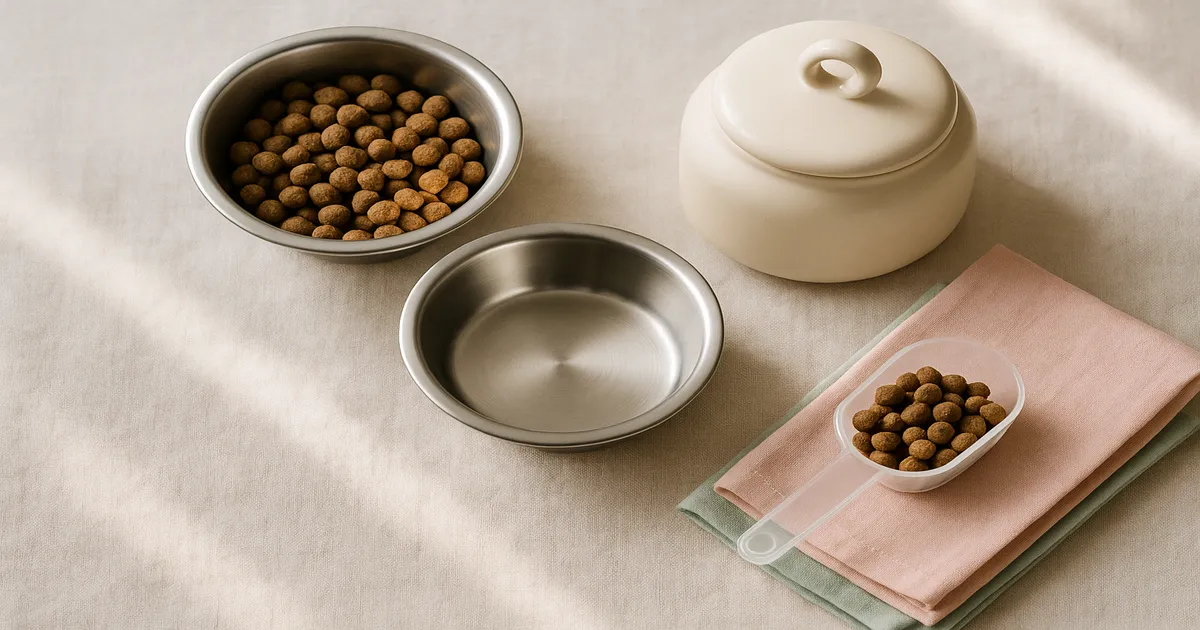
Quick Answer: Most puppies need 4 meals a day from 6–12 weeks, dropping to 3 meals at 3 months, then 2–3 meals from 6 months onward. How often you should feed your puppy depends on their age, breed size, and metabolism — and getting it right protects them from hypoglycemia, bloat, and obesity. Always confirm portions and frequency with your vet, especially for toy or giant breeds.
Figuring out how often to feed your puppy is one of the first — and most important — questions new owners face. Feed too infrequently and a tiny Chihuahua puppy can crash into hypoglycemia. Overfeed a Great Dane pup and you risk skeletal damage that lasts a lifetime. The good news: once you understand the logic behind puppy feeding schedules, it all clicks into place.
How Often Should You Feed a Puppy? A Schedule by Age
Puppy Feeding Frequency at a Glance
| Age | Meals Per Day |
|---|---|
| 6–12 weeks | 4 meals/day (toy breeds: 4–5) |
| 3–6 months | 3 meals/day |
| 6–12 months | 2–3 meals/day |
| 12+ months | 2 meals/day |
These are solid baselines for most puppies. Breed size modifies every one of them — more on that below. Before you lock in any schedule, run it by your vet. A quick nutritional check at your puppy’s first visit can save a lot of guesswork.
Consistent meal timing does more than keep your puppy’s belly full. It stabilizes blood sugar, which is critical for small breeds. It reduces the risk of gastric dilatation-volvulus (bloat) in deep-chested breeds by keeping meal volume manageable. And it makes it far easier to spot when something’s wrong — a puppy that suddenly skips meals is telling you something.
Puppy Feeding Schedule by Age
Weeks 3–6: Weaning and First Solid Foods
At this stage, puppies are still with their breeder and mother. Nursing provides everything they need, but weaning typically begins around weeks 3–4 with puppy gruel — moistened kibble or puppy mousse offered 3–4 times daily. Fresh water should be available from week 3 onward.
Weeks 6–12: Four Meals a Day
This is when most puppies come home, and their stomachs are still tiny. Four meals spaced roughly every 4–6 hours prevents digestive upset and keeps energy levels stable. A practical daily schedule:
- 7:00 AM — Breakfast
- 12:00 PM — Lunch
- 5:00 PM — Dinner
- 9:00 PM — Evening meal
Toy breed puppies (Chihuahuas, Yorkies, Pomeranians) should eat 4–5 times daily at minimum during this window. Their glycogen stores are so small that a single skipped meal can trigger a hypoglycemic crisis.
Months 3–6: Transitioning to Three Meals a Day
By 3 months, the digestive system is maturing and larger portions are tolerated. This is also the peak growth phase — caloric needs are at their highest relative to body weight, roughly double what an adult of the same breed requires per pound. Drop the late-evening meal and redistribute those calories across three solid meals.
Months 6–12: Moving to Two or Three Meals a Day
Small and medium breeds can comfortably transition to two meals a day around the 6-month mark. Large and giant breeds should stay on three smaller meals until 12 months — the extra meal keeps each portion smaller, which meaningfully reduces GDV risk in deep-chested dogs.
12 Months and Beyond: Adult Feeding Routines
Two meals a day — morning and evening — works well for most adult dogs. Giant breeds are the exception: many veterinarians recommend keeping them on three meals for life given their elevated bloat risk. Note that food transitions to adult formulas vary by size: small and medium breeds switch at around 12 months, large breeds at 12–18 months, and giant breeds at 18–24 months.
How Breed Size Changes Your Puppy Feeding Schedule
Toy and Small Breeds: High Metabolism, Hypoglycemia Risk
| Size | Adult Weight | Feeding Frequency |
|---|---|---|
| Toy | Under 12 lbs (5.4 kg) | 4–5 meals/day |
| Small | 12–25 lbs (5.4–11.3 kg) | 3–4 meals/day |
Toy breeds burn through glucose at a startling rate. A Yorkie or Chihuahua puppy that goes more than 4–6 hours without food can become lethargic, trembly, and — in serious cases — seize. Four to five meals a day until at least 12 weeks isn’t optional for these dogs; it’s a safety requirement.
Medium Breeds: The Balanced Middle Ground
| Size | Adult Weight | Feeding Frequency |
|---|---|---|
| Medium | 25–50 lbs (11.3–22.7 kg) | 3 meals/day |
Medium breeds — Beagles, Cocker Spaniels, Bulldogs — are the most forgiving when it comes to feeding schedules. Three meals a day from 8 weeks through 6 months, then a straightforward transition to two meals. That said, Beagles are highly food-motivated and prone to obesity, so measured portions and a kitchen scale matter here.
Large and Giant Breeds: Slower Growth, Serious Risks
| Size | Adult Weight | Feeding Frequency |
|---|---|---|
| Large | 50–100 lbs (22.7–45.4 kg) | 3 meals/day |
| Giant | Over 100 lbs (45.4 kg) | 3 meals/day (smaller portions) |
Great Danes, German Shepherds, and Rottweilers need a completely different approach. Overfeeding accelerates growth, which stresses developing joints and bones — a direct cause of developmental orthopedic disease. Large-breed puppies must eat food specifically formulated for large breeds, with calcium levels between 0.7–1.2% dry matter. Standard puppy food often exceeds this range and can cause real skeletal harm.
How Much to Feed a Puppy: Portions and Measuring Right
Approximate Daily Calories by Weight and Age
| Puppy Weight | Age | Approx. Daily Calories |
|---|---|---|
| 5 lbs (2.3 kg) | 8 weeks | 200–275 kcal |
| 10 lbs (4.5 kg) | 8 weeks | 350–450 kcal |
| 10 lbs (4.5 kg) | 4 months | 450–550 kcal |
| 20 lbs (9.1 kg) | 3 months | 550–700 kcal |
| 40 lbs (18.1 kg) | 4 months | 900–1,200 kcal |
| 60 lbs (27.2 kg) | 6 months | 1,200–1,600 kcal |
| 80 lbs (36.3 kg) | 9 months | 1,500–2,000 kcal |
These figures are starting points. Always adjust based on your puppy’s body condition score — you should be able to feel (but not see) their ribs, and there should be a visible waist when viewed from above.
Weigh Food Instead of Using a Cup
Scooping kibble with a measuring cup sounds precise, but it isn’t. Depending on how the cup is filled, you can be off by 20–30% in either direction. A kitchen scale set to grams is the only reliable method.
Bag feeding guidelines are a starting point, not a prescription. They’re calculated for average activity levels and average metabolism. Use your puppy’s body condition score — not the bag — as your primary guide, and adjust in small increments (no more than 10% at a time).
Choosing the Right Puppy Food
Dry Kibble, Wet Food, or Raw?
Dry kibble is the most practical choice for most puppies — easy to measure, nutritionally complete, and supportive of dental health. Wet food has higher moisture content, which benefits toy breeds and picky eaters, but it’s more expensive and harder to measure precisely. Raw diets are controversial; without careful formulation they risk nutritional imbalances and bacterial contamination. If you’re interested in raw feeding, get veterinary guidance before you start.
How to Read an AAFCO Statement
Every reputable puppy food carries an AAFCO (Association of American Feed Control Officials) nutritional adequacy statement. Look for the phrase “complete and balanced for growth” or “complete and balanced for all life stages.” If it says “for maintenance” only, it’s not appropriate for puppies. Large-breed owners should also look for the qualifier: “including growth of large-size dogs.”
Key Nutrients to Look For
- Crude protein: Minimum 22% dry matter, from a named animal source (chicken, beef, salmon)
- Crude fat: Minimum 8% dry matter
- DHA: Listed on the label — essential for brain and eye development
- Calcium: 0.7–1.2% DM for large-breed puppies specifically
- Omega-3/6 fatty acids: Especially important for double-coated breeds like Huskies and Golden Retrievers
Ingredients to avoid: artificial preservatives (BHA, BHT, ethoxyquin), vague protein sources listed as the primary ingredient (“meat meal” or “poultry by-product” as the first item), and excessive fillers like corn syrup or artificial colors.
Feeding-Related Health Risks Every Puppy Owner Should Know
Hypoglycemia in Toy Breed Puppies
Toy breed puppies under 4 lbs — Chihuahuas, Yorkies, Pomeranians, Maltese — have almost no glycogen reserve. A gap of more than 4–6 hours between meals can send blood sugar into freefall. Watch for lethargy, trembling, glassy eyes, or seizures. If you see these signs, rub a small amount of Karo syrup or honey on the gums and get to a vet immediately. Prevention is simple: 4–5 meals a day, no exceptions, until at least 12 weeks.
Bloat (GDV) in Deep-Chested Breeds
Gastric dilatation-volvulus is a life-threatening emergency with a mortality rate of 10–60% even with treatment. Great Danes, Standard Poodles, Weimaraners, Dobermans, and German Shepherds are most at risk. Practical steps to reduce risk:
- Feed 2–3 smaller meals rather than one large one
- No vigorous exercise for 1 hour before or 2 hours after meals
- Use a slow-feeder bowl to reduce gulping
- Avoid elevated food bowls — contrary to older advice, current research suggests they increase GDV risk in large breeds
Developmental Orthopedic Disease in Large Breeds
DOD covers hip dysplasia, elbow dysplasia, osteochondrosis, and related conditions. The common thread is overfeeding calcium or excess calories that push rapid growth in large and giant breed puppies. Use a food labeled specifically for large-breed puppies, which keeps calcium in the safe 0.7–1.2% DM range. Don’t supplement with extra calcium on top of a complete diet — more is not better here.
Puppy Obesity
Overfeeding in puppyhood doesn’t just cause short-term weight gain — it can trigger a permanent increase in fat cell numbers that makes lifelong weight management harder. Labs, Beagles, Pugs, Cocker Spaniels, and Dachshunds are highest risk. Weigh every meal, limit treats to 10% of daily calories, and build good habits now. The patterns you establish in puppyhood tend to stick.
Building a Consistent Puppy Feeding Routine
Set a Schedule You Can Actually Keep
Pick mealtimes you can stick to every day — puppies thrive on predictability. Build meals around your morning routine, lunch break, and evening return home. If you work long hours, arranging a midday visit or dog walker for the noon meal is worth it, especially in the 6–12 week phase.
Timed Feeding vs. Free Feeding
Put the bowl down, set a timer for 15–20 minutes, then pick it up — whether or not it’s empty. This is called timed feeding, and it’s strongly preferred over free feeding for most breeds. Free feeding makes it nearly impossible to monitor intake, detect appetite changes, or maintain a healthy weight. It also makes house training harder, since you can’t predict when your puppy needs to go outside.
Using Mealtimes for Training and Enrichment
Every meal is a training opportunity. Hand-feeding portions of your puppy’s daily ration reinforces recall and builds trust — a positive reinforcement approach that costs nothing extra. Stuffing a Kong with the measured food ration and freezing it creates 15–20 minutes of productive mental work. Snuffle mats and puzzle feeders extend mealtime and reduce anxiety-driven behaviors. Whatever goes into an enrichment toy counts toward the day’s calorie total.
Transitioning Between Puppy Foods
Switching foods too fast causes diarrhea and vomiting. Use this 7–10 day schedule:
- Days 1–2: 75% old food, 25% new food
- Days 3–4: 50% old food, 50% new food
- Days 5–6: 25% old food, 75% new food
- Days 7–10: 100% new food
If loose stools appear, slow the transition. If vomiting persists, call your vet.
When to Call the Vet
Most puppies are enthusiastic eaters. Contact your vet if you notice:
- Two or more consecutive skipped meals
- Vomiting after every meal
- A visibly bloated or hard abdomen (call immediately — this is an emergency)
- Sudden, unexplained weight loss or gain
- Lethargy or weakness after eating
One final note: fresh, clean water should always be available. Don’t restrict water to control house training — it doesn’t work and can be dangerous.
Frequently Asked Questions About Feeding Your Puppy
How often should I feed my puppy at 8 weeks old?
An 8-week-old puppy should eat 4 meals a day, spaced roughly every 4–6 hours. Toy breed puppies (Chihuahuas, Yorkies, Pomeranians) need 4–5 meals to prevent hypoglycemia. Spreading meals evenly through the day keeps blood sugar stable and prevents digestive upset from large portions.
When can I switch my puppy from 3 meals to 2 meals a day?
Most small and medium breed puppies can move to 2 meals a day around 6 months of age. Large and giant breeds should stay on 3 meals until at least 12 months to keep portions smaller and reduce bloat risk. When you make the switch, redistribute the same total daily calories across two meals — don’t reduce the overall amount.
Can I free-feed my puppy instead of scheduling meals?
Free feeding is not recommended for most puppies. It makes it difficult to monitor how much your puppy is eating, detect early signs of illness, maintain a healthy weight, or predict bathroom breaks for house training. Timed feeding — putting the bowl down for 15–20 minutes, then picking it up — gives you far more control.
How do I know if I’m feeding my puppy the right amount?
Use body condition scoring rather than relying solely on bag guidelines. You should be able to feel your puppy’s ribs without pressing hard, but not see them. Viewed from above, there should be a visible waist. If ribs are prominent or the waist has disappeared, adjust portions by no more than 10% and reassess after two weeks.
Should I feed my puppy before or after exercise?
Always feed after exercise, not before — especially for large and deep-chested breeds. Wait at least 1 hour before a meal and 2 hours after before allowing vigorous activity. Exercising on a full stomach significantly raises the risk of bloat (GDV), which can be fatal without emergency surgery.