Quick Answer: Getting a flea collar on a spicy cat is absolutely doable — it just takes preparation, timing, and patience. Tire your cat out with a vigorous play session, use high-value treats or a lick mat as distraction, desensitize the neck area over several days, then apply the collar calmly and reward heavily. If your cat truly won’t tolerate a collar, topical or oral flea treatments are solid alternatives.
If you’ve ever wrestled with the question of how do I get a flea collar on my spicy kitty, you already know that a reactive cat can turn a two-minute task into a full-on ordeal. The challenge isn’t physical — it’s behavioral. With the right approach, even the feistiest cats can learn to tolerate wearing a flea collar, or at least stop treating it like a declaration of war.
How to Get a Flea Collar on a Spicy Cat: The Framework
What Is a Spicy Cat?
“Spicy cat” took off on TikTok and Reddit in the early 2020s, largely through shelter communities reframing reactive cats as lovably feisty rather than broken. It’s not a breed — it’s a personality type. A spicy cat might be fearful, pain-sensitive, poorly socialized, or simply wired for high reactivity. The behavior is the challenge, not the cat.
Step-by-Step Overview
- Trim nails 24–48 hours before your attempt (yours and theirs).
- Play hard — a vigorous 15–20 minute session 30–45 minutes before collar application.
- Desensitize the neck area over 7–14 days using treats and gradual touch.
- Apply the collar using a lick mat as distraction, calmly and without rushing.
- Reward heavily immediately after, and for several minutes following.
Every section below unpacks one of those steps in detail.
Understanding Why Your Cat Is Spicy
Fear-Based and Reactive Aggression
The American Association of Feline Practitioners (AAFP) identifies feline aggression as the second most common behavioral complaint in cats presented to veterinarians. Most spicy behavior traces back to fear-based aggression, redirected aggression, pain sensitivity, or a lack of socialization during the critical 2–7 week developmental window. Cats who weren’t handled gently and frequently as kittens may never fully accept restraint — and that’s neurology, not a character flaw.
Reading the Warning Signs
Cats give plenty of warning before they bite. The escalation sequence goes: dilated pupils → flattened ears → tail lashing → hissing or growling → swatting → biting. If you see flattened ears or a lashing tail during collar application, stop immediately. Pushing through those signals almost always makes the next attempt harder.
Breeds Most Likely to Be Spicy
Certain breeds show up more often in the reactive category:
- Bengals — high prey drive and easily overstimulated during handling. Earlier-generation Bengals (F1–F3) tend to be especially reactive, though all generations can be.
- Siamese — emotionally sensitive and prone to overstimulation; they bond deeply with one person and may be defensive with strangers.
- Egyptian Maus — extremely wary of strangers and sensitive to sudden movement or noise. They’re fast enough to make restraint genuinely difficult.
- Feral-influenced DSH/DLH cats — if a cat missed that 2–7 week socialization window, human touch may always feel threatening.
Why the Neck Is a Flashpoint
Cats have a lower tolerance threshold for sustained touch than dogs — this is well-documented in veterinary behavioral literature. The neck is particularly loaded: it’s where a predator would grab prey, so many cats are hardwired to react defensively when that area is touched unexpectedly. That’s exactly why flea collar application can push an otherwise manageable cat over the edge.
Before You Touch the Collar: Preparation
Trim Those Nails First
Trim your cat’s nails 24–48 hours before your collar attempt — not the same day. Fresh trims are less sharp than day-of trims, and you want that buffer so the cat isn’t already agitated. Keep styptic powder nearby in case you nick the quick. Your own nails matter too: long nails make gentle, controlled handling harder than it needs to be.
Choose the Right Flea Collar
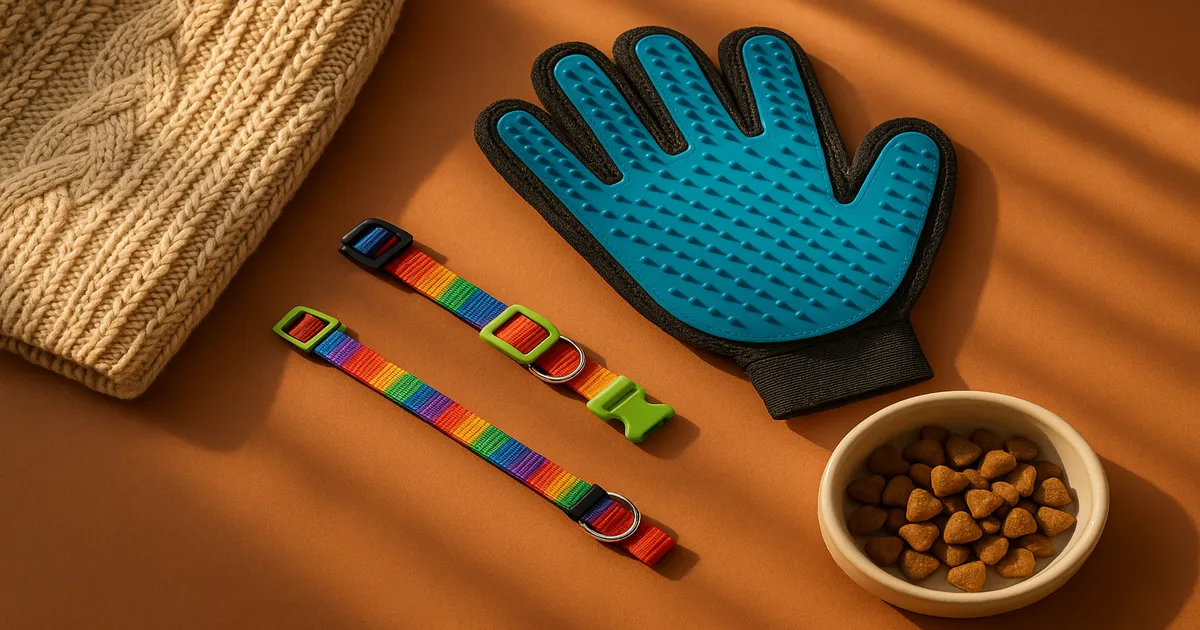
For a reactive cat, a breakaway safety collar is non-negotiable — it releases under pressure, which is critical if your cat thrashes. Adjustable fit matters too, since you want precise control over tension. Well-regarded options include Seresto and Hartz . One important note: the neck must be completely dry before application. If you gave your cat a flea bath, wait 24–48 hours before fitting the collar.
Gather Your Supplies First
Have everything within arm’s reach before you bring your cat into the room. Rummaging through a drawer while a reactive cat reconsiders the situation is not a winning strategy.
- High-value treats: Churu squeeze treats or freeze-dried single-ingredient meat treats work well
- A lick mat (LickiMat Casper Cat Slow Feeder)
- A soft ribbon or fabric strip for mock practice
- Calming pheromone spray (optional but helpful)
Tire Them Out: The Exercise Window
Why a Tired Cat Is a Cooperative Cat
Veterinarian Dr. Liz Bales describes the natural feline cycle as hunt → catch → eat → groom → sleep. Vigorous play replicates the hunting phase and triggers the relaxation response that follows. A cat coming down from a good play session is physiologically calmer — lower cortisol, lower reactivity, more open to handling.
Aim for 15–20 minutes of active play ending about 30–45 minutes before your collar attempt. That gap lets the cat settle into post-hunt calm without fully resetting to baseline alertness. Follow the play session with a small meal or treat to complete the cycle and deepen the relaxation.
Desensitization: Teaching Your Spicy Cat to Tolerate the Collar
What Is Systematic Desensitization?
Systematic desensitization means gradually exposing your cat to a stressor — neck touching, then collar wearing — at such a low intensity that it doesn’t trigger a fear response, then slowly increasing the intensity over time. The AAFP’s Low-Stress Handling Guidelines identify this as the single most effective long-term strategy for handling-reactive cats.
A 7–14 Day Neck-Touch Protocol
Keep every session under 2 minutes. Overstimulation is the enemy.
- Days 1–3: Touch the side of your cat’s neck for 2–3 seconds. Immediately follow with a high-value treat. Repeat 3–5 times.
- Days 4–6: Gradually increase touch duration to 5–8 seconds. Continue pairing every touch with a treat.
- Days 7–10: Begin gently encircling the neck with your hand (no pressure). Treat every time.
- Days 11–14: Simulate the collar motion — a light, brief encircling movement — while treating continuously.
If your cat shows any warning signs at any stage, drop back to the previous step. Progress isn’t linear, and that’s fine.
Introduce the Collar’s Smell Early
Place the flea collar near your cat’s sleeping area for 2–3 days before application. Cats are olfactory creatures — a novel smell on their neck is an additional stressor you can reduce in advance.
Practice with a Mock Collar
Before using the real collar, loop a soft ribbon loosely around the neck, treat, and remove. Do this several times over a day or two. By the time the actual collar appears, the sensation is already familiar.
How to Get a Flea Collar on Your Spicy Kitty: The Application
Setting the Scene
Choose a quiet room with no other pets present. Close the door — a cat that bolts mid-application is a cat you’ll be starting over with tomorrow. Low lighting can help reduce visual stimulation for particularly reactive cats.
The Lick Mat Distraction Method
Apply Churu or a small amount of wet food to a lick mat and place it in front of your cat. Let them start licking before you touch the neck at all. Repetitive licking activates the parasympathetic nervous system — it’s genuinely calming, not just distracting.
While they’re occupied:
- Approach calmly from the side, not from above.
- Begin the collar loop motion you’ve already practiced.
- Fasten the collar without rushing — have it pre-adjusted to approximately the right size.
- Check the fit immediately.
- Reward with additional treats, then step back and give space.
The Two-Finger Fit Rule
You should be able to slide exactly two fingers under the collar — snug enough that it won’t slip off, loose enough that it’s not restrictive. Too tight risks skin irritation and discomfort. Too loose, and your cat can get a jaw or leg caught while grooming. Recheck the fit after a few days, since weight can shift.
If Your Cat Reacts Mid-Application
Stop. Don’t force it. A cat that’s reached the hissing or swatting stage is not going to cooperate, and pushing through damages trust for every future attempt. Calmly step back, let the cat leave if they want to, and try again the next day. One failed attempt isn’t a setback — it’s data.
When to Call Your Vet
If your cat won’t tolerate a collar after several weeks of desensitization, that’s useful information. Ask your vet about:
- Topical spot-on treatments — applied quickly to the back of the neck where the cat can’t immediately groom it off
- Oral flea medications — some cats tolerate a pill hidden in a treat far better than any collar
- Vet tech application — a wellness visit in a low-stress clinical environment can sometimes accomplish what home attempts can’t
Flea Risks Worth Knowing About
Even indoor cats aren’t safe. Fleas hitchhike in on clothing, shoes, and other pets. Here’s what you’re protecting against:
- Flea Allergy Dermatitis (FAD) — a hypersensitivity to flea saliva; a single bite can trigger intense itching, hair loss, and skin lesions in sensitized cats. FAD also increases touch sensitivity, which can worsen spicy behavior and create a frustrating feedback loop.
- Flea anemia — especially dangerous in kittens; the cat flea (Ctenocephalides felis) is a prolific feeder.
- Tapeworm (Dipylidium caninum) — transmitted when cats ingest infected fleas during grooming.
- Bartonella henselae (Cat Scratch Disease) — transmitted via flea feces; particularly relevant when handling cats that scratch.
- Mycoplasma haemofelis — a flea-transmitted blood parasite causing hemolytic anemia.
Flea infestations and ear mites (Otodectes cynotis) often co-occur. Check your cat’s ears during any handling session — dark, coffee-ground-like debris and head shaking are the telltale signs.
Supporting Your Spicy Cat: Treats, Diet, and Skin Health
High-Value Treats as a Training Tool
Not all treats are equal when you’re asking a cat to tolerate something stressful. High-value means something your cat doesn’t get routinely. Churu squeeze treats and freeze-dried single-ingredient meat (chicken, salmon) tend to rank highest. Keep treat calories under 10% of daily intake per AAHA guidelines — roughly 15–25 calories for an average adult cat.
Diet, Skin Sensitivity, and Flea Allergy Risk
Food allergies — commonly triggered by beef, dairy, or fish — can increase baseline skin sensitivity and make cats more reactive to touch. If your cat has a history of skin issues alongside spicy behavior, ask your vet about a hydrolyzed protein diet such as Hill’s Prescription Diet z/d or Royal Canin Hydrolyzed Protein. Reducing skin irritation can reduce touch reactivity — a genuine quality-of-life improvement for both of you.
Omega-3 Supplements
Omega-3 fatty acids (EPA and DHA from fish oil) support skin barrier function and may reduce the severity of flea allergy reactions. A typical target is 50–100 mg of EPA/DHA per 10 lbs of body weight daily. Look for a product formulated specifically for cats (Zesty Paws Pure Wild Alaskan Salmon Oil) and confirm the dose with your vet, especially if your cat has any underlying health conditions.
Frequently Asked Questions
Is it safe to put a flea collar on an aggressive or reactive cat?
Yes, with the right preparation. Trim nails beforehand, use desensitization over 7–14 days, and never force the collar onto a cat that’s actively hissing or swatting. If your cat is genuinely dangerous to handle, ask your vet about topical spot-ons or oral flea medications instead.
What is the best flea treatment for a cat that won’t let you touch it?
Topical spot-on treatments applied quickly to the back of the neck are often easier than a collar for highly reactive cats. Oral flea medications hidden in a high-value treat are another solid option. Your vet can recommend the right formulation based on your cat’s health profile.
How do I get my cat used to wearing a collar if it hates being handled?
Use systematic desensitization over 7–14 days: start with brief, treat-paired neck touches, gradually increase duration, introduce the collar’s scent near their bedding, and practice with a soft ribbon before using the real thing. Keep every session under 2 minutes and always end on a positive note.
How tight should a flea collar be on a cat?
Follow the two-finger rule: you should be able to slide exactly two fingers comfortably under the collar. Tighter risks skin irritation; looser risks the cat getting a paw or jaw caught while grooming. Recheck the fit after a few days.
Can I use a flea collar on a feral or semi-feral cat?
Generally, no — attempting to do so without proper restraint is dangerous for both of you. For community or semi-feral cats, contact a TNR (Trap-Neuter-Return) organization or your local animal control. Spot-on treatments applied during a trap event are typically far safer than collar application for unsocialized cats.