Quick Answer: Keep meds and training treats from colliding by using completely separate containers (different colors, different textures), logging every dose before you give it, and pre-portioning the entire day’s treat budget each morning. When two people handle the same dog, the system — not memory — has to do the work.
Figuring out how to keep meds and training treats from colliding when two people handle the dog sounds like a minor logistical problem — until it isn’t. A double dose of phenobarbital. A Lab who’s decided every soft treat must contain a pill. Four hundred hidden calories nobody tracked. These aren’t hypothetical disasters. They’re what happens when households rely on “we’ll remember” instead of a real protocol.
This guide is built around Labradors — the breed most likely to be in a busy multi-handler household, most likely to be on long-term medication, and most likely to eat literally anything you put in front of them. But every principle here applies to any dog, any breed.
What “Collision” Means and Why It Matters
Five distinct collisions can happen when medication management and treat-based training share the same dog and different handlers:
- Caloric collision — training treats pile onto medication-delivery treats and push the dog over their daily calorie limit without either handler realizing it.
- Ingredient collision — the food used to hide a pill interacts with the medication itself. Tyramine-rich foods like aged cheese can cause dangerous hypertensive reactions in dogs on selegiline (Anipryl), an MAOI.
- Timing collision — a training session or high-fat treat given too close to medication time can cause GI upset with NSAIDs or metronidazole, or reduce absorption of drugs that require an empty stomach.
- Behavioral collision — when the same treat is used for pills and for “sit,” the dog starts refusing training treats because they suspect a pill is hiding inside. Or worse, they start refusing pills altogether.
- Accountability collision — neither handler knows what the other gave, leading to missed doses, double doses, and uncounted calories.
The Three Rules Every Multi-Handler Household Needs
- Never use the same treat for medication delivery and training. Full stop.
- Pre-portion the entire day’s treat budget every morning into a single shared container. When it’s empty, treat time is over.
- Log before you dose. Check the log first, record what you’re about to give, then administer.
Why Meds and Training Treats Collide — and How to Stop It
Caloric Collision: Hidden Calories That Add Up Fast
The 10% rule says treats — all treats combined — shouldn’t exceed 10% of a dog’s daily caloric intake. For a 65 lb (29 kg) Labrador eating 1,400 kcal/day, that’s a ceiling of 140 kcal across every treat, including the ones used to hide pills. A single tablespoon of peanut butter runs about 95 kcal. Add a few training treats and you’ve blown the budget before noon.
This matters even more for Labs. A 2016 study published in Cell Metabolism found that roughly 25% of Labrador Retrievers carry a deletion in the POMC gene, which impairs the brain’s ability to signal fullness. These dogs aren’t being dramatic — they genuinely don’t feel satisfied the way other dogs do. Over 50% of Labs in the US are already overweight or obese, and excess weight accelerates hip dysplasia, elbow dysplasia, CCL rupture, and diabetes. Every untracked treat is a real risk.
Ingredient Collision: When Pill Wrappers Interact With Medications
Most people reach for peanut butter or cheese without thinking twice. For many medications, that’s fine. For others, it can be actively harmful. Dogs on selegiline (Anipryl) — prescribed for cognitive dysfunction — should not receive tyramine-rich foods like aged cheese, deli meats, or fermented treats, as the interaction can cause a dangerous spike in blood pressure. Soy-based treats interfere with levothyroxine absorption. High-fat pill wrappers worsen GI irritation from NSAIDs and metronidazole. The table below covers the most common scenarios.
Timing Collision: When You Give Treats Matters as Much as What You Give
Some medications must be given with food to prevent nausea; others require an empty stomach for proper absorption. If Handler A runs a training session 20 minutes before Handler B administers a drug that needs an empty stomach, absorption suffers — and neither handler knows why the medication isn’t working as expected. Running a training session immediately after NSAID administration is another common mistake: the dog may associate the nausea from the medication with the training treats and begin refusing them.
Behavioral Collision: How Dogs Learn to Refuse Treats — or Pills
Dogs are extraordinarily good at pattern recognition. If soft chicken-flavored treats always precede something unpleasant — a pill, a throat-check, a bitter aftertaste — they’ll start refusing those treats preemptively. The reverse is equally problematic: a dog who suspects a pill is coming will be harder to train and more stressed in sessions. The behavioral fallout from treat contamination is real and slow to reverse.
Accountability Collision: The Double-Dose Problem
This is the quietest collision and often the most dangerous. Handler A gives morning meds and forgets to log it. Handler B comes home, sees no record, and gives the meds again. Double-dosing phenobarbital, NSAIDs, or thyroid medication can be life-threatening. The fix isn’t better memory — it’s a system that makes the current status visible to everyone, always.
Setting Up a Centralized Dog Management Hub
The Physical Hub
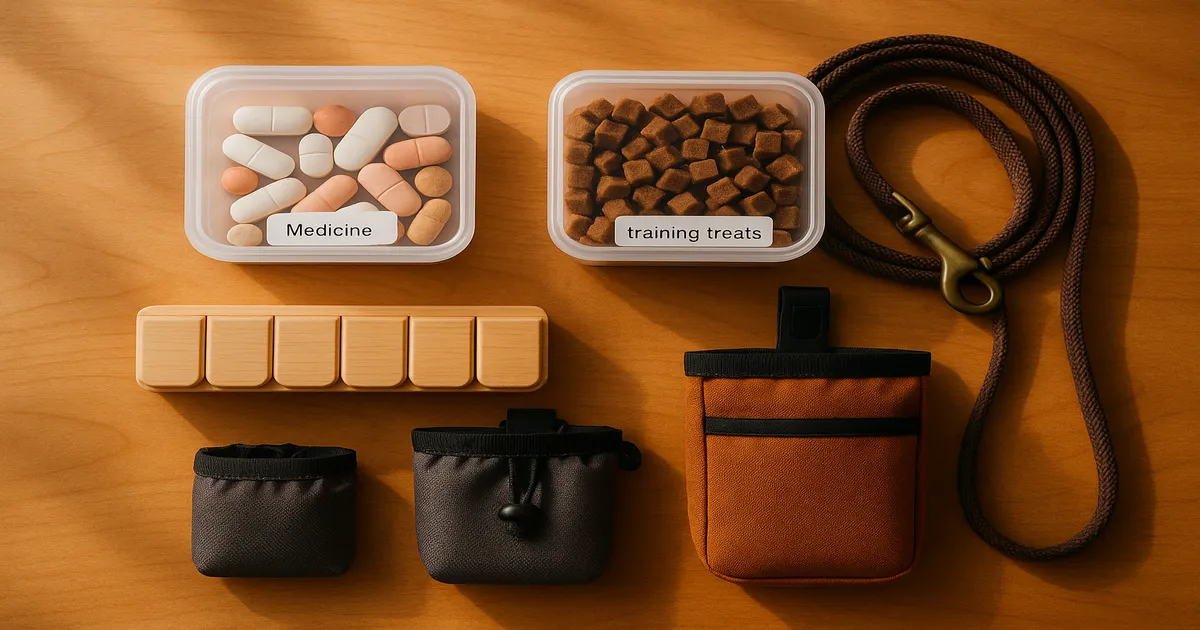
Pick one spot — a drawer, a shelf, a wall organizer — and make it the single source of truth for everything dog-related. Stock it with:
- A weekly pill organizer (human-style works perfectly), labeled AM and PM
- A small whiteboard or magnetic notepad: date, time, who gave the medication, what treat was used
- Two clearly labeled treat containers — different colors, different textures (more on this below)
- A laminated card listing current medications, doses, timing requirements, food restrictions, and emergency vet contact
The whiteboard is the most important piece. It makes the current state visible at a glance without requiring anyone to check their phone.
The Flip-Card System: Low-Tech Accountability That Sticks
Not every household runs on apps. The flip-card system is simple: a physical index card near the medication hub with “MEDS DUE” on one side and “MEDS GIVEN” on the other. The morning handler flips it after administering. The evening handler flips it back after theirs. Anyone can see the current status in one second without unlocking a phone.
For households where everyone is reliably on their phones, PetDesk and Pawprint both support medication logging and can send reminders. A shared Google Calendar with handler-assigned reminders works just as well and costs nothing. The key is assigning reminders to specific people — when everyone is responsible, no one is.
How to Keep Meds and Training Treats From Colliding: Choosing the Right Treats
Color-Code and Texture-Differentiate Your Containers
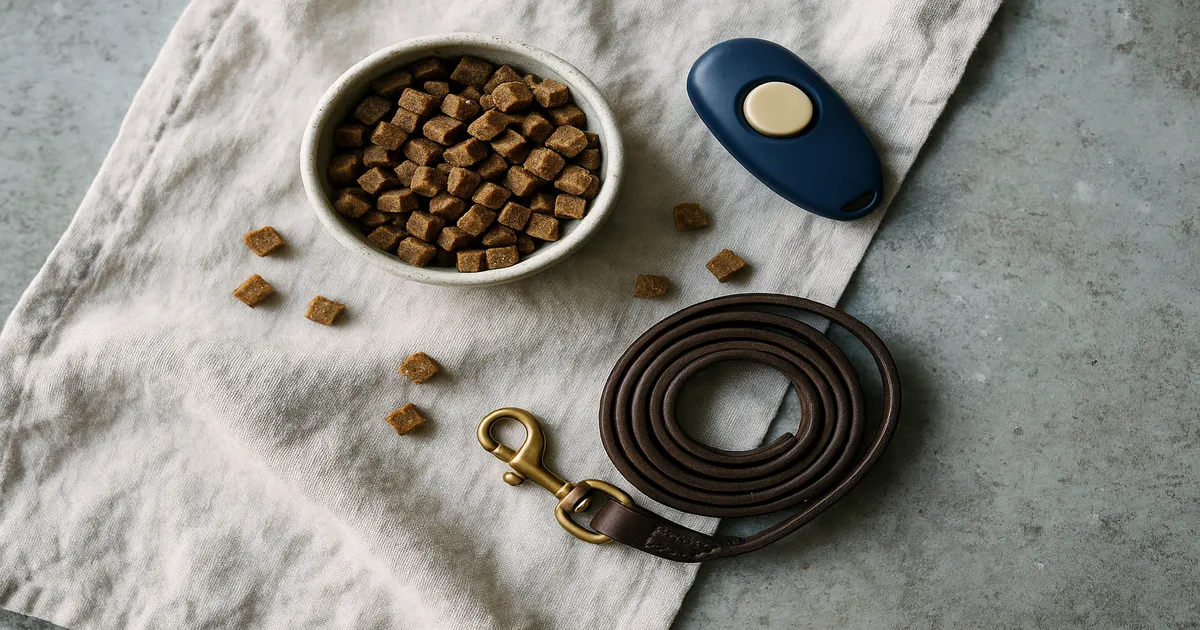
Use a red-lidded container for medication treats and a green-lidded container for training treats. The color difference is a fast visual cue for handlers; the texture difference — soft and moldable for pills, small and crunchy for training — helps the dog distinguish them too, which reduces behavioral collision over time.
Safe Food Vehicles by Medication Type
| Medication | Safe Options | Avoid |
|---|---|---|
| NSAIDs (Carprofen, Meloxicam) | Plain cooked chicken, plain rice ball | High-fat cheese, peanut butter |
| Antibiotics (Amoxicillin, Doxycycline) | Small amount cream cheese, plain turkey | Large dairy amounts with doxycycline |
| Selegiline / MAOIs | Plain boiled chicken, commercial pill pockets | Aged cheese, fermented foods, deli meats |
| Thyroid meds (Levothyroxine) | Plain chicken, plain rice | Soy-based treats |
| Phenobarbital | Small amount xylitol-free peanut butter | Xylitol — FATAL |
| Gabapentin | Cream cheese, pill pockets | Large fat loads |
| Prednisone / Steroids | Plain chicken | High-sodium treats |
A Word on Xylitol
Xylitol deserves its own warning. It appears in some peanut butters, sugar-free treats, and dental products, and it’s extremely toxic to dogs at any dose. If you’re using peanut butter as a pill vehicle, confirm the product is xylitol-free every single time you buy it — manufacturers change formulas without notice. Dedicated dog-safe peanut butters eliminate this risk entirely.
Caloric Accounting: Fitting Med Treats Into the Daily Budget
Medication treats count toward the 10% daily treat limit — they don’t get a free pass. Plan the medication treats first (since those are non-negotiable), then allocate whatever remains to training. Using low-calorie pill pockets for medication delivery preserves more of the budget for training sessions.
The Handler Handoff Protocol
Morning Handler Responsibilities
The morning handler owns the day’s setup:
- Administer AM medications using the designated med treat.
- Log the dose immediately — time, treat used, any observations.
- Flip the card (or update the app) to “MEDS GIVEN.”
- Pre-portion the entire day’s training treat allotment into the shared green-lid container.
That last step sets a hard ceiling on treat calories for the entire day, regardless of how many training sessions happen or how many people are involved.
Evening Handler Responsibilities
Before touching a treat or a pill:
- Check the whiteboard or app to confirm AM meds were logged.
- Administer PM medications if scheduled.
- Log immediately.
- Train from whatever remains in the pre-portioned container.
The Golden Rule: When in Doubt, Don’t Re-Dose
If the log is unclear and you’re not sure whether the medication was given, do not re-administer. Text or call the other handler first. Double-dosing phenobarbital can cause severe sedation or ataxia. Double-dosing NSAIDs risks acute kidney injury. Double-dosing thyroid medication causes dangerous cardiac effects. A brief delay in dosing is always safer than a double dose.
Behavioral Strategies to Prevent Treat Refusal
Keep the Categories Completely Separate — Always
This is the rule people break most often, usually out of convenience. The moment you use a training treat to hide a pill, you’ve started a clock on that treat’s usefulness for training. Keep the categories separate, every single time.
The Fake-Out Method and Pill Gun Technique
The fake-out method helps maintain positive associations with medication delivery: offer three identical-looking soft treat balls in quick succession, with the pill hidden in only one. The dog doesn’t know which is which, and the experience stays unpredictable enough to stay positive.
A pill gun is another excellent option — it bypasses the treat entirely. Place the pill at the back of the throat, close the mouth, stroke the throat to encourage swallowing, then immediately reward with a training treat from the green container. The reward comes after the pill, not with it.
Training a Dedicated “Medication Station” Behavior
Teach a specific cue — “medicine time” — paired with a specific location (a mat in the kitchen, for example) that is never used for regular training. The dog learns that this cue and location mean medication, not training. It reduces anticipatory stress and keeps the two contexts cleanly separated in the dog’s mind.
When to Ask About Compounded Flavored Medications
If your dog has become genuinely pill-resistant, ask your vet about compounded formulations. Many medications can be made into flavored chewable treats by a veterinary compounding pharmacy, eliminating the need for a food vehicle entirely. Transdermal gels applied to the ear flap are another option — no treats, no stress, no collision.
Talking to Your Vet: A Multi-Handler Checklist
Bring a notebook to every medication appointment and ask:
- What is the exact timing window for this medication — with food, without food, or within a specific window of a meal?
- What foods are approved and prohibited as pill vehicles for this specific drug?
- What is the maximum daily caloric allowance including treat calories?
- What are the signs of a missed dose versus a double dose?
- Can this medication be given once daily to reduce handler confusion?
Also ask your vet to provide written instructions you can laminate and add to the hub. Verbal instructions get misremembered; a laminated card in the medication drawer gets referenced correctly every time. Most vets are happy to provide this — they just don’t know to offer it unless you ask.
Signs of Missed Dose vs. Double Dose
| Medication | Missed Dose Signs | Double Dose Signs |
|---|---|---|
| Phenobarbital | Increased seizure activity | Severe sedation, ataxia, vomiting |
| NSAIDs | Return of pain/limping | Vomiting, lethargy, bloody stool |
| Levothyroxine | Weight gain, lethargy | Restlessness, rapid heart rate |
| Prednisone | Inflammation return | Increased thirst/urination, panting |
If you suspect a double dose of any medication, call your vet immediately. Do not induce vomiting without veterinary guidance.
Frequently Asked Questions
Can I use peanut butter to hide my dog’s pills?
Peanut butter is safe for most medications, but there are important exceptions. Never use it with selegiline (Anipryl) due to the MAOI-tyramine interaction risk. Always confirm the peanut butter is xylitol-free — xylitol is fatal to dogs and appears in some brands without obvious labeling. Peanut butter is also high in fat, making it a poor choice for dogs on NSAIDs or with GI sensitivity. Use it sparingly and count those calories toward the daily treat budget.
What should I do if two people accidentally both give the dog medication?
Call your veterinarian immediately — don’t wait to see if symptoms develop. Do not induce vomiting without veterinary guidance, as this can cause additional harm with some medications. Have the medication name, dose, and approximate times of both administrations ready when you call. The highest double-dose risks are phenobarbital (severe sedation, ataxia), NSAIDs (kidney injury, GI bleeding), and thyroid medications (cardiac effects).
Why is my dog refusing training treats after starting a new medication?
This is a behavioral collision. Your dog has associated the smell or texture of those treats with an unpleasant experience — a pill, a bitter aftertaste, or post-medication nausea. Switch to a completely different treat for training (different flavor, different texture, different container), and use a separate food vehicle for medication delivery. The two categories should never overlap again.
How do I track treats and meds when a dog walker or family member also helps?
The physical hub is your best tool here. A whiteboard with the day’s log and a pre-portioned treat container means anyone who walks through the door can see exactly what’s been given and how much treat budget remains. Brief the dog walker in writing — a laminated instruction card works well — and ask them to initial the log after every visit. (Spectrum Diversified Wall-Mount Pet Station)
Is the 10% treat rule the same for dogs on a weight-loss diet?
No. Dogs on a calorie-restricted diet may have a lower daily caloric target than their maintenance intake, which shrinks the treat budget further. Ask your vet for the specific daily caloric target and calculate 10% of that number — not the dog’s maintenance calories. For a Lab on a weight-loss plan eating 1,100 kcal/day, the entire treat budget (including pill wrappers) drops to 110 kcal.