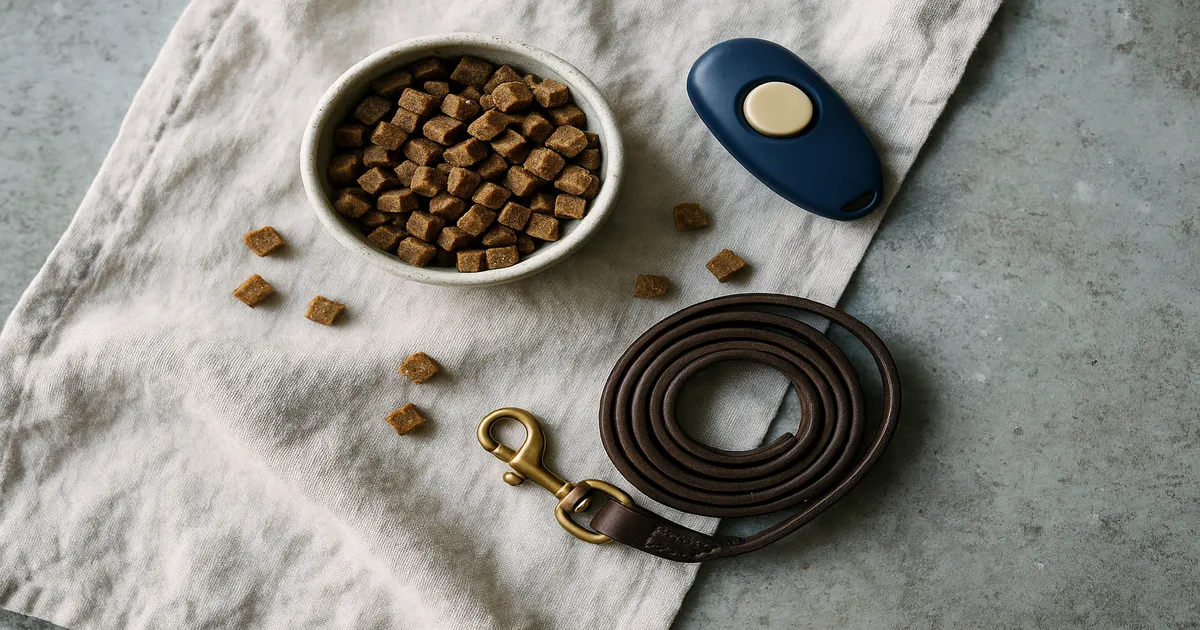
Quick Answer: To use treats as training rewards, follow this simple loop: ask for the behavior, wait for your dog to do it, mark the moment with a click or a “Yes!”, then deliver a pea-sized treat within 1–2 seconds. The treat always comes after the behavior — never before. This method is endorsed by the AVSAB, AVMA, and CCPDT as the most effective and humane way to train dogs.
Knowing how to use treats as training rewards is one of the most valuable skills you can develop as a dog owner. Done right, it’s fast, humane, and backed by decades of behavioral science. Done wrong — showing the treat before you ask, giving too many, or never fading them — and you’ll create frustration for both of you. This guide covers the mechanics, the science, treat selection, calorie management, and the most common mistakes to avoid.
The Science Behind Treat-Based Dog Training
From Pavlov to Positive Reinforcement
The roots of treat training go back further than most people realize. Ivan Pavlov’s food-reward experiments in the 1890s showed that animals could learn associations between stimuli and outcomes — the direct ancestor of everything we do with treats today. B.F. Skinner formalized positive reinforcement in the 1930s–50s: behaviors followed by a reward are more likely to be repeated. Simple, powerful, and still the foundation of modern training.
The real leap came in the 1960s when Karen Pryor used food rewards paired with a clicker to train dolphins at Sea Life Park in Hawaii. By the 1980s and 90s, trainers like Ian Dunbar and Patricia McConnell had brought those same principles into companion dog training, replacing the punishment-heavy methods that had dominated since the military dog-training era of the World Wars.
How Treats Motivate Learning
When your dog earns a treat, it’s not just about the food. The anticipation and delivery of a food reward triggers dopamine release in the mesolimbic reward pathway — the same neurological circuit that motivates humans to pursue pleasurable experiences. That dopamine hit creates a genuine motivational state, which is why food is such a reliable reinforcer across virtually every dog.
Timing is what makes or breaks the association. Research in Applied Animal Behaviour Science confirms the reward must arrive within 1–2 seconds of the desired behavior. Wait longer than 3 seconds and the learning signal degrades — your dog may end up associating the treat with whatever they were doing when it finally arrived (often sitting down after spinning in circles looking for it).
Key Training Methods That Use Food Rewards
| Method | Description | Best For |
|---|---|---|
| Lure-Reward | Treat guides dog into position | Puppies, beginners, new behaviors |
| Clicker + Treat | Precise marker bridges behavior and reward | Shaping, distance work |
| Capturing | Reward naturally occurring behaviors | ”Settle,” calm behaviors |
| Shaping | Reward successive approximations toward a goal | Complex tricks, service tasks |
| NILIF | All rewards, including treats, must be earned | Pushy or resource-guarding dogs |
How to Use Treats as Training Rewards: Step by Step
Timing Your Reward: The 1–2 Second Rule
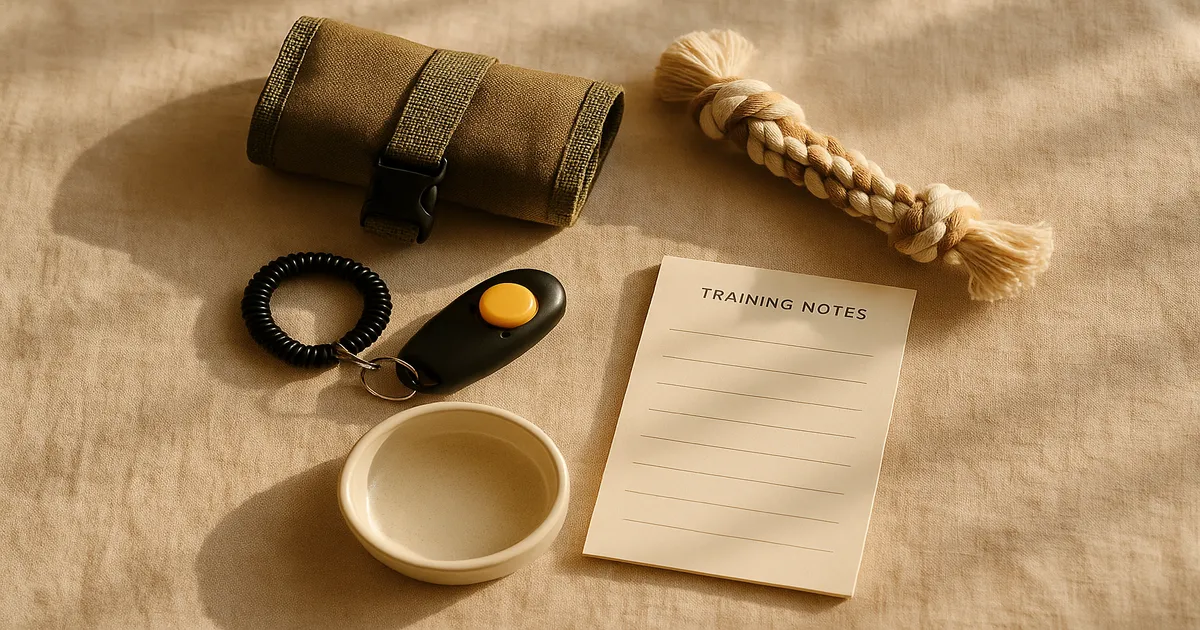
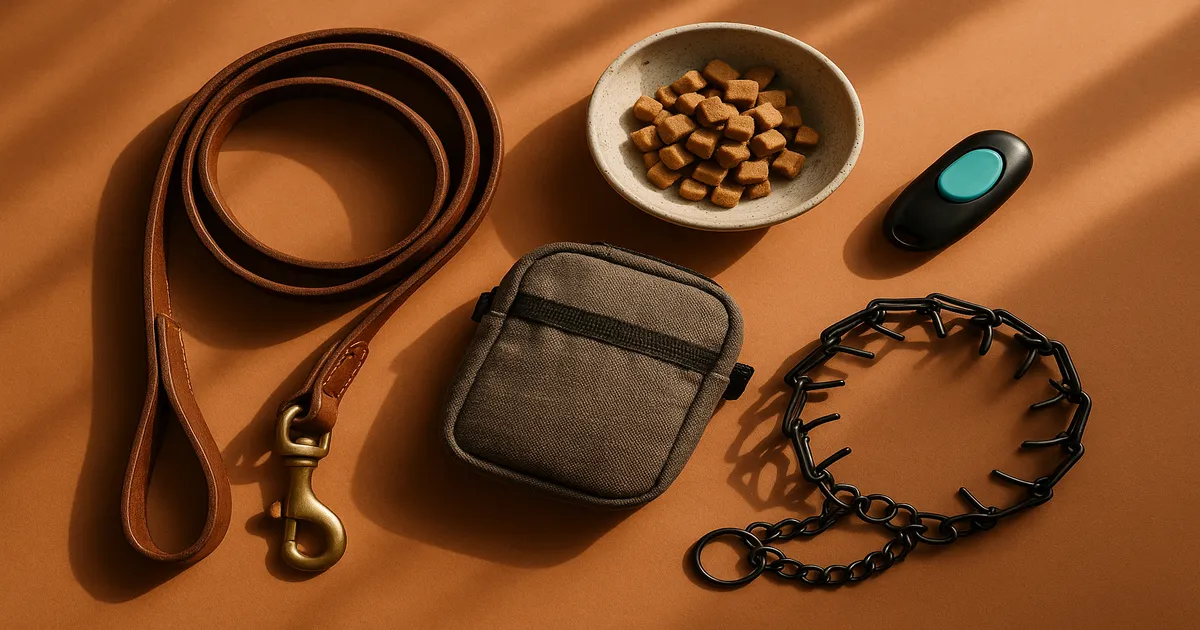
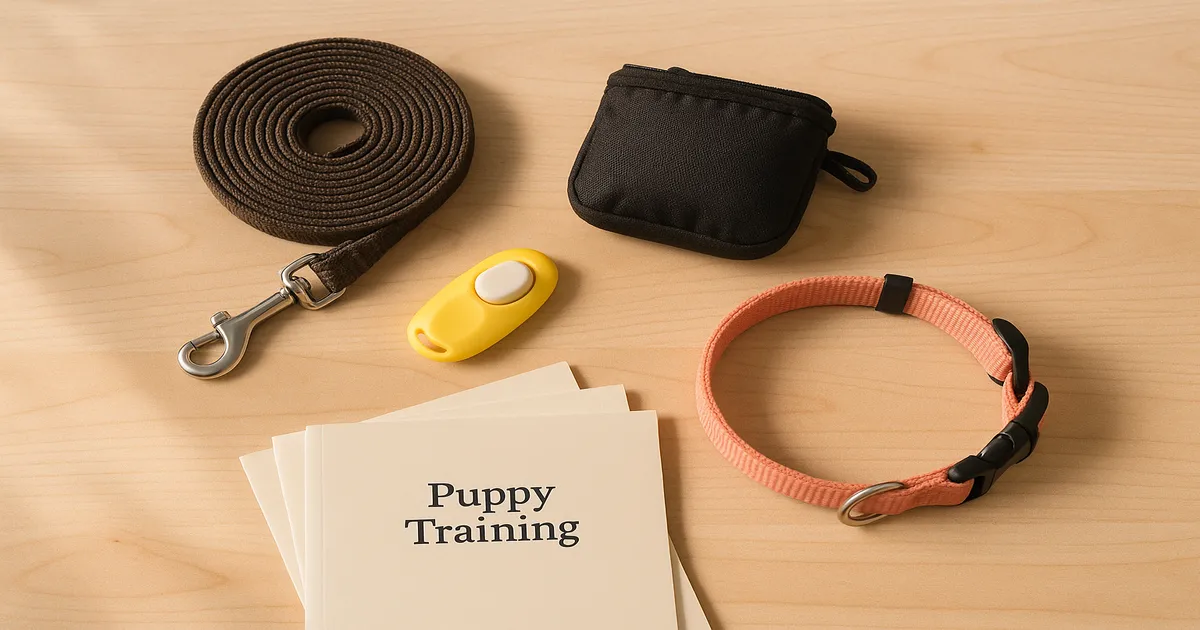
Set up before you start. Load your treat pouch, choose an environment with an appropriate distraction level for what you’re teaching, and have your marker ready — either a clicker or a consistent verbal marker like “Yes!” A clicker such as the Karen Pryor i-Click delivers a more precise, consistent sound than a verbal marker, which makes it especially useful when you’re shaping new behaviors.
The sequence never changes: Cue → Behavior → Mark → Treat. The mark freezes the moment — it tells your dog that exact thing is what earned the reward. The treat follows within 1–2 seconds. Without the marker, you’re just handing out food and hoping.
How to Lure, Mark, and Reward a New Behavior
- Hold a treat between your fingers and use it to guide your dog’s nose into position (for example, luring the nose up and back to prompt a sit).
- The moment their bottom touches the floor, mark immediately with a click or “Yes!”
- Deliver the treat within 1–2 seconds.
- After 5–10 successful repetitions, move the food to your opposite hand while keeping the same hand signal. Your dog should start following the gesture, not the food.
- Once the behavior is consistent, add the verbal cue just before the hand signal.
Recommended Session Lengths by Age and Life Stage
| Life Stage | Age | Session Length | Sessions Per Day |
|---|---|---|---|
| Puppy | 8–16 weeks | 3–5 minutes | 2–3 |
| Adolescent | 4–18 months | 5–10 minutes | 3–5 |
| Adult | 1–7 years | 10–15 minutes | 1–3 |
| Senior | 7+ years | 5–10 minutes | 2–3 |
Always end on a success, even if that means asking for something easy your dog already knows well.
Choosing the Right Treats for Your Dog
The Three-Tier Treat System
Professional trainers almost universally organize treats into three tiers based on value:
- Tier 1 — Everyday rewards: Your dog’s own kibble or low-calorie commercial treats. Use these for known, easy behaviors in a calm, low-distraction environment.
- Tier 2 — Mid-value rewards: Soft commercial treats or freeze-dried meat pieces. Pull these out for new behaviors, mild distractions, or maintenance training.
- Tier 3 — High-value jackpots: Real cooked chicken, cheese, or whatever your dog goes absolutely wild for. Reserve these for breakthrough moments, high-distraction environments, or helping a fearful dog build positive associations.
The key is matching treat value to the difficulty of what you’re asking and the level of distraction around you. A quiet living room with a food-motivated Labrador? Kibble works fine. A busy park with a Belgian Malinois who’d rather be chasing a ball? You need your Tier 3 arsenal.
Best Treat Types for Training: A Practical Comparison
| Treat Type | Examples | Best Use | Caloric Density |
|---|---|---|---|
| Kibble | Dog’s own dry food | Low-distraction, NILIF | Low |
| Soft commercial treats | Zuke’s Mini Naturals, Wellness Soft WellBites | General training, puppies, seniors | Low–Medium |
| Freeze-dried meat | Stella & Chewy’s, Primal | High-distraction, high-value | Medium–High |
| Real cooked meat | Chicken breast, turkey, lean beef | Fearful dogs, breakthrough moments | Medium |
| Cheese | String cheese, cheddar cubes | High-value; use sparingly | High |
| Hot dogs/deli meat | Plain, low-sodium varieties | High-value; use sparingly | High |
| Fruit/vegetables | Blueberries, carrots, apple (no seeds) | Low-calorie variety | Very Low |
Soft treats such as Zuke’s Mini Naturals are ideal for rapid-fire training sessions because they’re consumed in under two seconds and won’t interrupt your flow. For higher-distraction work outdoors, freeze-dried options like Stella & Chewy’s Freeze-Dried Raw Treats carry a stronger smell that cuts through environmental noise.
Treat Size, Texture, and Why Smell Matters
Treats should be pea-sized or smaller — roughly 1/4 inch (0.6 cm) — and consumed in under 2 seconds so you don’t lose training momentum. Most commercial treats are still too large straight out of the bag; break them into 3–5 pieces before your session starts.
Soft treats beat hard biscuits during rapid-fire training every time. A crunchy biscuit takes 10–15 seconds to chew and swallow, which completely disrupts the flow of a session. Save the big crunchy rewards for the end. When you’re working outdoors, lean on smelly treats — liver, fish, real meat. Dogs have approximately 300 million olfactory receptors compared to our 6 million, so a pungent treat cuts through environmental distractions in a way that bland kibble simply can’t.
Storing Treats and Preventing Habituation
A dedicated treat pouch worn at your hip is non-negotiable for timing accuracy — fumbling in your pocket costs you that critical 1–2 second window. A pouch like the Doggone Good Rapid Reward Treat Bag keeps treats accessible and your hands free. Real meat and cheese treats need refrigeration and should be used within 3–5 days; freeze them in small portions to extend shelf life.
Rotate your treat types weekly. Dogs experience sensory-specific satiety — they habituate to the same reward and it loses motivational value. Keeping your rotation fresh keeps engagement high.
Avoiding Common Treat Training Mistakes
The Bribery Trap
Here’s the most common mistake: showing your dog the treat before you ask for the behavior. The moment you do that, the treat becomes a bribe — your dog only responds when the food is visible. Keep the treat hidden, ask for the behavior, mark it, then produce the reward. The dog learns that good things appear after they comply, not as a condition of doing so.
How and When to Fade Food Rewards
Once a behavior is reliably learned, move the food to your opposite hand or pocket while keeping the same hand signal. Then transition to a variable ratio reinforcement schedule: instead of rewarding every correct response, reward unpredictably — every 2nd, 5th, or 10th time. Variable ratio schedules produce the most durable, extinction-resistant behaviors in all species. It’s the same principle that makes slot machines compelling.
As behaviors become deeply conditioned, replace food rewards with life rewards: praise, a game of tug, access to sniffing opportunities, or being let out to the yard. These are sustainable long-term and keep your dog working for you even without a treat pouch.
What Treat Refusal Actually Means
Treat refusal during training is almost always a stress signal, not defiance. If your dog turns away from even high-value food, the environment is too overwhelming, they may be feeling unwell, or the distraction level far outweighs the treat’s value. Never push through a training session with a treat-refusing dog. Step back, reduce the distraction, and address the emotional state first.
Treat Safety, Calorie Management, and Your Dog’s Health
The 10% Rule
Treats should make up no more than 10% of your dog’s total daily caloric intake — the guideline endorsed by the AVMA and most veterinary nutritionists. To put that in perspective: a single standard Milk-Bone biscuit contains roughly 40 calories. For a 30 lb (14 kg) dog with a daily caloric budget of 700–875 calories, just 10 of those biscuits could represent nearly half their daily needs.
The 2022 APOP survey found 59% of US dogs are overweight or obese. Treat training is wonderful, but caloric discipline matters. Practical ways to stay within the 10% limit:
- Use your dog’s regular meal kibble as Tier 1 training treats whenever possible.
- Subtract training treat calories from their daily meal portion.
- Lean on very low-calorie options like carrot pieces, blueberries, or plain rice cakes broken into tiny pieces.
- Weigh treats before sessions if you’re working with a weight-sensitive dog.
Caloric Needs by Dog Size: A Quick Reference
| Dog Weight | Approx. Daily Calories (Active Adult) | Max Daily Treat Calories (10%) |
|---|---|---|
| 5 lbs (2.3 kg) | 200–275 kcal | 20–28 kcal |
| 10 lbs (4.5 kg) | 325–400 kcal | 33–40 kcal |
| 20 lbs (9 kg) | 525–650 kcal | 53–65 kcal |
| 30 lbs (14 kg) | 700–875 kcal | 70–88 kcal |
| 50 lbs (23 kg) | 1,000–1,200 kcal | 100–120 kcal |
| 75 lbs (34 kg) | 1,350–1,600 kcal | 135–160 kcal |
| 100 lbs (45 kg) | 1,700–2,000 kcal | 170–200 kcal |
Based on NRC canine energy requirement formulas: RER = 70 × (body weight in kg)^0.75, multiplied by an activity factor of 1.6–2.0.
Dangerous Ingredients to Avoid
Some common ingredients are genuinely dangerous — not just “not ideal.” Always check labels:
- Xylitol: An artificial sweetener found in some peanut butters and sugar-free products. Even small amounts can cause hypoglycemia and liver failure. This one is acutely life-threatening.
- Grapes and raisins: Can cause acute kidney failure. The mechanism isn’t fully understood, which makes any amount risky.
- Macadamia nuts: Cause neurological symptoms including weakness, tremors, and hyperthermia.
- Onion and garlic: Repeated exposure causes Heinz body anemia.
- Chocolate: Theobromine toxicity; dark chocolate is far more dangerous than milk or white.
Managing Digestive Sensitivities
Introduce any new treat gradually — offer 1–2 pieces and wait 24 hours before using it in volume. Loose stool, vomiting, or flatulence after a new treat usually points to high fat content, artificial additives, or too-rapid dietary change rather than a true allergy.
A few breed-specific notes worth keeping in mind: Labrador Retrievers carry a higher-than-average rate of a POMC gene mutation that impairs satiety signaling, making strict caloric management especially important for this breed. Brachycephalic breeds such as Bulldogs and Boxers are prone to flatulence and do better avoiding high-fermentable-fiber treats. West Highland White Terriers and Soft-Coated Wheaten Terriers have an elevated risk of protein-losing enteropathy — consult your vet before introducing novel protein treats with these breeds.
Frequently Asked Questions About Using Treats for Dog Training
How do you use treats as training rewards without creating dependency?
The sequence is everything: cue first, behavior second, mark it, then reward. Never show the treat before asking. Once a behavior is learned, fade the lure by moving food to your opposite hand, then shift to a variable ratio schedule — rewarding unpredictably rather than every time. As behaviors solidify, replace food with life rewards like praise, play, or outdoor access.
What size should training treats be?
Pea-sized or smaller — roughly 1/4 inch (0.6 cm) — and soft enough to be consumed in under 2 seconds. Most commercial treats are too large straight out of the bag; break them into 3–5 pieces before your session. The goal is to keep training momentum flowing without interruption.
How many treats can I give my dog during a training session?
It depends on treat size and your dog’s daily caloric budget. Treats should not exceed 10% of total daily calories. Using pea-sized pieces of your dog’s own kibble, you can comfortably work through 20–30 repetitions in a single session without making a meaningful dent in their daily allowance. With higher-calorie options like cheese or chicken, keep pieces tiny and count them against the day’s total.
When should I stop using treats in training?
You don’t have to stop entirely — you just stop using them every single time. Once a behavior is reliable, shift to a variable ratio schedule and start mixing in life rewards. Most well-trained dogs will work happily for a mix of occasional treats, praise, and play. The goal is a dog who responds because the behavior has become a habit, not because a treat is always guaranteed.
Can I use treats to train an anxious or fearful dog?
Yes — in fact, treats are one of the most powerful tools for helping fearful dogs build positive associations. The key is working below the dog’s stress threshold. If your dog refuses even high-value food, you’re too close to the scary thing or the environment is too overwhelming. Move further away, reduce the intensity, and let the dog set the pace. Counter-conditioning — pairing the scary stimulus with a high-value treat — is a standard technique used by veterinary behaviorists for exactly this purpose.