Quick Answer: The best puppy training guides online are grounded in positive reinforcement, align with AVSAB guidelines, and address your puppy’s specific developmental stage and breed background. Resources like AKC GoodDog!, Kikopup (Emily Larlham), and Zak George’s YouTube channel consistently hit these marks. Avoid anything built around dominance or “alpha” theory — veterinary behaviorists have thoroughly discredited those methods.
Finding the best puppy training guide online is harder than it sounds. Every website claims to have the definitive answer, but quality varies enormously — and the wrong approach can genuinely set your puppy back. This guide explains what the science actually says, what separates a credible resource from a harmful one, and how to tailor training to your specific dog.
What Makes the Best Puppy Training Guide Online?
What to Look for in a Quality Resource
A trustworthy guide is transparent about its methods. Look for explicit grounding in positive reinforcement, references to professional organizations like the AVSAB or APDT, and content that covers developmental stages rather than treating all puppies as identical.
Red flags include promises of instant results, heavy reliance on “corrections,” or any mention of becoming your dog’s “alpha.” These aren’t just outdated — they can cause lasting behavioral damage.
Why Science-Based Methods Work Better
Decades of research confirm that reward-based training builds faster, more reliable responses than punishment-based approaches — without damaging the dog-owner relationship. The AVSAB’s 2021 position statement explicitly discourages dominance-based methods, citing increased aggression and fear as documented outcomes.
Puppy Development: The Science Behind Effective Training
The Critical Socialization Window (3–12 Weeks)
This is the single most important period in your puppy’s life. Experiences during these weeks — good and bad — wire behavioral patterns that persist into adulthood. The AVSAB recommends beginning socialization before the full vaccine series is complete, because the behavioral risk of under-socialization outweighs the infection risk when exposure is managed carefully.
A practical benchmark is the Rule of 100: before 12 weeks, expose your puppy to 100 different people, places, sounds, and surfaces. A busy week of intentional outings gets you there faster than you’d expect.
Neonatal, Transitional, and Juvenile Periods
Scott and Fuller’s landmark 1965 research established the developmental windows still used in behavioral medicine today:
- Neonatal (0–2 weeks): Eyes and ears closed. Breeders who practice Early Neurological Stimulation (ENS) during this phase produce measurably more stress-resilient puppies.
- Transitional (2–3 weeks): Eyes and ears open; first social interactions begin.
- Juvenile (3–6 months): Fear imprint stages occur. A single frightening experience can have outsized effects, so keep exposures positive and controlled.
Adolescence (6–18 Months): Why Training Gets Harder First
Adolescence blindsides many owners. Hormonal changes, a second fear period, and a temporary dip in responsiveness can make a formerly reliable puppy seem to forget everything. He hasn’t. Consistency during this window is critical — this is not the time to ease up.
How Breed History Shapes Trainability
The AKC recognizes 200+ breeds across seven groups, each shaped by centuries of selective breeding for specific jobs. That history shows up in your training sessions every day.
- Herding breeds (Border Collie, Australian Shepherd): Brilliant and driven, but they need a job or they’ll invent one — usually involving your furniture.
- Sporting breeds (Labrador, Golden Retriever): Food-motivated and eager to please; excellent for first-time owners.
- Terriers (Jack Russell, Bull Terrier): Independent and tenacious; need creative, consistent training.
- Hounds (Beagle, Bloodhound): Scent-driven and selectively focused; scent-based enrichment works beautifully.
- Toy breeds (Chihuahua, Pomeranian): Require the same rules as large breeds — skipping training because they’re small creates persistent behavior problems.
- Working breeds (German Shepherd, Doberman Pinscher): Task-oriented and loyal; thrive with structured, purposeful training.
Core Training Methods the Best Puppy Guides Recommend
Positive Reinforcement: The Gold Standard
Positive reinforcement means adding something the dog wants — food, play, praise — immediately after a desired behavior, making that behavior more likely to repeat. The timing window is tight: within one to two seconds of the behavior. Miss it, and you’re reinforcing whatever the dog did next.
This isn’t just the kindest approach. It’s the most effective one, supported by a substantial body of peer-reviewed research.
Clicker Training and Marker-Based Methods
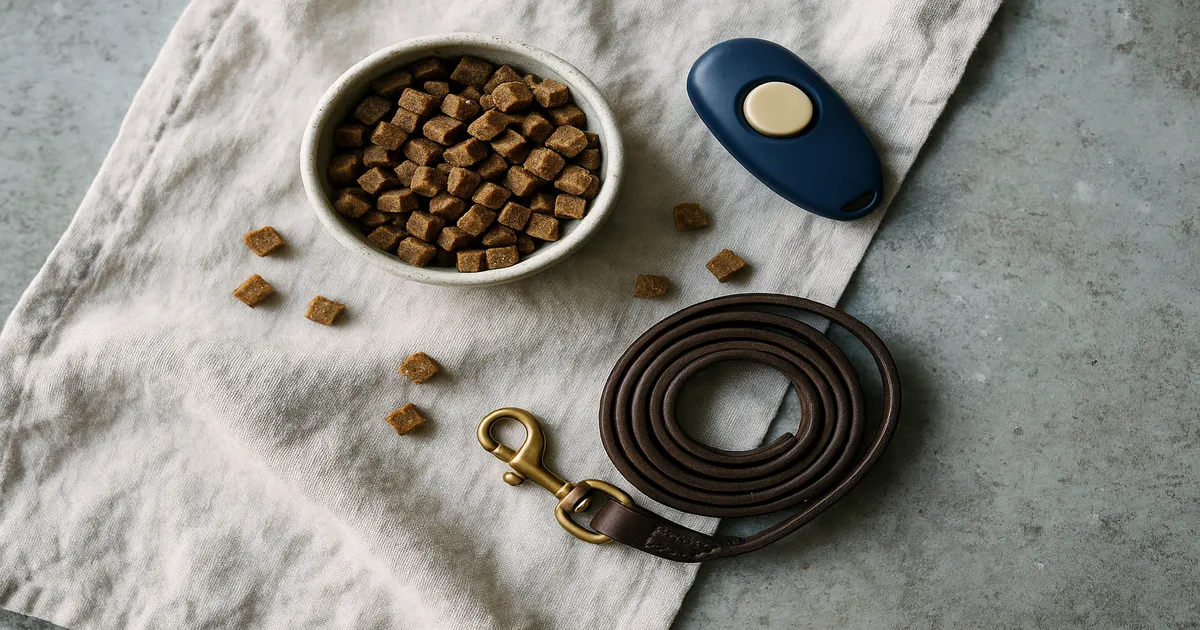
A clicker — or a consistent verbal marker like “yes!” — bridges the gap between the behavior and the reward. It tells the dog exactly what earned the treat, removing the ambiguity that slows learning. A quality clicker makes a real difference here. (Karen Pryor i-Click)
Most top online guides, including Kikopup and AKC GoodDog!, incorporate marker training as a foundational skill.
Luring, Shaping, and Capturing
Three distinct ways to get a behavior on cue:
- Luring: A treat guides the dog’s body into position. Fast to teach, but fade the lure quickly or the dog becomes dependent on seeing food.
- Shaping: Rewarding successive approximations toward a goal behavior. Slower, but builds dogs who actively problem-solve.
- Capturing: Rewarding a behavior the dog offers naturally — clicking when the dog lies down on his own, for example. Great for calm, low-energy behaviors.
The best guides teach all three and help you choose the right tool for each situation.
Why Dominance-Based Training Is Harmful
The alpha/pack leader model was built on misinterpreted wolf research that has since been corrected by its original author, L. David Mech. Applying it to dogs — who aren’t wolves and live in human households, not packs — produces fear, suppressed body language, and increased bite risk. The AVSAB’s position is unambiguous: dominance-based methods cause harm and should be avoided.
Session Length and Frequency
Keep sessions short and frequent. Puppies have limited attention spans and fatigue quickly — which looks like distraction or defiance but is actually just a tired brain.
- 5–10 minutes per session
- 2–3 sessions per day
- End every session before the puppy checks out, on a successful repetition
Exercise, Mental Stimulation, and the Best Puppy Training Guide Advice
The 5-Minute Rule
Veterinary consensus is clear: 5 minutes of structured exercise per month of age, twice daily. A 3-month-old puppy gets 15-minute leash walks. A 5-month-old gets 25 minutes. Growth plates in large breeds don’t close until 12–24 months, and repetitive high-impact exercise before closure risks permanent orthopedic damage.
Mental Stimulation: Often More Effective Than Physical Exercise
A tired puppy is a good puppy — and mental fatigue is just as effective as physical exercise. Nose work activates dramatically more brain processing than a walk does. A 20-minute scent game can settle a high-drive puppy better than an hour of fetch.
Practical tools that work:
- Puzzle feeders and snuffle mats (Kong Classic)
- Licki mats for calm, focused settling (LickiMat Wobble)
- Obedience training sessions (which count as mental exercise)
- Decompression walks on a long line, letting the puppy sniff freely
Destructive chewing, excessive barking, and relentless attention-seeking are frequently labeled “bad behavior.” More often, they’re unmet physical and mental needs. Before reaching for a training solution, check whether the exercise quota is actually being met.
Grooming as Part of Training: Building Cooperative Care Early
Start Before 12 Weeks
Puppies introduced to brushes, nail trimmers, and ear handling before 12 weeks show dramatically less resistance as adults. The AVSAB’s cooperative care framework teaches dogs to voluntarily participate in grooming rather than endure it — a meaningful distinction that makes vet visits and at-home care far easier for everyone.
Nail Trimming, Ear Cleaning, and Dental Care
- Nails: Trim every 2–4 weeks. If you hear clicking on hard floors, they’re already too long. A nail grinder can be less stressful than clippers for sensitive puppies.
- Ears: Check weekly; clean every 2–4 weeks with a vet-approved cleaner. Never insert cotton swabs into the canal. Floppy-eared breeds — Cocker Spaniels, Basset Hounds, Poodles — are at higher risk for infections.
- Teeth: The American Veterinary Dental College reports that 80% of dogs show signs of periodontal disease by age 3. Brush daily with enzymatic toothpaste — never human toothpaste, which contains xylitol.
Introducing Grooming Tools with Positive Reinforcement
Start with the tool visible but not touching. Pair its presence with high-value treats and build duration gradually. A licki mat smeared with peanut butter during nail trims is a simple, effective technique that transforms the experience for anxious puppies. (LickiMat Buddy)
Puppy Health Essentials
Core Vaccine Schedule
Schedule your first vet visit within 48–72 hours of bringing your puppy home. The AAHA 2022 core vaccine schedule:
- 6–8 weeks: DA2PP (Distemper, Adenovirus, Parvovirus, Parainfluenza)
- 10–12 weeks: DA2PP booster + Bordetella
- 14–16 weeks: DA2PP booster + Rabies
- 12–16 months: Boosters
Monthly heartworm, flea, and tick prevention should begin at 8 weeks.
How Health Issues Affect Training Progress
A puppy who suddenly seems resistant, distracted, or reactive may be in pain. Undiagnosed orthopedic issues, ear infections, and skin allergies commonly masquerade as training problems. If your puppy’s responsiveness drops unexpectedly, rule out a physical cause before adjusting your training approach.
Nutrition: Fueling Learning and Growth
Puppy vs. Adult Food
Puppies need food formulated for growth — higher protein, appropriate fat levels, and a carefully balanced calcium-to-phosphorus ratio. This last point is especially critical for large and giant breeds. Too much calcium during rapid growth contributes directly to orthopedic conditions like OCD and hip dysplasia. Large-breed puppy formulas are specifically designed to manage this risk.
Using Food as a Training Reward
Treats should make up no more than 10% of daily caloric intake. The simplest way to stay within that limit is to use a portion of your puppy’s daily kibble as training rewards, reserving small, high-value treats — chicken, cheese, or soft commercial training treats — for new or difficult behaviors. (Zuke’s Mini Naturals)
Build a reward hierarchy: kibble for easy, familiar behaviors; high-value treats for challenging new skills or high-distraction environments.
Frequently Asked Questions About the Best Puppy Training Guide Online
What age should you start training a puppy?
Training starts the moment your puppy comes home — typically at 8 weeks. Young puppies can learn basic cues like sit, down, and name recognition immediately. Formal puppy classes can begin as early as 7–8 weeks, provided the puppy has had at least one vaccine set and the facility requires health screening for all dogs.
Is online puppy training as effective as in-person classes?
For foundational skills, quality online guides and video-based courses are genuinely effective — particularly for owners who are consistent. In-person classes offer one thing online resources can’t replicate: real-world socialization with other puppies and people. Ideally, use both. Online resources for daily practice, in-person classes for socialization and live feedback.
How do I know if a puppy training guide is trustworthy?
Look for transparent methodology, references to AVSAB or APDT guidelines, and content authored or reviewed by certified professionals (CPDT-KA, CDBC, or veterinary behaviorists). Avoid any guide that promises fast results through corrections, prong collars, or dominance-based techniques.
How long does it take to train a puppy?
Basic cues like sit, down, and come can be established within a few weeks of consistent daily practice. Reliable recall, loose-leash walking, and impulse control take longer — often several months. Adolescence (6–18 months) will test your patience, but puppies trained consistently through that window emerge as genuinely well-mannered adult dogs.
What’s the single most important thing a puppy training guide should cover?
Socialization during the critical window (3–12 weeks) has more long-term impact on your dog’s behavior than any single training technique. A guide that doesn’t address this period prominently is missing the most important chapter.