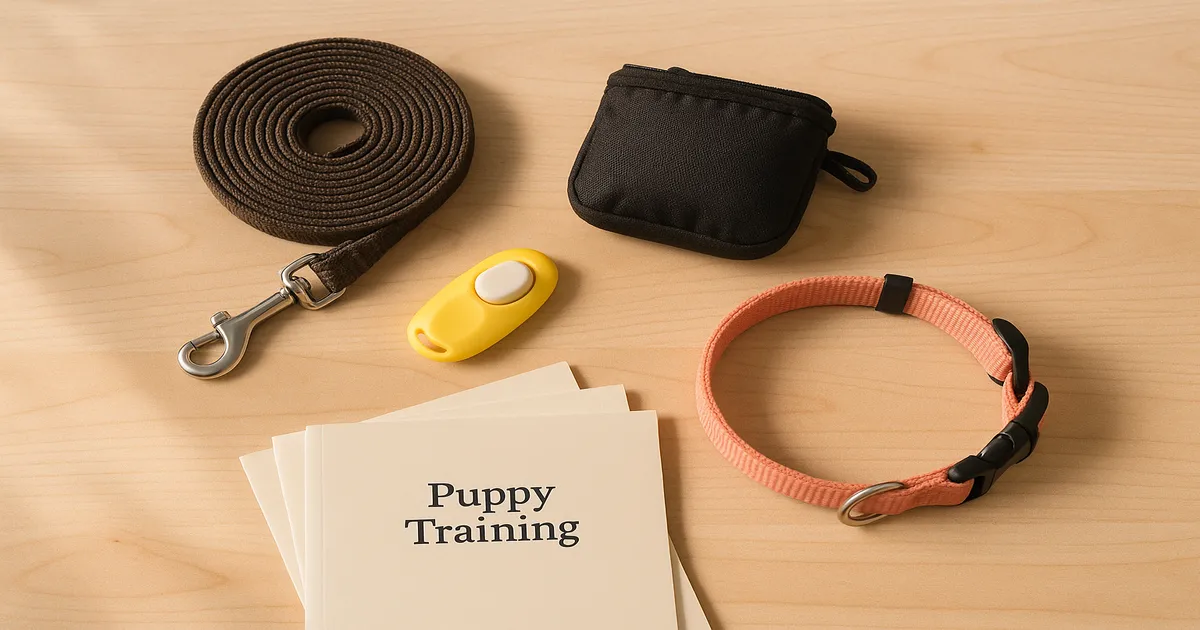
Quick Answer: The first two weeks with a new puppy are less about perfection and more about foundation. Focus on name recognition, basic socialization, and building trust through positive reinforcement — and understand that your pup’s breed background will shape how quickly and eagerly they respond to early lessons.
Knowing how to navigate initial training days with a new pup can feel overwhelming, but the science is reassuringly clear: the most important work happens in the first 12 weeks of life, and small, consistent efforts compound fast. Your puppy doesn’t need to sit on cue by Friday. They need to feel safe, start learning their name, and experience the world in positive, manageable doses. Get those three things right, and everything else builds on a solid foundation.
What to Expect When You Navigate Initial Training Days With a New Pup
The Most Important Thing to Know Before Day 1
The socialization window — the period when a puppy’s brain is most open to learning that the world is safe — runs from roughly 3 to 12 weeks of age. By the time most puppies arrive in their new homes at 8 weeks, you have just four weeks left in that window. That’s not a reason to panic. It is a reason to start immediately.
Positive reinforcement is non-negotiable during this period. Reward what you want to see more of, ignore or redirect what you don’t, and never use punishment. This isn’t just philosophy — punishment causes lasting psychological harm in puppies, particularly in sensitive breeds like Vizslas, Whippets, and Cavalier King Charles Spaniels.
What You Can Realistically Achieve in the First Two Weeks
By the end of day 14, a well-supported puppy should recognise their name, have started learning “sit,” be making progress with crate comfort, and have experienced a variety of surfaces, sounds, and people. That’s a genuinely impressive list for a creature that sleeps 16–20 hours a day.
How Your Puppy’s Breed Shapes Early Training
Herding Breeds: Independent Thinkers Who Anticipate Commands
Border Collies, Australian Shepherds, German Shepherds, and Corgis were selectively bred to think ahead of their handler. Border Collies can learn a new command in fewer than five repetitions and obey first commands more than 95% of the time — but that intelligence cuts both ways. These puppies will problem-solve during sessions, sometimes offering behaviours before you’ve asked for them. Channel that energy with clear structure and plenty of mental challenge.
Sporting and Gun Dog Breeds: Natural People-Pleasers
Labradors, Golden Retrievers, and Cocker Spaniels were built to work in close partnership with humans. Labs and Goldens make up approximately 70% of guide and service dog programmes in the US — that cooperative drive shows up from day one. Expect strong eye contact, high food motivation, and genuine enthusiasm. The main early challenge is redirecting overexcitement like jumping and mouthing, not coaxing engagement.
Working Breeds: Confident Handling Required from Day One
Rottweilers, Dobermans, Boxers, and Siberian Huskies are physically powerful and strong-willed. They respect calm, consistent leadership and will test any ambiguity in your expectations. Early socialisation isn’t optional for these breeds — it’s essential. The Husky in particular carries an independent streak developed over thousands of years alongside the Chukchi people of Siberia, making it one of the more challenging working breeds for first-time owners.
Terrier Breeds: Short Sessions and High Rewards Win
Terriers were bred to make fast, independent decisions underground — without waiting for instructions. That translates to a dog who chooses when to comply. They’re not less intelligent; Stanley Coren’s research places them in the middle tier specifically because of selective compliance. Keep sessions to 3–5 minutes, use high-value rewards, and end on a win every single time.
Toy Breeds: Never Underestimate Small Dogs
Chihuahuas, Pomeranians, and Yorkshire Terriers are fully capable of advanced obedience — they’re simply victims of inconsistent owner expectations. Toy breeds are disproportionately surrendered to shelters due to house-training failures that stem directly from owners applying lower standards than they would to a larger dog. Train them exactly as you would a German Shepherd puppy. They’ll surprise you.
Hound Breeds: When the Nose Overrides Everything Else
Scent hounds like Beagles and Bloodhounds have noses that can genuinely override all other inputs, including your voice. Start training in the lowest-distraction environment possible — indoors, ideally before meals. Sight hounds like Greyhounds and Whippets carry explosive prey drive that requires careful management around small animals from the very first day.
Understanding Puppy Temperament in the First Two Weeks
The Five Core Temperament Dimensions Every Owner Should Know
The C-BARQ assessment tool, developed at the University of Pennsylvania, identifies five dimensions that predict how a puppy will respond to early training:
- Trainability — desire to work with humans and respond to cues
- Aggression — reactivity toward strangers, familiar people, or other dogs
- Fear/Anxiety — response to novel stimuli and separation
- Attachment — bonding intensity with the primary caregiver
- Energy/Excitability — baseline arousal level
Understanding where your puppy sits on each dimension helps you calibrate your approach rather than fight against their nature.
High-Trainability Breeds vs. Independent Breeds: Day 1 Differences
A Golden Retriever puppy on day one typically makes eye contact readily, engages with food immediately, and gravitates toward their owner. A Chow Chow or Afghan Hound puppy may appear aloof, self-directed, and uninterested in interaction. Neither response is wrong — they reflect deeply ingrained genetic wiring. Forcing interaction with an independent breed backfires. Let them approach on their own terms, reward every voluntary engagement, and trust builds faster than you’d expect.
Recognising Stress Signals Before They Escalate
Puppies communicate discomfort clearly if you know what to look for:
- Yawning when not tired
- Lip licking
- Whale eye (whites of the eyes visible)
- Tucked tail or flattened ears
- Sudden ground sniffing mid-session
- Scratching seemingly out of nowhere
Any of these signals means the session is over. End positively, give the puppy space, and try again after a nap. Pushing through stress signals doesn’t build resilience — it builds negative associations with training.
How Sleep Cycles Affect Training Readiness
Puppies aged 8–12 weeks sleep 16–20 hours per day. The best training window is the 15–20 minutes of alert, curious wakefulness that follows a nap and a toilet trip. Miss that window and you’re training an overtired puppy — which produces frustration on both sides.
The Critical Socialization Window: Your Biggest Early Opportunity
What the Science Says About the 3–12 Week Window
Dr. Scott and Fuller’s landmark 13-year study at the Jackson Laboratory established that the socialization window closes at approximately 12–14 weeks. Dogs under-socialised during this period show measurably higher rates of fear, aggression, and anxiety throughout their lives. This is the single most important piece of science a new puppy owner can absorb.
Socialization Experiences to Prioritise Before Week 12
Introduce your puppy to as many of the following as possible — always at their pace, always paired with treats and calm praise:
- Surfaces: Grass, gravel, tile, carpet, metal grating, wooden stairs
- Sounds: Traffic, vacuum cleaners, children playing, thunder recordings
- People: Different ages, skin tones, hats, beards, umbrellas, wheelchairs
- Animals: Other vaccinated, friendly dogs and cats
- Handling: Paws, ears, mouth, tail — covered in detail in the grooming section below
- Environments: Car rides, pet-friendly stores, different rooms of the house
Fear Imprint Periods: What to Avoid and When
Between 3 and 6 months, puppies go through a juvenile fear imprint period. A single frightening experience during this window can create lasting sensitivity. Keep introductions positive and controlled. If your puppy shows stress signals, create more distance and slow down. Never flood a puppy with a scary stimulus hoping they’ll “get over it.”
Puppy Development Stages at a Glance
| Stage | Age | Key Training Focus |
|---|---|---|
| Neonatal | 0–2 weeks | Breeder handles; sensory development |
| Transitional | 2–3 weeks | Eyes and ears open; first social responses |
| Socialization Window | 3–12 weeks | Most critical learning period |
| Juvenile | 3–6 months | Basic commands; fear imprint awareness |
| Adolescence | 6–18 months | Boundary testing; reinforce foundations |
| Social Maturity | 18–36 months | Personality fully established |
How to Navigate Initial Training Days With a New Pup: Your First 14-Day Plan
Sample Day-by-Day Training Plan for Week One
Days 1–2: Focus entirely on settling in. Let the puppy explore the home at their own pace. Introduce the crate with the door open and a stuffed Kong inside — the Kong Classic filled with peanut butter or wet food is ideal for this. Start name recognition: say the puppy’s name once, and reward the moment they look at you.
Days 3–4: Begin short, 3–5 minute training sessions. Name recognition games, gentle handling of paws and ears, and crate meals to build positive association.
Days 5–7: Introduce “sit” using lure-and-reward — hold a treat above the nose and move it slowly back until the puppy’s bottom drops naturally. Start a consistent potty routine: outside immediately after every nap, meal, and play session.
The First Commands to Teach and Why
Teach in this sequence:
- Name recognition — the foundation of all future communication
- Sit — the first impulse-control behaviour; easy to lure and fast to reinforce
- Come/recall — the most important safety command your dog will ever learn; start it early and make it the most rewarding thing in their world
How Long Should Puppy Training Sessions Be?
Session length depends on breed temperament. For easily distracted or independent breeds — terriers, hounds, most toy breeds — keep sessions to 3–5 minutes. For high-trainability breeds like Border Collies, Poodles, and Labradors, you can stretch to 8–10 minutes before focus drops. Always end while the puppy is still engaged, not after they’ve already checked out.
Using Play as the Primary Learning Modality
The best puppy training sessions don’t feel like training at all — they feel like games. Chase games reinforce recall. Tug teaches “drop it.” Hide-and-seek builds both recall and problem-solving. If your puppy looks bored or distracted, make yourself more interesting, not more demanding.
Exercise Guidelines for Puppies: The 5-Minute Rule
Why Over-Exercising a Puppy Is a Serious Risk
The UK Kennel Club’s widely endorsed guideline is simple: 5 minutes of structured exercise per month of age, twice daily. A 10-week-old puppy gets roughly 12 minutes per session. That’s it.
Growth plates — the cartilage at the ends of developing bones — don’t fully close until 8–11 months in small breeds and as late as 18–24 months in giant breeds. Forced repetitive exercise before closure raises the risk of hip dysplasia, elbow dysplasia, and osteochondrosis. Free play in a safe, enclosed yard is far safer than leash walks for the first several weeks.
Exercise Needs by Breed Size
- Small breeds (under 20 lbs / 9 kg): 10–15 minutes of gentle play; indoor games are ideal
- Medium breeds (20–60 lbs / 9–27 kg): 15–20 minutes, building gradually; herding breeds in this range need disproportionate mental stimulation
- Large breeds (60–100 lbs / 27–45 kg): 15–20 minutes maximum; controlled fetch and training sessions count toward this
- Giant breeds (over 100 lbs / 45 kg): 10–15 minutes of very gentle activity; avoid stairs, jumping, and rough play entirely
Mental Stimulation Tools That Count as Exercise
Research from the University of Bristol confirms that mental fatigue is as effective as physical exercise for calming dogs — and often safer for young puppies. A 10-minute snuffle mat session can tire a puppy out as effectively as a walk.
| Tool | From Age | Primary Benefit |
|---|---|---|
| Stuffed Kong | 8 weeks | Self-soothing; crate training aid |
| Snuffle mat | 8 weeks | Scent engagement; slows eating |
| Licki mat | 8 weeks | Anxiety reduction; positive association |
| Puzzle toys (Level 1) | 10 weeks | Confidence building; problem-solving |
| Hide-and-seek | 10 weeks | Recall foundation; bonding |
| Name recognition games | 8 weeks | First training exercise |
A snuffle mat like the Paw5 Wooly Snuffle Mat works well from 8 weeks and doubles as a slow feeder. For puzzle toys, start with a beginner-level option like the Nina Ottosson Dog Brick before moving to more complex designs.
Grooming and Handling Desensitisation from Day One
Why Early Handling Sets Up a Lifetime of Vet and Groomer Tolerance
A puppy who learns that being touched is safe and rewarding becomes an adult dog who tolerates nail trims, ear cleaning, and veterinary examinations without stress. A puppy who never receives this foundation can become genuinely difficult — and occasionally dangerous — to handle as an adult, not out of aggression but out of fear. Start on day one.
Coat Type and What It Means for Your Training Routine
Short and smooth-coated breeds — Labradors, Beagles, Boxers, Chihuahuas — need minimal coat maintenance but benefit enormously from early handling desensitisation. A rubber curry brush used gently from the first week creates a positive association with grooming before there’s any real grooming to do. The Kong ZoomGroom is a good choice for this — it’s soft enough for puppies and doubles as a bathing tool.
Double-coated breeds will eventually require regular brushing to manage shedding and prevent matting. Starting with a soft slicker brush during puppyhood — even for 30 seconds at a time — makes adult grooming sessions dramatically easier. The Chris Christensen Big G Slicker Brush is widely used by professional groomers and gentle enough for early desensitisation work.
Step-by-Step Handling Desensitisation Protocol
Work through this sequence daily, keeping each session under two minutes:
- Touch a paw briefly — immediately pair with a high-value treat
- Hold the paw for one second — treat and release
- Touch an ear flap — treat
- Gently lift the ear — treat
- Touch the muzzle — treat
- Lift a lip briefly — treat
- Handle the tail — treat
The key is pairing every touch with something the puppy loves before any discomfort is possible. You’re building a conditioned emotional response: being touched means good things happen. Once that association is solid, nail trims and ear cleaning become manageable rather than battles.
Common Mistakes New Owners Make in the First Training Days
Inconsistency: The Number One Training Killer
If one family member lets the puppy jump up for greetings while another corrects it, the puppy learns that the rules change depending on who’s in the room. That’s not confusion — that’s exactly what you taught them. Every person in the household must apply the same rules from day one. Write them down if it helps.
Applying Adult Dog Standards to a Puppy Brain
An 8-week-old puppy cannot hold their bladder for more than two hours. They cannot focus for more than five minutes. They will bite, chew, and forget commands they knew yesterday. None of this is defiance — it’s developmental biology. Adjust your expectations to match the brain in front of you, not the adult dog you’re imagining.
Skipping Crate Training and Why It Backfires
A crate is not a punishment — it’s a safe den. Puppies who learn to self-soothe in a crate are less likely to develop separation anxiety, easier to house-train, and safer when left unsupervised. Introduce it with meals and stuffed Kongs, never force the puppy inside, and build duration gradually. The short-term effort pays dividends for years.
Punishment-Based Methods and the Damage They Cause
Scruff shaking, alpha rolls, and harsh verbal corrections suppress behaviour without teaching an alternative — and in sensitive breeds, they create lasting fear responses. Modern veterinary behavioural science is unambiguous: positive reinforcement produces faster, more reliable, and more durable learning than punishment. If a trainer recommends physical corrections for an 8-week-old puppy, find a different trainer.
Frequently Asked Questions About Navigating Initial Training Days With a New Pup
What is the first thing you should train a new puppy?
Start with name recognition — it’s the foundation of every command that follows. Say the puppy’s name once, and the moment they look at you, reward them immediately. Once they’re reliably responding to their name, move to “sit” as the first formal command. These two skills alone give you the ability to get your puppy’s attention in almost any situation.
How long should puppy training sessions be for an 8-week-old?
Keep sessions to 3–5 minutes for most breeds. High-trainability breeds like Border Collies and Golden Retrievers may sustain focus for up to 8–10 minutes, but it’s always better to end while the puppy is still engaged. Multiple short sessions throughout the day are far more effective than one long session that ends in frustration.
At what age is it too late to socialise a puppy?
The primary socialization window closes at approximately 12–14 weeks, based on Dr. Scott and Fuller’s landmark research. After that point, new experiences can still be introduced, but they require more effort and may not have the same lasting positive impact. Socialization is a lifelong process — it’s never truly “too late,” but earlier is always better.
How do I stop my puppy from biting during training sessions?
Puppy biting — also called mouthing — is normal developmental behaviour, not aggression. When your puppy bites during a session, end the interaction immediately and turn away. No yelping, no pushing them away — simply remove your attention for 10–15 seconds, then re-engage. Consistency across every family member is essential. Redirect biting onto appropriate chew toys and reward calm mouth behaviour generously.
Should I use treats for every command, or will my puppy become dependent on food?
Treats are a training tool, not a permanent requirement. In the early weeks, reward every correct response — this is called continuous reinforcement, and it’s how new behaviours are established quickly. Once a behaviour is reliable, shift to intermittent reinforcement: reward unpredictably, sometimes with food, sometimes with praise or play. This actually makes behaviours more durable, not less. Think of treats as the salary for learning a new job — once the skill is mastered, the pay structure changes.