Quick Answer: Abyssinian cats are low-to-moderate shedders. Their short, fine coat and minimal undercoat produce far less loose hair than double-coated breeds like Persians or Maine Coons. Seasonal peaks happen in spring and fall, but weekly brushing and a few simple home habits are all most owners need to stay on top of it.
If you’ve been researching how much Abyssinian cats shed before bringing one home, here’s the short version: not much. The Aby’s sleek, ticked coat is one of its most practical features — beautiful to look at and genuinely easy to manage. But “low shedding” doesn’t mean “no shedding,” and knowing what to expect through the seasons will help you stay ahead of the fur.
How Much Do Abyssinian Cats Shed?
Abyssinians sit firmly in the low-to-moderate shedding category. Their short, fine, close-lying coat produces noticeably less loose hair than most domestic breeds. You’ll find the occasional strand on your sofa, but you won’t be battling tumbleweeds of fur across your floors.
Seasonal shedding does happen — mainly in spring and to a lesser extent in fall — but it’s mild enough that most owners barely notice it compared to life with a Persian or Ragdoll.
Why Abyssinians Shed Less Than Most Breeds
The main reason is coat structure. Abyssinians have very little undercoat, and it’s the dense undercoat that causes the dramatic seasonal “blowouts” you see in double-coated breeds. Less undercoat means less fur flying when the seasons change.
Their short, fine hairs also behave differently when they do shed. Instead of clumping into visible fur piles, they tend to disperse — settling into fabric rather than rolling across hardwood floors. Less obvious, but still there.
Understanding the Abyssinian Coat
Coat Structure and Texture
The Abyssinian coat is short, fine, and dense, lying flat against the body with a distinctly silky feel. It has just enough undercoat to give it body, but nowhere near the thick insulating layer found in breeds built for cold climates. Run your hand along an Aby’s back and it feels almost painted on — smooth, lustrous, and close.
The Ticked Tabby Pattern
What makes the Abyssinian coat visually striking is its agouti ticking: each individual hair carries two to three alternating bands of colour. This creates a warm, shimmering effect across the entire coat — no stripes or spots, just a rich, layered depth. Ruddy (warm orange-brown with black ticking) is the classic expression, though blue, sorrel, and fawn variants are equally beautiful.
Abyssinian vs. Somali: A Shedding Comparison
The Somali is essentially a long-haired Abyssinian — same ticked pattern, same personality, but with a flowing semi-long coat that sheds considerably more. If you love the Abyssinian temperament but want a fluffier look, be prepared for significantly more grooming and more visible hair around the home. For low-shedding households, the shorthaired Aby is the clear choice.
Abyssinian Shedding Compared to Other Cat Breeds
Shedding Level Comparison
| Breed | Shedding Level |
|---|---|
| Sphynx | Minimal (hairless) |
| Abyssinian | Low–Moderate |
| Siamese | Low–Moderate |
| Bengal | Low–Moderate |
| American Shorthair | Moderate |
| Maine Coon | Moderate–High |
| Persian | High |
| Ragdoll | High |
| Siberian | High |
Are Abyssinians Hypoallergenic?
No — Abyssinians are not hypoallergenic. Like every cat, they produce the Fel d 1 protein, the primary trigger for cat allergies, which is found in saliva, skin secretions, and urine — not just fur.
That said, their lower shedding volume means less airborne hair and dander, and some people with mild cat allergies find them easier to tolerate than high-shedding breeds. This is not guaranteed. Anyone with allergies should spend several hours with an Abyssinian in a home environment before committing — a quick breeder visit won’t tell you the full story.
Seasonal Shedding: What to Expect Year-Round
Spring is the heaviest shedding period. As daylight hours increase, the coat transitions and releases whatever winter growth occurred. For most Aby owners this is still a manageable uptick — a bit more hair on the brush, maybe a few extra strands on the couch — rather than a dramatic event. The fall shed is typically lighter; many owners barely notice it at all.
Managing Increased Shedding Periods
The fix is simple: brush more often. During spring and fall, increase brushing from once a week to two or three times per week. This captures loose hair before it lands on your furniture and keeps the coat looking its best. A few additional tools worth keeping on hand:
- Lint rollers for quick clothing clean-ups
- Washable furniture covers during peak shedding weeks
- A pet-hair vacuum attachment for upholstered surfaces
Grooming Your Abyssinian to Minimise Shedding
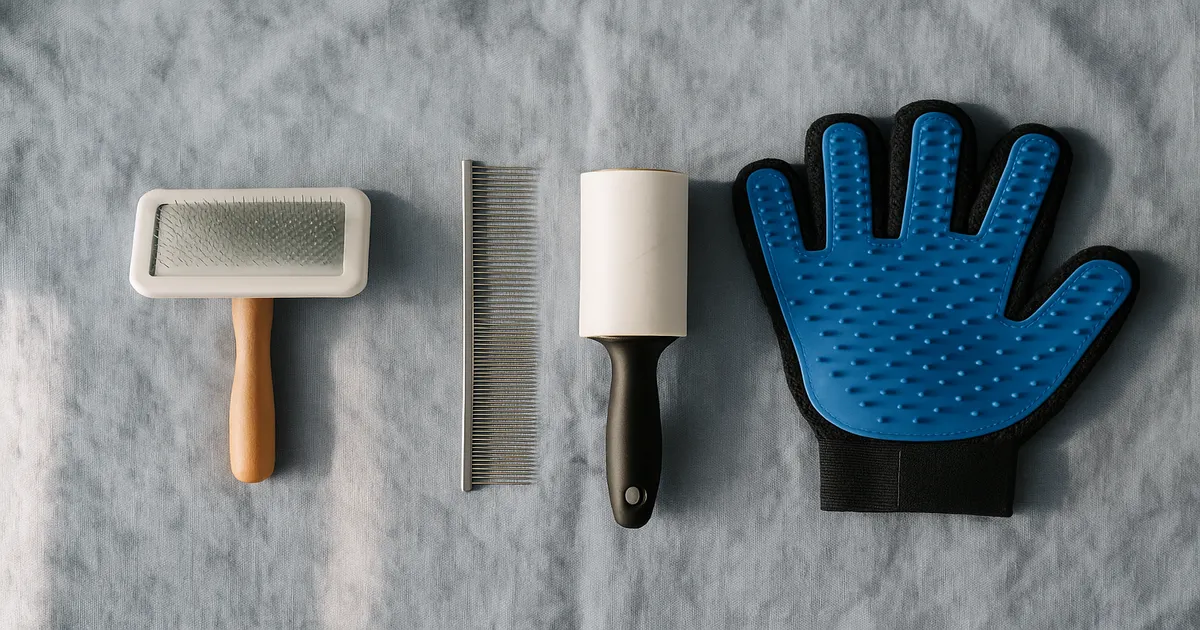
Best Brushes and Grooming Tools
The right tool makes a real difference. For an Abyssinian’s fine, close-lying coat, you want something that removes loose hair without being harsh on the skin.
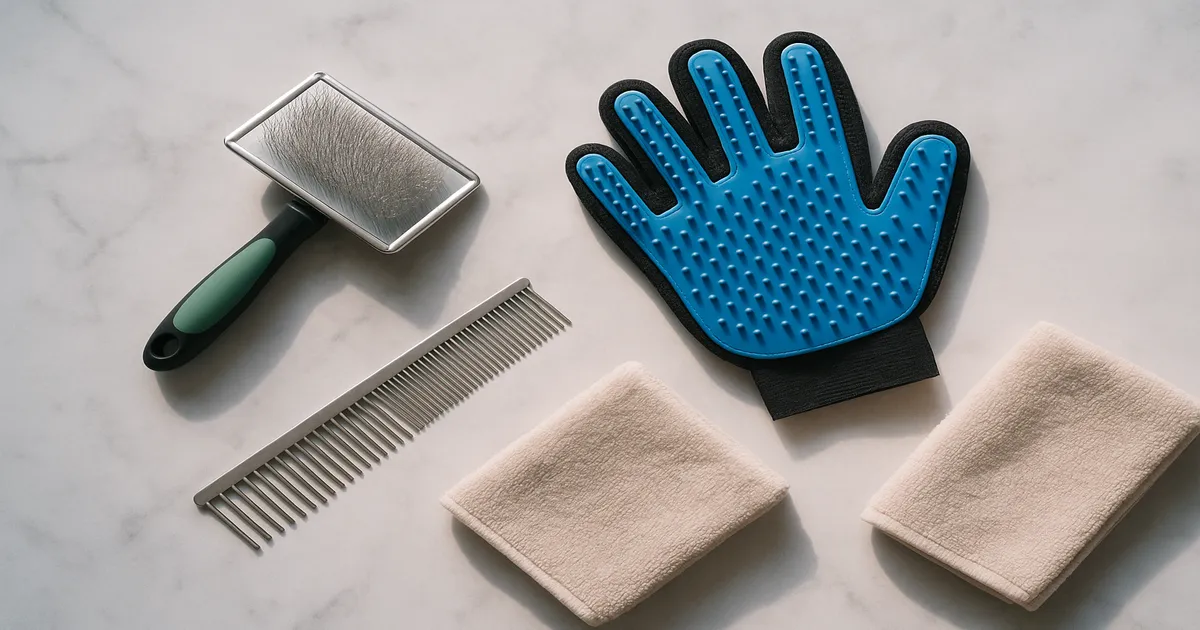
- Rubber grooming mitt — the most Aby-friendly option; feels like a massage and most cats love it. The HandsOn Pet Grooming Gloves work particularly well for this coat type.
- Rubber curry brush — excellent for loosening dead hair and stimulating the skin. The Kong ZoomGroom is a popular choice.
- Soft-bristle brush — good for finishing and adding shine.
- Fine-tooth metal comb — use occasionally to check for parasites or skin irregularities.
Avoid stiff slicker brushes designed for longer-coated breeds — they’re overkill for this coat and can strip natural oils.
How Often to Brush an Abyssinian
Once a week is the baseline for most of the year. During shedding peaks, bump that up to two or three times per week. Abyssinians introduced to brushing as kittens often grow to genuinely enjoy the sessions — their dog-like social nature means they tend to lean into the attention rather than run from it.
Does Bathing Reduce Shedding?
A bath can help loosen and remove dead coat, especially heading into peak shedding season. For most pet Abyssinians, bathing every two to four months is plenty — or whenever they get into something. Their short coat dries quickly, which makes the whole process far less of an ordeal than it is with longer-haired breeds.
Always use a cat-specific shampoo — human products disrupt feline skin pH and can cause irritation. Burt’s Bees Hypoallergenic Cat Shampoo is a gentle, widely available option. If you want a cat that tolerates bathing without turning it into a wrestling match, start the habit in kittenhood.
Complete Grooming Routine: Beyond the Coat
A thorough Abyssinian care routine covers more than brushing:
- Nails: Trim every two to three weeks with cat-specific clippers. Provide tall scratching posts (at least 28–32 inches / 71–81 cm) to help naturally wear them down.
- Ears: Check weekly for wax, debris, or odour. Clean with a vet-approved ear solution and a cotton ball — never a cotton swab inside the canal.
- Eyes: Wipe any discharge from the corners with a damp soft cloth, using a separate cloth for each eye.
- Teeth: Brush two to three times per week using cat-specific enzymatic toothpaste. Daily is ideal. Virbac CET Enzymatic Toothpaste is a vet-recommended brand worth keeping in your kit.
Health Conditions That Can Affect Abyssinian Shedding
When Shedding Is a Warning Sign
Abyssinians are naturally low shedders, so a sudden or noticeable increase in hair loss warrants attention. Common culprits include stress, nutritional deficiencies, environmental allergies, skin conditions, or underlying illness. If your Aby’s shedding pattern changes significantly without an obvious seasonal explanation, a vet visit is the right call.
Breed-Specific Health Issues to Know
A few inherited conditions are worth understanding, since overall health directly affects coat quality:
- Progressive Retinal Atrophy (PRA): A genetic eye condition causing progressive vision loss; DNA testing is available and responsible breeders screen for it.
- Renal Amyloidosis: Protein deposits in the kidneys that can lead to early-onset kidney failure, typically appearing between one and five years of age.
- Pyruvate Kinase (PK) Deficiency: An inherited anaemia affecting red blood cell lifespan; DNA testing is available.
- Hypertrophic Cardiomyopathy (HCM): The most common feline heart disease; Abyssinians carry a moderate predisposition.
Any of these conditions can show up secondarily in the coat — dullness, increased shedding, or poor texture — before other symptoms become obvious.
Nutrition and Coat Health
Diet is one of the most effective and most overlooked tools for managing shedding. A high-quality, high-protein cat food rich in omega-3 and omega-6 fatty acids supports skin barrier function and coat sheen. Fish-based formulas or those supplemented with fish oil are particularly good options — Purina Pro Plan Complete Essentials Adult Cat Food is a well-regarded choice that meets these criteria. Poor nutrition is one of the most common — and most correctable — causes of excessive shedding.
Tips for Living With an Abyssinian and Managing Cat Hair
Managing Abyssinian hair is genuinely straightforward. A few consistent habits go a long way:
- Vacuum weekly with a pet-hair attachment, focusing on upholstered furniture and rugs
- Keep lint rollers in multiple rooms and by the front door
- Wash cat bedding every one to two weeks
- Consider a HEPA air purifier to capture airborne hair and dander — the Levoit Core 300 is a compact, effective option for a single room
Furniture and Fabric Choices That Help
Short, fine cat hairs weave stubbornly into certain fabrics and disappear on others. If you’re decorating with an Aby in mind:
- Microfibre and leather repel short hairs better than velvet, chenille, or loose-weave fabrics
- Medium-tone furniture (tans, greys) shows Aby hair less than very dark or very light upholstery
- Washable slipcovers are a practical investment for high-traffic cat spots
Frequently Asked Questions About Abyssinian Cat Shedding
Do Abyssinian cats shed a lot?
No. Abyssinians are low-to-moderate shedders. Their short, fine coat and minimal undercoat produce significantly less loose hair than breeds like Persians, Ragdolls, or Maine Coons. Seasonal shedding occurs in spring and fall, but most owners find it very manageable with weekly brushing.
How much do Abyssinian cats shed compared to other breeds?
Less than most. They sit below average compared to popular breeds, though they shed more than hairless cats like the Sphynx. Their minimal undercoat is the key difference — most heavy shedding in cats comes from the dense undercoat cycling seasonally, and Abyssinians simply don’t have much of one.
Are Abyssinian cats good for people with allergies?
Possibly, for mild sensitivities — but they are not hypoallergenic. All cats produce the Fel d 1 protein that triggers allergic reactions. Lower shedding volume means less airborne hair and dander, which some allergy sufferers find helpful. Anyone with cat allergies should spend extended time with the breed before deciding to adopt.
How often should you brush an Abyssinian cat?
Once a week is sufficient for most of the year. During spring and fall shedding seasons, increase to two or three times per week. A rubber grooming mitt or curry brush works best for their fine, close-lying coat.
Why is my Abyssinian shedding more than usual?
Increased shedding outside of normal seasonal peaks can signal stress, poor nutrition, allergies, a skin condition, or an underlying health issue. Check whether anything has changed in the cat’s diet, environment, or routine. If the shedding is significant or accompanied by other symptoms — lethargy, skin changes, weight loss — consult your veterinarian.