Quick Answer: Male Maine Coons tend to be more overtly affectionate, clownish, and socially confident. Females are typically more independent, selective in their bonding, and self-possessed in how they engage with people. Both sexes make wonderful companions — the right choice depends far more on your lifestyle than on which is objectively better. Spay/neuter status shapes behaviour significantly in either case.
If you’ve been researching Maine Coon temperament male vs female, you’ve probably noticed that breeders, owners, and cat behaviourists tend to agree: yes, real differences exist — but they’re more like two flavours of wonderful than a clear winner. This guide covers what to expect from each sex, what traits they share, and how to decide which one suits your home.
Male vs Female Maine Coon Temperament: Key Differences at a Glance
| Trait | Male | Female |
|---|---|---|
| Affection Style | Constant, demonstrative | Selective, on their terms |
| Independence | Lower — velcro-cat tendencies | Higher — comfortable alone |
| Vocality | More frequent chirping and trilling | Quieter day-to-day |
| Playfulness | Exuberant, clownish, kitten-like longer | Focused, prey-driven, self-directed |
| Family Suitability | Excellent with kids, dogs, busy households | Excellent for singles, quieter homes |
| Typical Weight | 13–18 lbs (5.9–8.2 kg) | 8–12 lbs (3.6–5.4 kg) |
Sex is one factor — not the whole story. Individual personality, early socialisation, and spay/neuter status will often influence behaviour more than sex alone. That said, the patterns above are consistent enough to be worth understanding before you bring a kitten home.
Maine Coon Background: Why Temperament Runs Deep
The Maine Coon is widely recognised as the only longhaired cat breed native to the United States. The most plausible origin story traces them to longhaired cats brought by European sailors in the 1700s and 1800s, which interbred with the shorthaired cats of New England farms and ships. No deliberate breeding programme created them — environment and utility shaped the breed entirely.
For generations, Maine Coons earned their keep hunting rodents on farms and homesteads through brutal New England winters. That history matters. Centuries of living alongside humans, relying on cooperation rather than solitude, produced a cat that is genuinely people-oriented at a genetic level. The breed nearly vanished mid-century when Persians dominated the show scene, but a revival in the 1960s and 70s — anchored by the founding of the Maine Coon Breeders and Fanciers Association in 1968 — saved it. The CFA granted full recognition in 1976, and today Maine Coons rank among the most popular cat breeds in the US by CFA registration.
The “dog-like” label gets used a lot, and it genuinely fits. Maine Coons follow their owners from room to room, greet people at the door, learn their names reliably, and can be trained to walk on a leash or play fetch. This sociable, trainable temperament is the baseline for both sexes — the male vs female differences sit on top of that shared foundation.
Male Maine Coon Temperament: The Social Clown
Personality and Social Style
Male Maine Coons are the extroverts of the breed. They’re overtly affectionate and frequently described as velcro cats — they want to be wherever you are, whether that’s the couch, the bathroom, or the home office. Expect antics. Males are more likely to perform silly stunts, knock things off shelves for the reaction, and generally behave as though they’re auditioning for a sitcom.
Their kitten energy lingers well past the first birthday. Many males remain exuberantly playful into their third or fourth year, which is part of their charm — though it does mean they need consistent mental and physical stimulation. They’re also notably more vocal, using the breed’s signature chirps and trills throughout the day.
Socially, males tend to be confident across the board. They’re less likely to disappear when guests arrive and more likely to trot over and investigate a new person. With children, they’re typically patient and tolerant of unpredictable handling. In multi-pet households, neutered males generally integrate well with other cats and dogs, often initiating play rather than conflict.
Intact vs Neutered Males
An intact male Maine Coon is a different animal entirely. Spraying, roaming, and territorial aggression are significant issues that make an unneutered male genuinely difficult to live with. Neutering — ideally before sexual maturity around 5–6 months — resolves the vast majority of these behaviours and reveals the affectionate, sociable temperament the breed is known for. One caveat: because males bond so intensely with their humans, they carry a higher risk of separation anxiety. If you work long hours, a second cat for company is worth serious consideration.
Female Maine Coon Temperament: The Dignified Queen
Personality and Social Style
Female Maine Coons are affectionate — just on their own schedule. They’ll come to you for a cuddle when they’re ready, settle in your lap with quiet contentment, and then equally decide they’re done and move on. There’s a self-possession to them that many owners find deeply appealing. They’re observant and measured, and they tend to assess a new situation before committing to engagement.
Day-to-day, females are typically more consistent in mood than males. Less drama, fewer antics, but no less personality. Their prey-drive behaviours — stalking, pouncing, precise toy targeting — tend to be sharper and more focused than the males’ more scattershot enthusiasm.
Females often form one deep primary bond. They’ll be friendly and pleasant with the whole household, but there’s usually one person who gets the full treatment: the slow blinks, the head bumps, the quiet companionship. They’re also more comfortable self-entertaining, which makes them a better fit for owners who are away from home during the day.
Intact vs Spayed Females
An unspayed female in heat is loud, restless, and relentlessly escape-seeking — and heat cycles can recur every two to three weeks during breeding season (roughly January through September in the Northern Hemisphere). Spaying eliminates this entirely and reveals the calm, self-possessed personality described above. In multi-cat homes, female-to-female introductions require careful, patient management; territorial tension is more common between two females than other pairings.
Shared Traits: What All Maine Coons Have in Common
Intelligence and Trainability
Maine Coons are among the most trainable domestic cat breeds. They solve problems quickly, learn cause-and-effect relationships, and some individuals figure out how to open doors or cabinets with alarming efficiency. That intelligence responds well to positive reinforcement — clicker training works particularly well given their food motivation and focus. Keep sessions to five or ten minutes, two or three times a day, and they double as bonding time.
Both sexes can reliably learn their name (and actually come when called), leash walking with a harness, fetch and retrieve, basic commands like sit and high-five, and puzzle toy operation. A good puzzle feeder like the Doc & Phoebe’s Indoor Hunting Feeder keeps them occupied between sessions.
Vocalisations, Water Fascination, and Adaptability
Maine Coons don’t really meow in the traditional sense — they chirp, trill, and chatter. It’s one of the breed’s most endearing quirks, and both sexes do it; males tend to do it more frequently. The breed’s water fascination is equally real. Many Maine Coons will paw at their water bowl, supervise bath time, or sit beside a running tap with great interest — which makes grooming considerably easier than with many other longhaired breeds.
Maine Coons also handle change better than most cats. New homes, new family members, new routines — they adjust. Neither sex is suited to long-term isolation; these are social cats that thrive with interaction.
Which Maine Coon Sex Is Right for You?
Families with young children will generally find males the stronger fit. Their higher tolerance for unpredictable handling, enthusiasm for interactive play, and social confidence with strangers make them well-suited to a busy household.
Single owners or couples often find a female’s selective, devoted bond deeply rewarding. You get a cat that genuinely chooses you — without the intensity of a velcro cat that needs constant reassurance.
Multi-pet households tend to integrate neutered males most smoothly, particularly when dogs or sociable cats are already in residence. If you’re adding a second cat to a home with a resident female Maine Coon, a male is usually an easier introduction than another female.
A few other lifestyle factors worth considering:
- Working long hours? A female’s comfort with self-entertainment is an advantage — or consider getting two cats regardless of sex.
- Apartment living? Both sexes adapt well, but a cat exercise wheel like the One Fast Cat Exercise Wheel and tall climbing structures are essential.
- Want a training project? Both sexes are trainable, but males’ attention-seeking nature often makes them slightly more enthusiastic partners.
If possible, spend time with a kitten — or better yet, meet the parents — before deciding. Individual personality and early socialisation matter enormously.
Exercise, Grooming, and Health Essentials
Exercise and Play
Maine Coons need at least 20–30 minutes of active play daily, ideally split across two or three sessions. Wand toys like the Da Bird Feather Wand, fetch with small toy mice, and harness walks all work well. A cat tree at least 5–6 feet (1.5–1.8 m) tall is non-negotiable — these are strong, athletic cats that need vertical space. An under-stimulated Maine Coon will tell you about it through furniture scratching, excessive vocalisation, or enthusiastically clearing every surface in your home.
Grooming
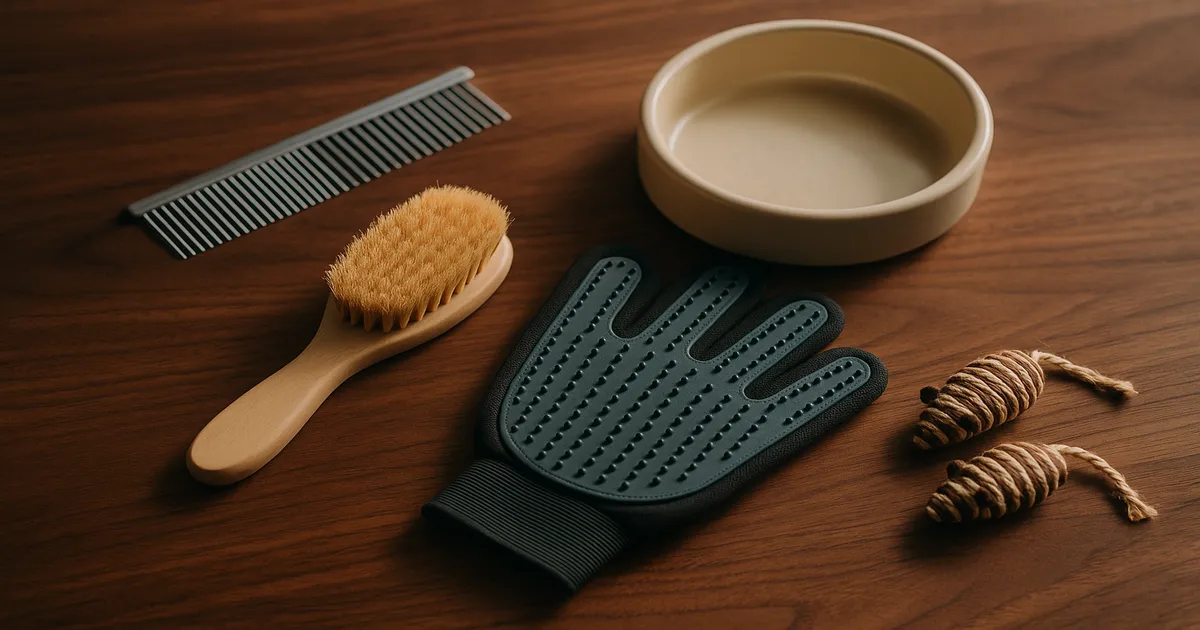
Maine Coon coats are silkier and less mat-prone than they look. That said, they do shed — moderately year-round, heavily during spring and autumn coat blows. Brush two to three times per week with a wide-toothed metal comb as your primary tool — the Andis Steel Comb is a reliable choice — plus a slicker brush for finishing. During heavy shedding seasons, daily brushing saves your furniture and reduces hairballs. Pay extra attention to the armpits, belly, behind the ears, and the “pantaloons” on the hind legs, where mats are most likely to form.
Additional grooming tasks: trim nails every two to three weeks, check ears weekly and clean with a vet-approved solution as needed, and brush teeth two to three times weekly with a cat-specific enzymatic toothpaste like Virbac CET Enzymatic Toothpaste.
Key Health Conditions
Hypertrophic Cardiomyopathy (HCM) is the breed’s most serious health concern. Maine Coons have a higher prevalence of the MYBPC3 gene mutation associated with HCM compared to most other breeds, though precise population-wide figures vary across studies; regular cardiac screening is essential regardless of genetic test results. The condition can progress to congestive heart failure, making echocardiograms a non-negotiable part of ongoing care.
Hip dysplasia affects a notable proportion of Maine Coons — more than most cat breeds — likely due to their large body size. Severity ranges from subclinical to significant lameness.
Spinal Muscular Atrophy (SMA) is a recessive genetic condition causing progressive muscle weakness in kittens from around 3–4 months of age. A DNA test exists, and responsible breeders screen all breeding cats. Affected cats aren’t in pain and can live comfortable lives with appropriate care.
Obesity is an underappreciated risk, particularly in neutered individuals, and it worsens both HCM and hip dysplasia significantly. Keeping your Maine Coon at a healthy weight is one of the highest-impact things you can do for their long-term health.
When buying from a breeder, ask for documentation of negative HCM (MYBPC3), SMA, and PKD genetic test results for both parents. A reputable breeder will have this paperwork ready without hesitation.
| Age | Recommended Screening |
|---|---|
| 8–12 weeks | Initial vet exam, core vaccines, FeLV/FIV testing |
| 6 months | Pre-spay/neuter bloodwork, dental evaluation |
| 1 year | Annual wellness exam, baseline cardiac auscultation |
| 2 years | First echocardiogram (HCM), hip evaluation if symptomatic |
| Annually (2+) | Wellness exam, echocardiogram, bloodwork, urinalysis |
| 7+ years | Senior panel every 6 months; blood pressure and kidney monitoring |
Frequently Asked Questions: Maine Coon Temperament Male vs Female
Are male or female Maine Coons more affectionate?
Males are typically more demonstratively affectionate — they seek physical contact consistently, follow their owners around, and initiate cuddles on a near-constant basis. Females are affectionate too, but on their own terms. Neither sex is cold or aloof; they just express affection differently.
Do male Maine Coons spray, and does neutering stop it?
Intact males will spray to mark territory — it’s a strong, persistent behaviour driven by hormones. Neutering before sexual maturity (around 5–6 months) eliminates or dramatically reduces spraying in the vast majority of cases. When neutered males do spray, it’s usually a stress response rather than hormonal marking.
Are female Maine Coons more independent than males?
Yes, generally. Females are more comfortable spending time alone, more selective about when they seek attention, and less likely to develop separation anxiety. That independence isn’t aloofness — they form deep bonds — but they’re far less likely to shadow you from room to room the way males often do.
Does spaying or neutering change a Maine Coon’s personality?
It removes hormonally-driven behaviours — spraying and aggression in males, heat cycles and escape-seeking in females — while leaving the core personality intact. Most owners find their cat’s true personality becomes more consistently visible after the procedure, without hormonal swings getting in the way.
Can a male and female Maine Coon live together peacefully?
Yes — a male-female pairing is often the smoothest combination in a multi-cat Maine Coon household. Both should be spayed and neutered before introduction. With a proper slow introduction (scent swapping, gradual visual contact, supervised meetings), most opposite-sex Maine Coon pairs settle into companionable cohabitation relatively quickly.