Quick Answer: To care for a poodle’s coat, brush 3–4 times per week, bathe every 3–4 weeks, and schedule professional grooming every 6–8 weeks. Poodle hair grows continuously, and shed hairs get trapped in the curls instead of falling out — so skipping maintenance leads to painful mats fast. Stay consistent, always blow-dry fully after bathing, and you’ll keep that coat healthy and tangle-free.
If you’ve ever felt like caring for a poodle’s coat is a part-time job, there’s a good reason for that. Poodle hair never stops growing. Unlike most breeds that shed seasonally, poodles hold loose hairs inside their curls, which means matting is always one missed brushing session away. The good news is that once you understand the biology and build a consistent routine, coat care becomes second nature — and the results are worth it.
How to Care for a Poodle’s Coat: The Essentials
Here’s what every poodle owner needs to know upfront:
- Brush 3–4 times per week minimum (daily for longer styles)
- Bathe every 3–4 weeks for longer clips; every 4–6 weeks for shorter ones
- Professional groom every 6–8 weeks
- Always blow-dry completely — never air dry
- Clean ears every 2–4 weeks
- Trim nails every 3–4 weeks
Why Poodle Coat Care Is Unique
Most dogs shed dead hairs onto your sofa. Poodles don’t. Their single-layer, continuously growing coat traps loose hairs inside the curls, where they tangle with living hairs and form mats. There’s no seasonal “reset” — the coat just keeps growing. That combination of continuous growth, no shedding, and a dense curl pattern is what makes poodle grooming more demanding than nearly any other breed.
Understanding the Poodle Coat
Hair vs. Fur
Poodles have hair, not fur, and the distinction matters. Fur grows in cycles — it reaches a set length, dies, sheds, and regrows. Hair, like yours, grows continuously until cut. A poodle’s coat follows the same pattern, which is why it needs regular trimming and consistent brushing to stay manageable.
Curl patterns vary from tight ringlets to loose, wavy spirals depending on the individual dog’s genetics. Tighter curls mat more quickly but tend to look more uniform. Looser waves are somewhat easier to brush through but can still develop tangles at the skin level where you can’t always see them.
Are Poodles Truly Hypoallergenic?
No dog is 100% allergen-free, but poodles are among the better options for allergy sufferers. They produce lower levels of the Can f 1 allergen and release less dander because shed hairs stay trapped in the coat rather than floating through the air. The American College of Allergy, Asthma & Immunology lists them among the most suitable breeds for people with dog allergies — though individual reactions still vary.
Standard, Miniature, and Toy: Do Coat Needs Differ?
All three size varieties share the same coat biology. A Standard Poodle at 40–70 lbs and a Toy Poodle at 4–6 lbs have essentially the same hair type. The practical difference is surface area — a Standard simply takes longer to brush and costs more to groom professionally.
Brushing: Frequency, Tools, and Technique
How Often Should You Brush a Poodle?
At minimum, brush 3–4 times per week. If your poodle is in a longer style like a Teddy Bear or Continental clip, daily brushing is the only reliable way to stay ahead of mats. Think of it like flossing — skipping a few days occasionally is fine, but making it a habit creates problems that are expensive to fix.
The Right Tools for Poodle Coat Care
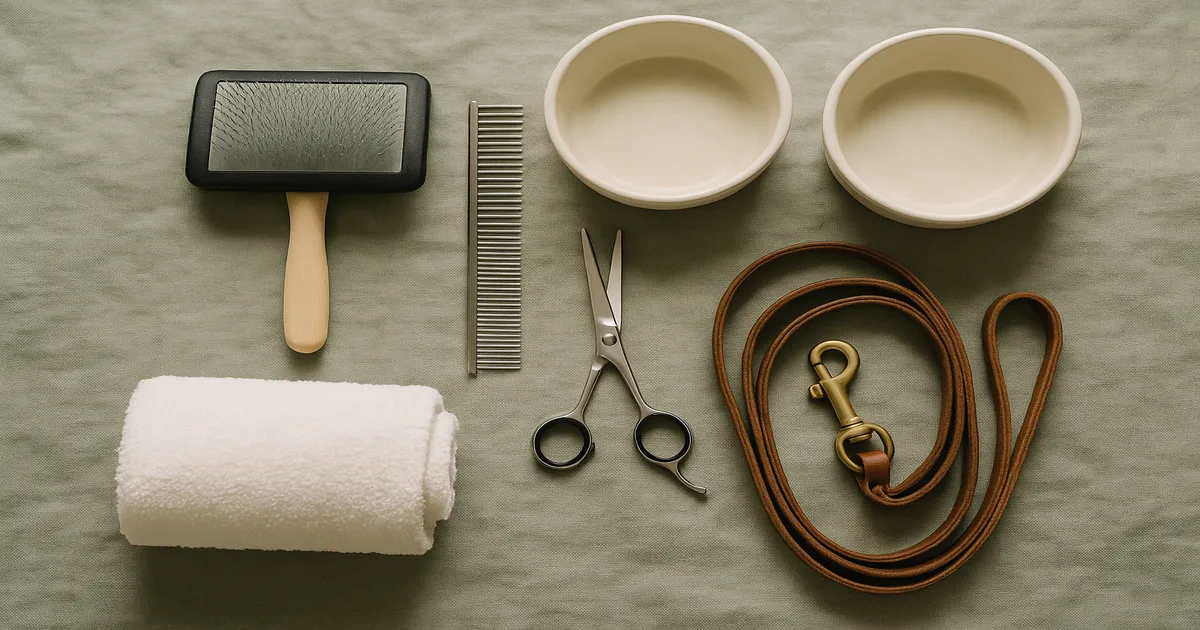
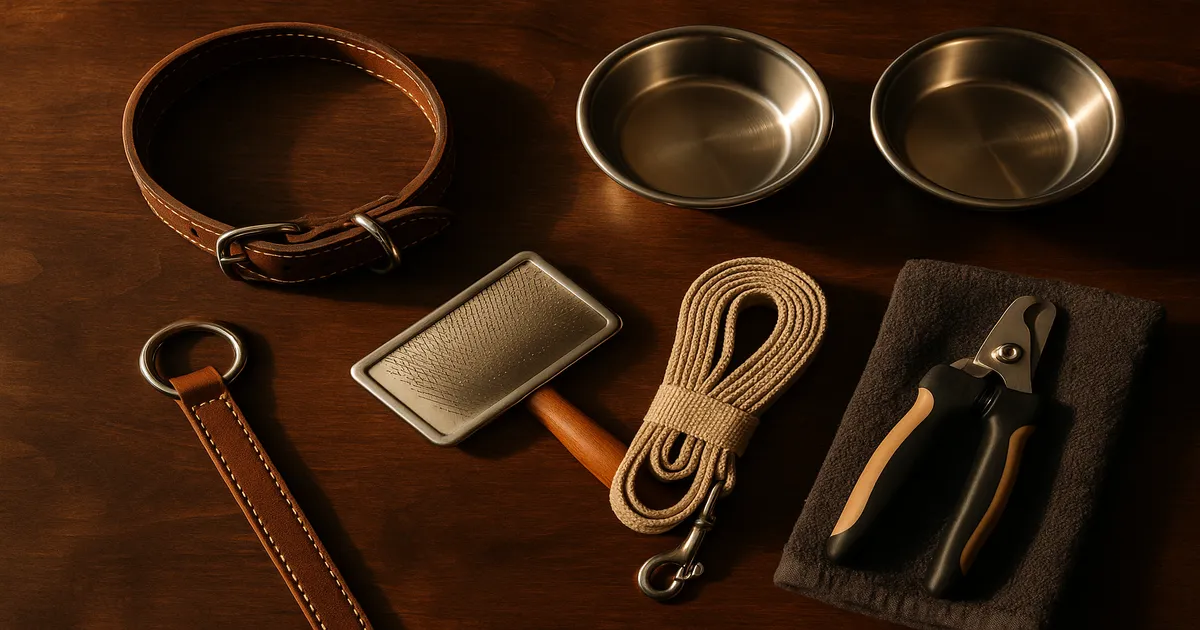
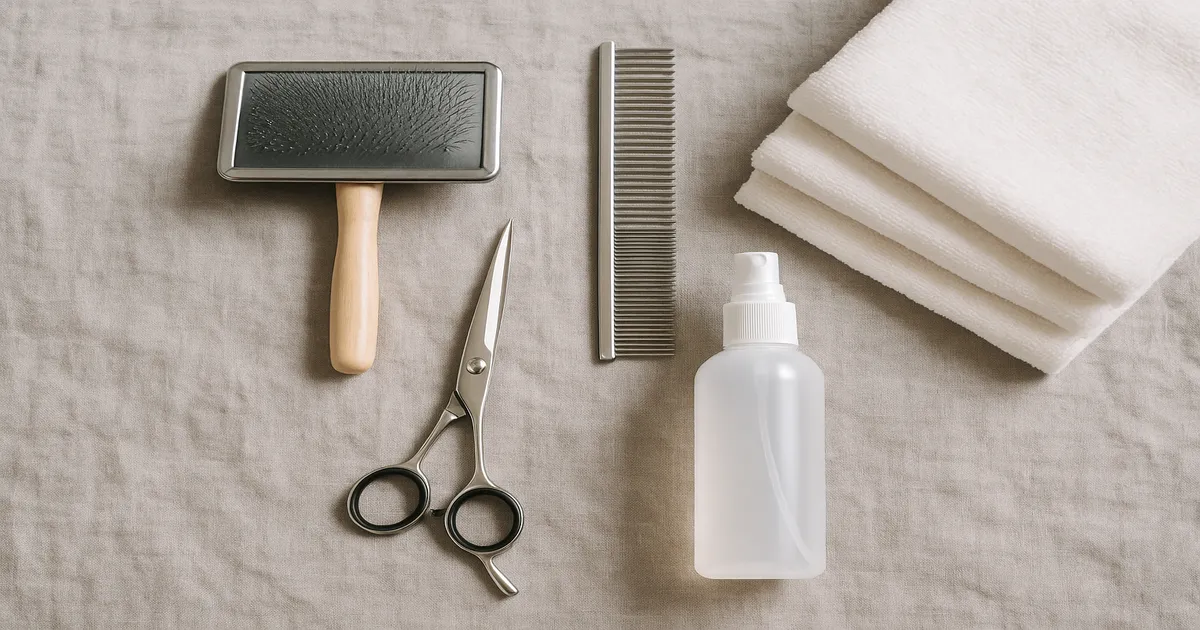
You don’t need a full professional kit, but you do need the right tools:
- Slicker brush — your everyday detangling workhorse, great for surface grooming
- Metal greyhound comb (fine/medium) — non-negotiable for checking mats at the skin level; a brush alone misses deep tangles
- Dematting comb or mat splitter — for carefully working through existing knots without ripping
- Pin brush — useful for longer, looser styles
A detangling spray is also worth keeping on hand for between-bath touch-ups. (Stuff Conditioner and Detangler)
Line Brushing: The Only Method That Actually Works
Line brushing is the professional technique that reaches all the way to the skin — and it’s the only method that reliably prevents mats.
- Mist the coat lightly with detangling spray if it’s dry.
- Part a small horizontal section and clip the rest up out of the way.
- Brush from the skin outward, working through any tangles before moving on.
- Lower another section and repeat, working your way up the body.
- Finish by running your metal comb through every section from root to tip. If it glides through freely, you’re mat-free.
High-Risk Mat Zones
Friction is the enemy. These spots mat first and fastest, so give them extra attention at every session:
- Behind and under the ears
- Armpits (axillae)
- Groin and inner thighs
- Under the collar
- Between the rear legs
How to Remove Mats Safely
Never yank a mat — it’s painful and damages the hair shaft. Instead, apply detangling spray, hold the mat at the base with your fingers to protect the skin, and work through it with a dematting comb in small strokes from the outside edge inward. If the mat is tight against the skin, call a groomer. Forcing it out at home risks cutting the skin, which happens more easily than most owners expect.
Bathing Your Poodle
How Often to Bathe
For dogs in longer styles, every 3–4 weeks is the sweet spot. Shorter clips like the Sporting or Lamb can go 4–6 weeks between baths. Bathing too frequently strips natural oils; bathing too infrequently lets oil, dirt, and debris accelerate matting.
Choosing Shampoo and Conditioner
Dog skin has a pH of 6.2–7.4, compared to human skin at 4.5–5.5. Using human shampoo — even gentle or baby formulas — disrupts your dog’s skin barrier and can trigger irritation over time. Always use a pH-balanced, dog-specific shampoo.
For white or light-colored poodles, a whitening shampoo prevents yellowing and brightens the coat. Dark coats benefit from a color-enhancing formula. Always follow with a moisturizing conditioner and a leave-in spray after rinsing.
Step-by-Step Bathing Protocol
- Brush thoroughly before getting the coat wet — water tightens existing mats dramatically.
- Wet the coat fully with lukewarm water, working from neck to tail.
- Apply shampoo and work it in gently. Don’t scrub in circles, which creates tangles.
- Rinse completely until the water runs clear.
- Apply conditioner, leave for 2–3 minutes, then rinse.
- Squeeze (don’t rub) excess water from the coat with a towel.
- Begin blow-drying immediately.
Why You Must Never Let a Poodle Air Dry
This is the rule most new poodle owners learn the hard way. When a poodle’s curls air dry, they contract tightly and trap moisture against the skin. That warm, damp environment is ideal for yeast infections, bacterial dermatitis, and hot spots — all uncomfortable, expensive to treat, and entirely preventable.
Professionals use a high-velocity force dryer to blast moisture out while brushing simultaneously, which also straightens the curls and makes the finished cut look cleaner. At home, a stand dryer or handheld pet dryer on low-to-medium heat works well — just keep it moving constantly to avoid heat concentration. The goal is a coat that’s completely dry to the skin, not just dry on the surface.
Poodle Grooming Styles
Popular Clip Styles at a Glance
| Clip | Description | Best For |
|---|---|---|
| Puppy Clip | Even length all over; rounded face | Pet owners; easiest maintenance |
| Teddy Bear Clip | Plush, rounded appearance; uniform length | Most popular pet style |
| Sporting Clip | Short, even trim with scissored face | Active dogs; low maintenance |
| Lamb Clip | Short body, longer legs | Clean look for pet owners |
| Bikini/Miami Clip | Shaved body, pom-poms on feet and tail | Warm climates |
| Continental Clip | Shaved hindquarters, hip and leg pom-poms | AKC show dogs |
| English Saddle Clip | More coat on hindquarters than Continental | AKC show alternative |
The Continental and English Saddle clips look spectacular but require near-daily brushing and significant professional skill — they’re essentially reserved for the show ring. For everyday life, the Teddy Bear, Puppy, and Sporting clips are the most practical. They’re easier to maintain between appointments and far less punishing if you miss a day or two of brushing.
How Your Chosen Style Affects Maintenance
Longer styles demand more brushing and more frequent professional visits. A dog in a Teddy Bear clip with 2–3 inches of coat needs daily attention and a groomer appointment every 6 weeks. The same dog in a short Sporting clip can get away with brushing every other day and stretching professional visits to 8 weeks.
When you book an appointment, bring a reference photo. “Short but not too short” means different things to different people. A standard professional session covers bath, blow-dry, cut, nail trim, and ear cleaning. Budget $50–$150+ depending on your poodle’s size, coat condition, and location. Arriving with a matted coat will incur dematting fees — or the groomer may recommend shaving down and starting fresh.
Ear, Eye, Nail, and Dental Care
Ear Care: Preventing Infections
Poodles grow hair inside their ear canals, which traps moisture and debris and creates a high-risk environment for chronic ear infections (otitis externa). The traditional practice of routinely plucking all ear canal hair is now debated — current veterinary guidance generally recommends removing only hair that causes a visible blockage, since aggressive plucking can cause micro-trauma that actually invites infection.
Clean your poodle’s ears every 2–4 weeks using a veterinarian-approved ear cleaning solution. (Virbac Epi-Otic Advanced Ear Cleaner) Apply the solution, massage the base of the ear for 30 seconds, let your dog shake, then wipe gently with cotton balls. Never insert cotton swabs into the canal.
Signs of infection: head shaking, scratching at ears, dark discharge, foul odor, or sensitivity when you touch the ears. See your vet promptly if any of these appear.
Eye Area and Tear Staining
Tear staining — those reddish-brown streaks below the eyes — is caused by overflow of tears (epiphora). It’s most common in Toy and Miniature Poodles, especially light-colored ones. Wipe the eye area daily with a damp cloth or pet-safe eye wipe. Persistent or worsening epiphora warrants a vet visit to rule out blocked tear ducts, entropion, or allergies.
Nail Trimming
Trim nails every 3–4 weeks. Overgrown nails force the toes into an unnatural position and stress the joints over time. Use guillotine-style clippers (Millers Forge Nail Clip) or a rotary grinder for dogs sensitive to the clipping sensation. (Dremel 7300-PT Pet Nail Grooming Tool) On dark nails, trim in small increments and look for a small gray or pink oval in the center of the cut surface — that’s the quick, and you’re close enough to stop.
Dental Hygiene
Aim to brush your poodle’s teeth daily, or at minimum three times per week, using a dog-specific toothbrush and enzymatic toothpaste. Never use human toothpaste — xylitol, a common sweetener in human dental products, is toxic to dogs. Toy Poodles deserve special attention here: their small jaws mean crowded teeth and a higher-than-average risk of periodontal disease. Professional dental cleanings every 12–18 months are often recommended for the Toy variety.
Coat Health From the Inside Out
A healthy coat starts with good nutrition. Look for a complete, balanced food that lists a named animal protein as the first ingredient. Fish oil is one of the most well-supported supplements for coat health — omega-3 fatty acids (EPA and DHA) reduce skin inflammation, support the skin’s moisture barrier, and add visible shine. A daily fish oil supplement dosed for your dog’s weight is a simple addition with meaningful results. (Zesty Paws Pure Wild Alaskan Salmon Oil)
At every brushing session, part the coat and look for redness, flaking, bald patches, or unusual odor. Common poodle skin conditions include sebaceous adenitis (SA), which is more prevalent in Standard Poodles and causes scaling and progressive hair loss; yeast dermatitis (Malassezia), which thrives in warm, moist areas like ear canals and skin folds; and environmental allergies, which can cause scratching, inflammation, and coat thinning. Catching any of these early makes treatment far simpler and less expensive. When in doubt, call your vet.
Building a Routine: Puppy to Adult
Start Grooming Early
Begin handling and grooming your poodle puppy at 10–12 weeks, after the second vaccination series. The goal at this stage isn’t a perfect groom — it’s building a positive association. Keep sessions short, use plenty of treats and calm praise, and let your puppy set the pace. A poodle that tolerates grooming calmly as an adult is almost always one that was introduced to it gently and positively as a puppy.
Sample Weekly Grooming Schedule
| Frequency | Task |
|---|---|
| Daily | Brush (especially for longer styles); wipe eye area |
| 3x per week minimum | Teeth brushing |
| Every 2–4 weeks | Ear cleaning |
| Every 3–4 weeks | Full bath and blow-dry; nail trim |
| Every 6–8 weeks | Professional groom (bath, cut, nail trim, ear cleaning) |
At-Home vs. Professional Grooming
You can realistically handle brushing, bathing, nail trims, ear cleaning, and teeth brushing at home. Haircuts are a different matter — producing a clean, even clip requires professional clippers, scissor skills, and experience that most owners don’t have. Think of it as a partnership: you maintain the coat between appointments, and the groomer handles the technical work. Professional grooming runs $50–$150+ per session, with Standard Poodles at the higher end and Toy Poodles at the lower end.
Frequently Asked Questions
How often should I brush my poodle’s coat? At minimum, 3–4 times per week. If your poodle is in a longer style like a Teddy Bear clip, daily brushing is necessary to prevent mats from forming.
Can I use human shampoo on my poodle? No. Human shampoo — including baby formulas — has a pH that’s too acidic for dog skin and can cause irritation and dryness over time. Always use a pH-balanced, dog-specific shampoo.
How do I know if my poodle has a mat I’m missing? After brushing, run a metal greyhound comb through every section from root to tip. If the comb snags or won’t pass through, there’s a mat. Pay extra attention to the armpits, groin, behind the ears, and under the collar — these are the highest-risk zones.
Is it okay to let my poodle air dry after a bath? No. Air drying allows the curls to contract and trap moisture against the skin, which creates the ideal conditions for yeast infections, bacterial dermatitis, and hot spots. Always blow-dry completely after every bath.
At what age should I start grooming my poodle puppy? Start short, positive handling sessions at 10–12 weeks, after the second vaccination series. Early exposure — with treats and praise — builds the tolerance that makes grooming easy for the rest of your dog’s life.