Quick Answer: Caring for an Australian Shepherd coat means brushing 2–3 times per week (daily during spring and fall shedding seasons), bathing every 6–8 weeks with a dog-safe shampoo, trimming nails every 3–4 weeks, and — critically — never shaving the coat. Aussies have a medium-length double coat that needs consistent maintenance to stay healthy, mat-free, and comfortable year-round.
If you share your home with an Aussie, you already know that gorgeous coat comes with real grooming responsibilities. Learning how to care for an Australian Shepherd coat isn’t complicated, but it does require the right tools, a consistent schedule, and a clear understanding of what that double coat is actually doing. This guide covers everything from brushing technique and mat removal to bathing, drying, and the shaving debate.
Understanding the Australian Shepherd Double Coat
Outer Coat vs. Undercoat: What Each Layer Does
The Aussie coat has two distinct layers that work together. The outer coat consists of medium-length guard hairs — straight to slightly wavy, weather-resistant, and naturally water-repellent. These guard hairs protect your dog from UV rays, insects, thorns, and temperature extremes.
Beneath that sits the undercoat: a dense, soft layer that insulates against both heat and cold. Think of it as your dog’s built-in climate control system. Together, these two layers are what make shaving so harmful — more on that shortly.
One important note on texture: a cottony undercoat is considered a fault in the breed standard and is significantly more prone to matting. A healthy Aussie coat should feel neither silky nor cottony.
Where Feathering and Longer Hair Grow
Hair length isn’t uniform across the body. The head, ears, front of the forelegs, and below the hocks are shorter and smoother. The body carries moderate-length hair, while feathering — longer, flowing hair — appears on the back of the forelegs, the breeches (back of the thighs), and the mane and frill around the neck. Males typically have a more pronounced mane than females.
Coat Changes After Spaying or Neutering
Altered dogs sometimes develop what groomers call a “spay coat” or “neuter coat” — a denser, woollier texture that mats more easily than an intact dog’s coat. If your Aussie was recently spayed or neutered and the coat has become harder to manage, you’re not imagining it. Increase brushing frequency and pay extra attention to high-risk matting zones.
How to Care for an Australian Shepherd Coat: Brushing Basics
Routine Brushing Schedule
During calmer coat periods, aim for 2–3 brushing sessions per week. This keeps loose hair manageable, prevents mats from forming, and gives you a chance to check the skin for irritation or parasites.
Twice a year — most intensely in spring and again in fall — Aussies “blow” their undercoat. Spring is the dramatic one: undercoat comes out in handfuls. During these periods, daily brushing isn’t optional, it’s necessary. Even a few missed days can lead to mats forming deep in the undercoat.
Step-by-Step Line Brushing Technique
Line brushing is the gold standard for double-coated breeds. Here’s how to do it:
- Lightly mist the coat with a detangling spray before you start. Never brush a completely dry, dirty coat — it causes breakage and static.
- Part the coat in a horizontal line and brush from the skin outward, working your way up the body in sections.
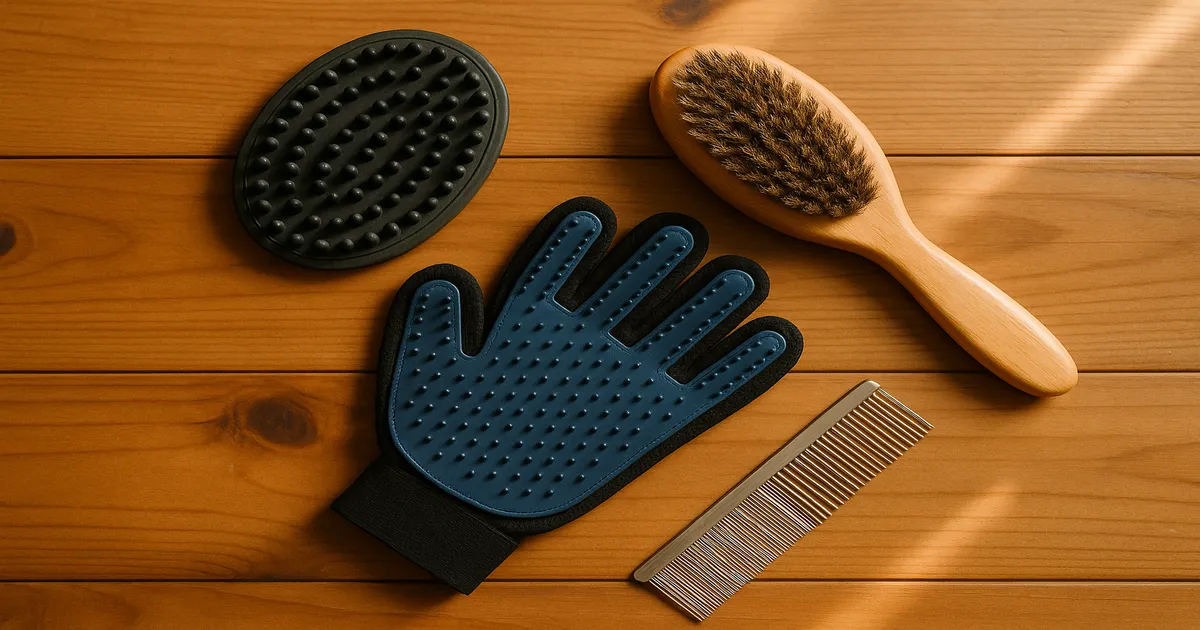
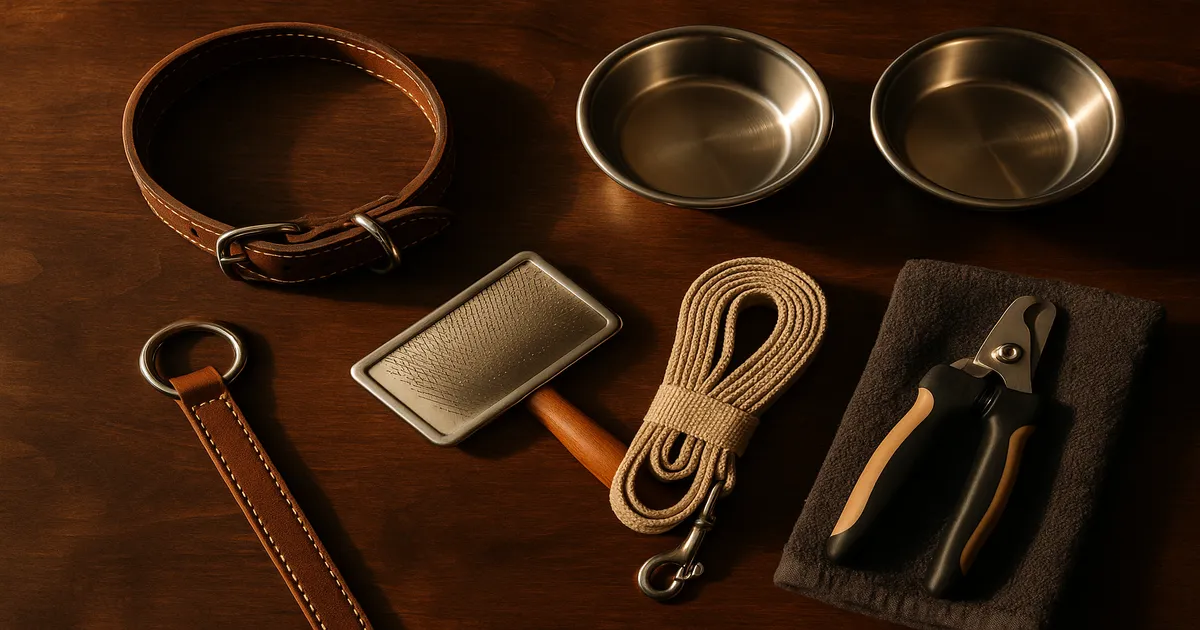
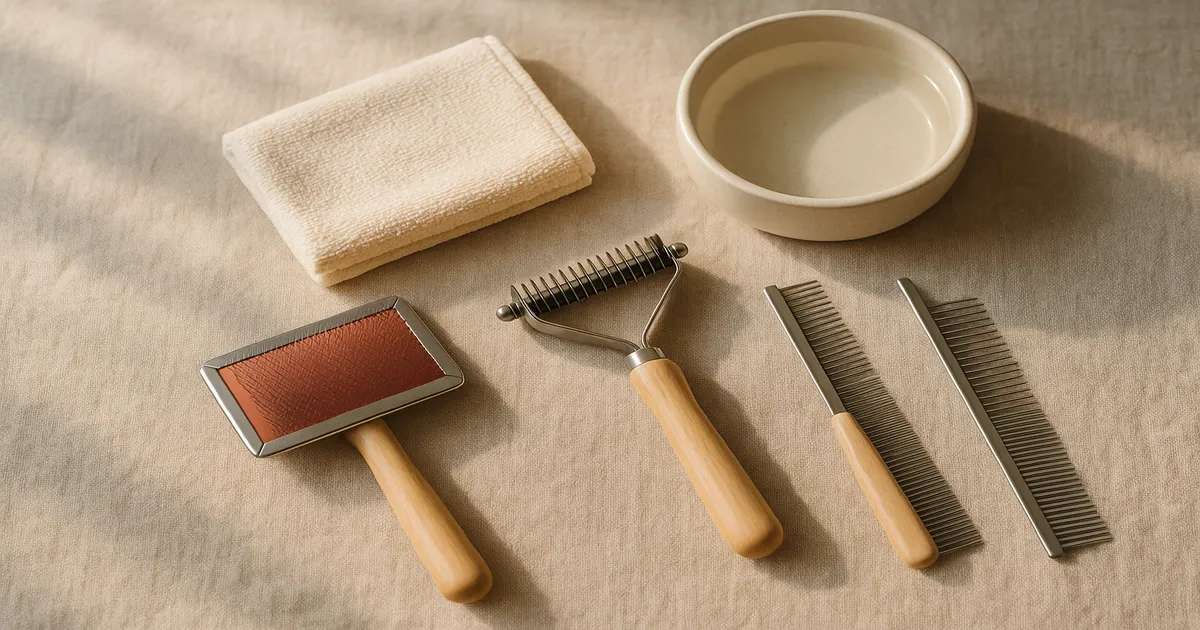
- Start with a slicker brush to detangle the surface coat. The Chris Christensen Big G Slicker Brush is a favourite among double-coat owners for its flexible pins and wide coverage.
- Follow with an undercoat rake, using gentle sweeping strokes to pull loose undercoat from deeper layers.
- Finish with a metal greyhound comb through the entire coat. If it catches, you’ve found a mat that needs attention.
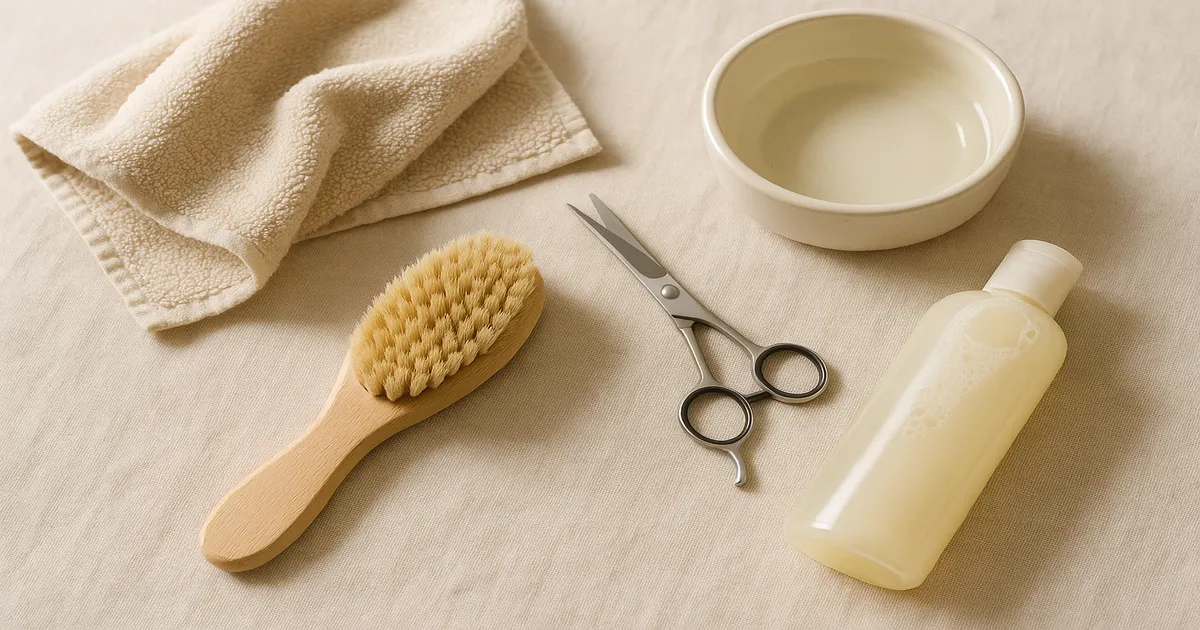
A dematting comb is worth keeping on hand for working through tangles safely before they become serious problems. A pin brush rounds out the toolkit as a gentler option for finishing and fluffing after the main session.
Managing Australian Shepherd Shedding
Aussies shed year-round — heavily, rating a solid 4–5 out of 5 on any shedding scale. That’s just the reality of the breed. On top of constant baseline shedding, two seasonal blowouts each year push things to another level entirely.
Spring is the most dramatic: your dog dumps the heavy winter undercoat in clumps. Fall is comparatively lighter, as the summer coat transitions to the winter coat. Both periods typically last several weeks.
Deshedding Treatments That Actually Help
A professional groomer’s high-velocity blow-dry treatment — combined with a deshedding shampoo and conditioner — is one of the most effective tools during a coat blow. The force dryer blasts loose undercoat out before it ends up on your furniture. For home bathing, a deshedding shampoo helps loosen undercoat during the wash.
For day-to-day life, a few practical strategies help keep your home manageable: lint rollers near every door, washable furniture covers on sofas your dog uses, and a HEPA-filter vacuum built for pet hair. Consistent brushing, though, remains the single most effective thing you can do.
How to Prevent and Remove Mats
High-Risk Matting Zones
Mats cluster in specific spots where friction, moisture, and dense hair combine. Check these areas every time you brush:
- Armpits — the most common and problematic location
- Behind and inside the ears
- Collar area, especially if your dog wears a collar 24/7
- Groin and inner thighs
- Between the toes
- Breeches (back of the thighs)
How to Safely Remove a Mat at Home
Small mats caught early can usually be handled at home:
- Apply a detangling spray or a small amount of coconut oil directly to the mat.
- Hold the hair firmly at the base, close to the skin, to prevent painful pulling.
- Work from the outer edges of the mat inward using a dematting comb or your fingers.
- For larger mats, use a mat splitter to divide it into smaller sections first, then work each section separately.
Never bathe a matted dog. Water causes mats to tighten — a mat that was manageable before a bath can become a dense, skin-tight knot afterward, sometimes requiring shaving to remove. Always work out every mat before the dog gets wet.
If mats are covering large areas, sitting tight against the skin, or causing visible discomfort, stop and call a professional groomer. Severe matting may ultimately require shaving as a last resort — not ideal, but sometimes the only humane option.
Bathing Your Australian Shepherd
How Often and What to Use
Every 6–8 weeks is the sweet spot for most Aussies. Active dogs who spend a lot of time outdoors may need baths more frequently. Over-bathing strips the coat’s natural oils, leading to dry skin, dandruff, and increased shedding.
For shampoo, choose based on the situation:
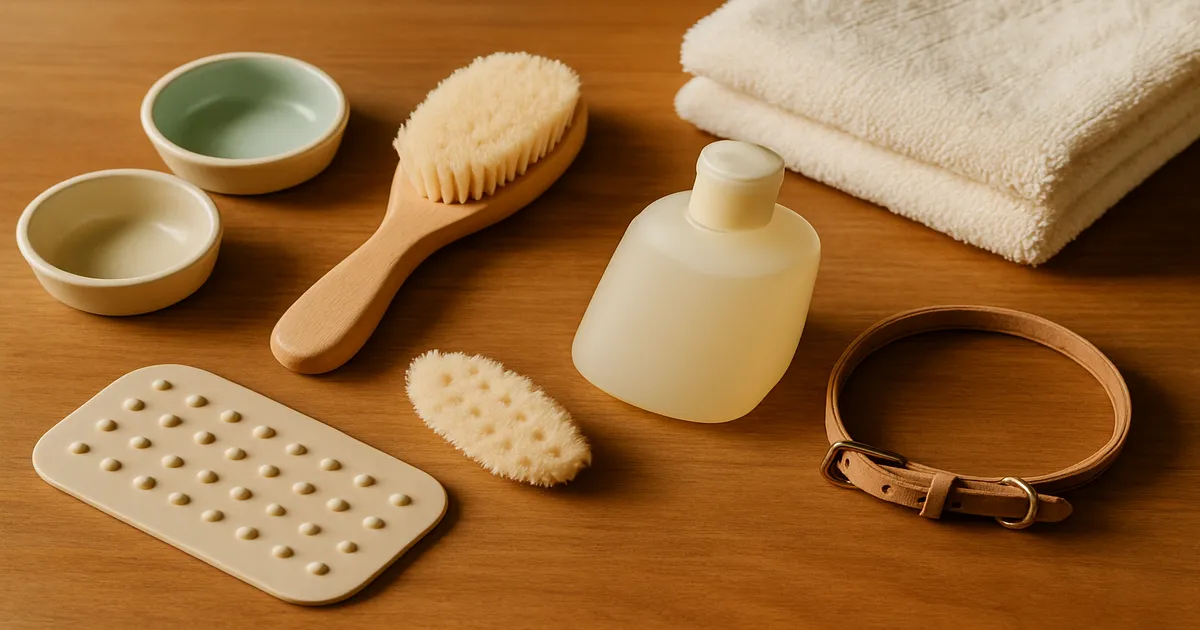
- Oatmeal or hypoallergenic shampoo for routine baths
- Deshedding shampoo during spring and fall coat blows
- Medicated shampoos (chlorhexidine, ketoconazole) only on veterinary advice
Never use human shampoo. Human skin has a pH of 4.5–5.5, while dogs sit at 6.2–7.4. Using the wrong pH disrupts the canine skin barrier and can cause irritation.
Step-by-Step Bathing Technique
- Brush out all mats completely before the dog gets wet — no exceptions.
- Saturate the coat fully using a handheld sprayer, working water all the way down to the skin. Double coats resist water, so take your time.
- Apply shampoo from neck to tail, working it into the undercoat — not just the surface.
- Rinse thoroughly until the water runs completely clear. Incomplete rinsing is a leading cause of skin irritation in double-coated breeds.