Quick Answer: Training a high arousal dog properly means combining positive reinforcement, consistent impulse control exercises, and a structured daily routine that channels drive rather than suppressing it. These dogs aren’t broken — they’re purpose-built for intensity. With the right approach, they can reach impressive levels of obedience and even compete in dog sports. The key is working with their genetics, not against them.
If you’ve ever searched for how to train a high arousal dog properly, you’ve probably already lived through the chaos — the leash lunging, the inability to settle, the zero-to-sixty excitement that seems to appear from nowhere. High arousal dogs aren’t difficult because they’re bad dogs. They’re difficult because their nervous systems were selectively bred over centuries to stay switched on. Understanding that distinction changes everything about how you approach training.
Understanding High Arousal: Why It Happens and Which Dogs Are Affected
The Science Behind Arousal in Dogs
Arousal is simply a dog’s level of mental and physical activation in response to stimuli. Every dog has an arousal threshold — the point at which stimulation tips into an intense, hard-to-control state. High arousal dogs hit that state faster, more intensely, and take longer to return to baseline afterward. That slow recovery is often what catches owners off guard. The walk ended an hour ago, but the dog is still buzzing.
Trigger stacking makes this worse. Each individual stimulus — a passing car, a barking dog next door, the sound of the leash — might seem minor on its own. But they compound. By the time you clip the leash on, you’re not dealing with one trigger. You’re dealing with five stacked ones, and the dog is already past threshold before you’ve left the driveway.
Which Breeds Are Most Commonly High Arousal?
The trait spans several breed groups:
- Herding: Border Collie, Australian Shepherd, Belgian Malinois
- Sporting: Vizsla, Weimaraner, English Springer Spaniel
- Terrier: Jack Russell Terrier, Bull Terrier
- Working: Siberian Husky, Doberman Pinscher, Dutch Shepherd
Working Lines vs. Show Lines: Why It Matters
The breed name alone doesn’t tell the whole story. Working-line dogs are bred for drive and task performance; show lines are bred for conformation and temperament stability. The behavioral gap between them can be enormous.
| Breed | High-Arousal Variant | Notes |
|---|---|---|
| Border Collie | Working sheepdog lines | Significantly higher arousal than show lines |
| Belgian Malinois | KNPV lines (Dutch police sport) | Extreme drive; not for novice owners |
| Australian Shepherd | Working ranch lines | Substantial behavioral difference from companion lines |
| Labrador Retriever | Field lines | Often classified as high arousal; very different from English/show Labs |
Don’t assume a mixed-breed rescue is automatically a calmer option, either. Dogs carrying stacked herding, terrier, or sporting genetics frequently present as high arousal without any obvious visual cues. If your rescue seems inexhaustible, reactive, and hyperfocused, working-breed heritage is a likely explanation.
How to Train a High Arousal Dog Properly: Core Methods
Why Positive Reinforcement Is Non-Negotiable
Positive reinforcement isn’t just the kindest approach for high arousal dogs — it’s the most effective one. These dogs are reward-sensitive and quick learners when the consequence is worth working for. Punishment, by contrast, layers emotional arousal on top of an already-activated nervous system. You end up with a dog that’s both anxious and reactive, which is harder to work with than the original problem. Research by Herron et al. (2009) in Applied Animal Behaviour Science found that aversive training methods frequently increase aggression and anxiety, particularly in already-reactive dogs. With high arousal dogs, punishment is counterproductive — not just philosophically, but practically.
Impulse Control: The Foundation of Every Session
Before any advanced training can happen, impulse control needs to become automatic. Start with these fundamentals:
- Sit-stay before leash attachment — the dog must be still before the clip goes on
- Door threshold work — dog waits at every door until released with a cue like “free” or “OK”
- Release cues before play — the ball doesn’t get thrown until there’s a calm sit
- Leave it — practiced daily with food, toys, and environmental distractions
These aren’t just obedience exercises. They teach the dog that pausing is the behavior that unlocks good things.
The Calm Before Activity Protocol
Before any walk, play session, or feeding, require a down-stay for 30–60 seconds. The dog learns that calm behavior — not frantic excitement — is what triggers the activity it wants. Over weeks, calm becomes the default pre-activity state rather than a frenzied loop around the kitchen. This is one of the most underused tools in high arousal training, and it costs nothing to implement.
Using Arousal as a Reward
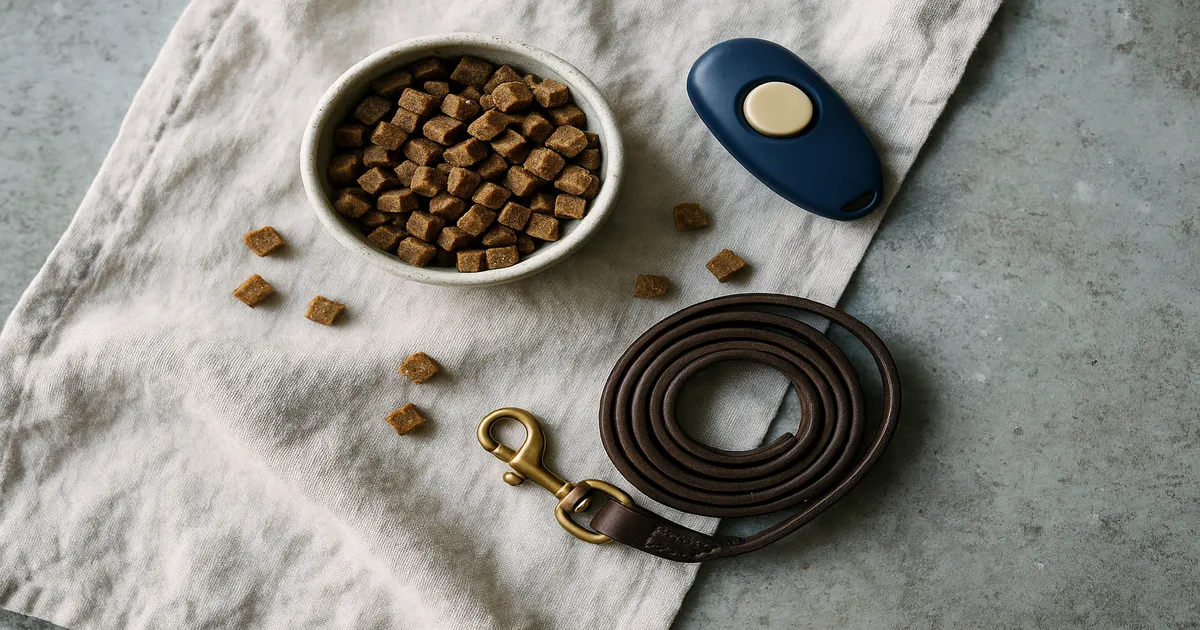
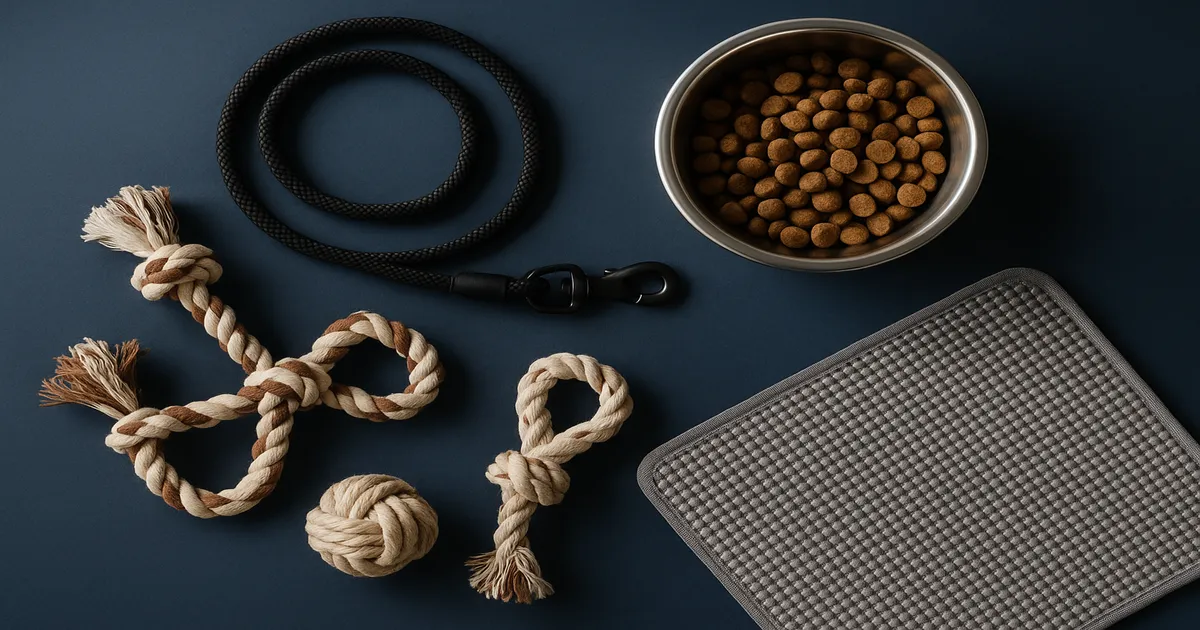
Once impulse control is solid, arousal itself becomes a training tool. A short game of tug after a clean obedience sequence is a powerful reward for a high-drive dog — often more motivating than food. This is the backbone of sport dog training: the dog works for the opportunity to engage its drive in a controlled burst. A sturdy tug toy with a handle (Tug-E-Nuff Bungee Whip) keeps hands safely away from the action during high-energy sessions.
Keep Sessions Short and Sharp
Long, grinding sessions exhaust both dog and handler without producing better results. Aim for 2–3 daily sessions of 10–15 minutes with high-value reinforcement. End each session while the dog is still engaged, not when it’s mentally checked out. Short, sharp, and successful beats long and sloppy every time.
Exercise and Mental Stimulation: Meeting the Real Need
How Much Exercise Does a High Arousal Dog Actually Need?
| Arousal Level | Minimum Daily Exercise | Recommended Daily Exercise |
|---|---|---|
| Moderate-High (e.g., field-line Labrador) | 60–90 minutes | 90–120 minutes |
| High (e.g., Australian Shepherd, Vizsla) | 90–120 minutes | 2–3 hours |
| Extreme (e.g., Border Collie, working-line Malinois) | 2–3 hours | 3–6+ hours |
The Best Physical Activities for High Drive Dogs
- Structured leash walking with obedience — heeling, sits at curbs, directional changes; mentally engaging, not just physical
- Flirt pole — 10–15 minutes equals roughly 30–45 minutes of regular exercise in arousal expenditure; the Outward Hound Tail Teaser is a solid, durable option
- Fetch with rules — sit and wait before each throw; prevents arousal spiraling
- Swimming — excellent low-impact exercise, especially for joint health
- Canicross or bikejoring — running or cycling with the dog in harness; ideal for the highest-energy breeds
- Treibball — uses large exercise balls to simulate herding; brilliant for herding breeds
Mental Stimulation: The Missing Piece
Physical exercise and mental stimulation are not interchangeable. Cognitive fatigue produces calmer behavior more reliably than physical fatigue alone. A dog that’s been sniffing, problem-solving, and thinking is genuinely tired in a way that three miles of jogging often can’t achieve. Work these into every day:
- Nose work and scent detection games
- Food puzzle toys like a stuffed Kong or Nina Ottosson puzzle feeders
- Progressive trick training
- “Find it” scatter feeding in the yard
- Hide-and-seek with toys or family members
The ‘Tired Dog’ Myth
The idea that you can simply exhaust a high arousal dog into good behavior is one of the most common mistakes owners make. Physical exercise alone builds cardiovascular fitness — meaning the dog becomes better at sustaining high arousal states over time. You’re training an athlete, not draining a battery. Mental engagement is what genuinely lowers the arousal baseline.
For dogs at the extreme end of the spectrum, organized sport training is the gold standard. Agility, Schutzhund/IGP, AKC Scent Work, and dock diving all provide structured, high-intensity outlets that satisfy drive without creating chaos.
Daily Management Strategies
Build a Predictable Routine
High arousal dogs experience anticipatory arousal — they ramp up before events happen, especially unpredictable ones. A consistent daily schedule (wake, walk, train, feed, rest, play, train, settle) reduces that anticipatory spike significantly. Predictability is calming. Chaos feeds the cycle.
Manage the Home Environment
- Baby gates to create calm zones away from front-door activity
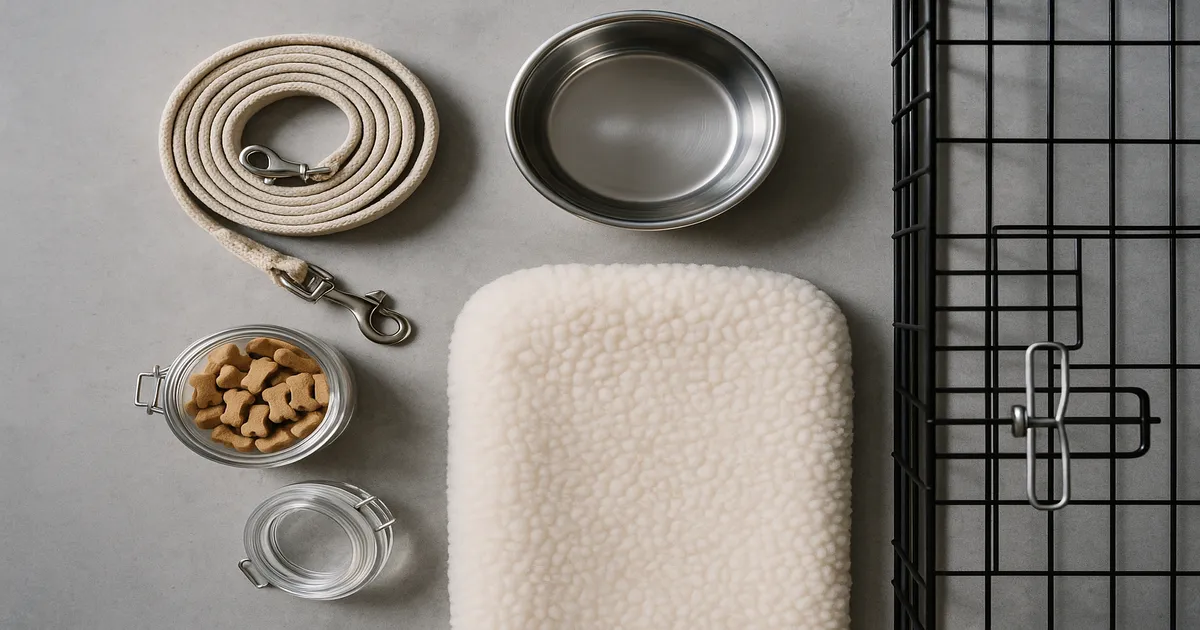
- Crate training — a well-conditioned crate gives the dog a structured place to decompress; it’s a safe space, not a punishment. A heavy-duty crate with a removable divider panel works well for larger, more powerful breeds (MidWest Homes)
- Window film on lower panes to reduce visual triggers from outside
- White noise machines near windows or doors to muffle auditory triggers
Socialization Done Right
Off-leash dog parks are generally a poor fit for high arousal dogs. Their play style is often overwhelming or misread as aggression by other dogs, and the uncontrolled environment makes trigger stacking almost inevitable. Structured, calm greetings on leash — or small, well-matched play groups with known dogs — are far more productive. The goal is controlled exposure, not maximum exposure.
When to Seek Professional Help
Some situations genuinely require professional support. Seek help if:
- Reactivity has progressed to lunging, snapping, or biting
- Behavior is getting worse despite consistent training
- You’re seeing signs of compulsive behavior (repetitive pacing, shadow chasing, tail chasing)
- Anxiety is severe enough to affect the dog’s quality of life
For complex cases, look for a Certified Applied Animal Behaviorist (CAAB) or veterinary behaviorist (DACVB). For general training support, a Certified Professional Dog Trainer (CPDT-KA) with experience in high-drive breeds is a strong starting point.
Health Considerations for High Arousal Breeds
Common Health Issues to Watch For
- Hip dysplasia: Australian Shepherd (19.7%), Border Collie (12.4%), Belgian Malinois (6.2%) per OFA data — screening recommended before breeding
- Epilepsy: Affects an estimated 1.5–2% of Border Collies; a genetic component has been identified
- Dilated cardiomyopathy (DCM): Doberman Pinschers have among the highest breed prevalence of any dog — estimated 58% affected by age 8 (Wess et al., 2010); annual Holter monitoring is recommended from age 2
- Compulsive behaviors: Elevated in herding breeds; Border Collies are particularly prone to light and shadow chasing
- Noise phobia: Herding breeds show disproportionately high rates, estimated at 25–30% in Border Collies
The MDR1 Gene Mutation: A Critical Alert for Herding Breed Owners
If you own a Border Collie, Australian Shepherd, Shetland Sheepdog, or any herding-breed mix, the MDR1/ABCB1 gene mutation is something you must know about. Dogs carrying this mutation can have severe — sometimes fatal — reactions to common medications including ivermectin (found in many heartworm preventatives), loperamide (Imodium), and certain chemotherapy agents. DNA testing before any medication is strongly recommended. The test is inexpensive and widely available through your veterinarian or services like Embark or the Washington State University Veterinary Clinical Pharmacology Lab.
Grooming Needs by Coat Type
Double coat (Border Collie, Australian Shepherd, Siberian Husky, Belgian Malinois): Brush 3–5 times per week, daily during seasonal shedding. A slicker brush and undercoat rake are the right tools for the job — the Chris Christensen Big G Slicker Brush is a favourite among handlers of high-shedding working breeds. Never shave a double coat; it disrupts thermoregulation and often causes abnormal regrowth.
Short coat (Doberman, Vizsla, Weimaraner, Malinois): Weekly brushing with a rubber curry brush keeps shedding manageable. Minimal professional grooming needed.
Wire/broken coat (Jack Russell Terrier): Weekly brushing plus hand-stripping 2–3 times per year maintains correct coat texture. Clipping softens the coat over time.
High arousal dogs frequently resist grooming — the handling, the restraint, and unfamiliar tools all spike arousal. Counter-conditioning from puppyhood is the answer: pair every grooming tool with high-value treats before it ever touches the dog. For nail care specifically, a rotary nail grinder like the Dremel 7300-PT is far less startling than clippers and is the preferred choice of most trainers working with reactive dogs.
Frequently Asked Questions
Will a high arousal dog ever calm down with age?
Yes, but don’t count on time alone to do the work. Most high arousal dogs show some natural mellowing between ages 3–5. However, dogs that haven’t received consistent training and structure often remain just as intense at age 6 as they were at age 1. Age helps; training and routine help far more.
What is the difference between a high arousal dog and a reactive dog?
High arousal describes a dog’s baseline neurological state — they activate quickly and recover slowly. Reactivity is a behavioral response, typically an over-the-top reaction to specific triggers like other dogs or strangers. Many high arousal dogs become reactive, but not all reactive dogs are high arousal. A reactive dog may have a fear or anxiety component; a high arousal dog’s reactivity is more often driven by excitement and impulsivity.
Can high arousal dogs live safely with cats or small animals?
It depends on the individual dog, early socialization, and ongoing management. Many high arousal dogs have elevated prey drive, and fast-moving small animals can trigger chase responses even in otherwise well-trained dogs. Careful, slow introductions and permanent supervision protocols are essential. Some dogs coexist peacefully; others simply cannot be trusted with small animals regardless of training.
How do I stop my high arousal dog from jumping and barking before walks?
Use the Calm Before Activity Protocol: put the leash away the moment jumping or barking starts, turn your back, and wait for four paws on the floor and quiet. Then re-approach calmly. Require a sit-stay before the leash clips on, and a down-stay at the door before it opens. Consistency is everything — if the walk happens even once while the dog is frantic, the behavior gets reinforced. Most dogs learn the new rule within one to two weeks of consistent practice.
Is it possible to over-exercise a high arousal dog and make behavior worse?
Yes. Relying solely on physical exercise can backfire by building cardiovascular fitness without addressing the cognitive component. The dog essentially becomes a better athlete — capable of sustaining high arousal for longer. Balance physical activity with mental stimulation and structured training for genuine behavioral improvement.