Quick Answer: Maine Coons average 12–15 years, while indoor domestic mixed-breed cats typically live 12–18 years — so the gap is smaller than most people expect. The real difference isn’t dramatic lifespan numbers; it’s that Maine Coons carry specific genetic health risks, particularly heart disease, that can cut life short if left unscreened. A health-tested Maine Coon kept indoors can absolutely live 15–18+ years.
Maine Coon Lifespan vs Domestic Cat: Average Numbers at a Glance
| Factor | Maine Coon | Average Domestic Cat |
|---|---|---|
| Average lifespan | 12–15 years | 12–18 years |
| Indoor-only potential | 15–18+ years | 15–20+ years |
| Genetic risk level | Higher — several breed-specific conditions | Lower — hybrid vigor in mixed breeds |
| Size-related aging | Larger body may contribute to slightly shorter lifespan | Smaller mixed breeds may live longer |
| Screening needs | High — specific genetic tests essential | Moderate — routine wellness care |
When people compare maine coon lifespan vs domestic cat, they often expect a dramatic difference. There isn’t one — on paper. The Maine Coon’s 12–15 year average sits just below the domestic cat’s 12–18 year range, and a well-cared-for indoor Maine Coon can comfortably reach the higher end of that spectrum.
The meaningful distinction is why some Maine Coons fall short of their potential. Breed-specific genetic conditions — especially hypertrophic cardiomyopathy — can cause premature death in cats that would otherwise have lived long, healthy lives. Screening eliminates much of that risk.
What Shapes Maine Coon Lifespan
Typical Range and Why “Average” Can Mislead
The accepted average for Maine Coons is 12–15 years, with many individuals reaching 15–18 years under excellent care. Maine Coons mature slowly — they don’t reach full size until 3–5 years of age — and their large body (males typically 15–25 lbs / 6.8–11.3 kg) may contribute modestly to a slightly shorter ceiling compared to smaller cats.
That said, “average” includes cats who died prematurely from undetected heart disease, accidents, or inadequate care. A Maine Coon from health-tested parents, kept indoors and seen regularly by a vet, has a very realistic shot at 15+ years.
Indoor Life Expectancy
Indoor-only Maine Coons routinely live 15–18 years, and some push beyond that. Removing outdoor hazards — cars, predators, infectious disease, and toxins — is the single biggest controllable factor for any cat’s longevity. Reputable breeding matters just as much. When both parents have been DNA-tested and cleared for major genetic conditions, the cat starts life with a better genetic hand to play.
Can a Maine Coon Live Into Its 20s?
Rare, but real. A small number of Maine Coons have been documented reaching their early 20s. These cats tend to share a common profile: indoor-only, healthy weight, attentive veterinary care, and good genetic luck. It’s an exceptional outcome rather than a realistic target — but it does show what’s possible with optimal care.
Domestic Cat Lifespan: The Comparison Baseline
Indoor Mixed-Breed Cats
Indoor-only domestic cats average around 15 years, with a realistic range of 12–18 years and some individuals living into their early 20s. Without outdoor hazards, their biggest longevity threats are obesity, dental disease, and age-related organ decline — all manageable with good veterinary care.
The Outdoor Penalty
The numbers drop sharply once cats go outside. Indoor-outdoor cats average 10–14 years, and strictly outdoor cats average just 2–5 years according to multiple veterinary studies. Road traffic, predators, cat fights, infectious diseases like FIV and FeLV, and accidental poisoning all take a serious toll. This pattern holds for Maine Coons just as much as any other breed.
Hybrid Vigor: The Mixed-Breed Advantage
Mixed-breed cats benefit from hybrid vigor — a broader genetic pool that reduces the concentration of harmful recessive mutations. They’re less likely to inherit the specific disease variants that accumulate in closed breeding populations over generations. This is the genuine longevity edge domestic mixed-breeds hold over purebred Maine Coons. Responsible breeding and genetic screening are the tools breeders use to close that gap.
Health Conditions That Affect Maine Coon Lifespan vs Domestic Cats
Hypertrophic Cardiomyopathy (HCM): The Biggest Threat
HCM is the leading cause of premature death in Maine Coons. The breed carries a specific mutation — MYBPC3 A31P — that causes the heart muscle walls to thicken over time, eventually leading to heart failure, aortic thromboembolism, or sudden cardiac death.
Studies suggest 33–46% of Maine Coons carry at least one copy of this mutation, though only around 10–15% develop clinical disease. The insidious part: HCM often shows no symptoms until it’s advanced. Annual echocardiograms starting at age 2 are the only reliable way to catch it early. DNA testing identifies carriers but cannot predict severity or onset.
Spinal Muscular Atrophy (SMA)
SMA is caused by a recessive mutation affecting spinal cord motor neurons. Affected kittens develop progressive muscle weakness starting around 3–4 months old, resulting in an unusual gait and posture. Importantly, SMA is not painful, and affected cats can live full lifespans with supportive care. A kitten cannot be affected if both parents test clear — responsible breeders screen for this routinely.
Hip Dysplasia
Approximately 18–24% of Maine Coons have some degree of hip dysplasia — a higher rate than most cat breeds. Their large size places more mechanical stress on hip joints, and dysplasia can progress to arthritis and chronic pain in middle age. OFA hip radiographs are recommended for breeding cats. For affected cats, weight management and a joint supplement like Cosequin for Cats can make a meaningful difference in comfort and mobility.
Polycystic Kidney Disease (PKD)
Less common in Maine Coons than in Persians, but documented. Fluid-filled cysts gradually replace functional kidney tissue, leading to chronic kidney disease. A DNA test is available, and reputable breeders screen for it — ask to see clearance certificates for both parents before you commit.
Obesity
Maine Coons have a strong food drive and a large frame that can mask weight gain. Obesity leads to diabetes, hepatic lipidosis, joint disease, and added cardiovascular strain — particularly dangerous in a breed already predisposed to heart disease. Target a body condition score of 4–5 out of 9; you should be able to feel the ribs without pressing hard.
Recommended Screening Schedule
- Before adopting: Confirm both parents have HCM DNA test (MYBPC3), SMA, and PKD clearances, plus OFA hip evaluations
- Age 2+: Annual echocardiogram for HCM monitoring
- Age 7+: Annual bloodwork (CBC, chemistry panel, urinalysis) and blood pressure monitoring
- Age 10+: Add annual thyroid panel — hyperthyroidism becomes more common in older cats
- Every visit: Dental examination and weight assessment
How to Maximise Your Maine Coon’s Lifespan
Start With a Reputable Breeder
This is the most impactful decision you’ll make. Ask every breeder for documentation — not just verbal assurances — of HCM DNA test results, SMA and PKD clearances, and OFA hip evaluations for both parents. Breeders who test their cats are proud to share results. Walk away from anyone who can’t or won’t.
Keep Your Maine Coon Indoors
The data is unambiguous. Indoor-only cats live years longer than their outdoor counterparts, and Maine Coons are no exception. If your cat craves outdoor stimulation, a secure catio or supervised leash walks provide enrichment without the risks.
Diet and Weight Management
Feed a high-protein, low-carbohydrate diet with wet food as the primary component. Cats have a naturally low thirst drive, and chronic mild dehydration is a significant contributor to kidney disease over time. A quality wet food like Wellness CORE Grain-Free Wet Cat Food provides the protein density Maine Coons need without excessive carbohydrates. Measure portions rather than free-feeding — even a few extra pounds significantly increases health risks in cats.
Preventive Veterinary Care
Annual wellness exams are non-negotiable. For Maine Coons specifically, add echocardiograms from age 2 and expanded bloodwork from age 7. Professional dental cleanings under anesthesia — typically every 1–2 years depending on your cat’s oral health — prevent periodontal disease that can affect organ health systemically.
Exercise and Mental Enrichment
Aim for 20–30 minutes of active interactive play daily, split across two sessions. Wand toys are particularly effective for mimicking hunting behavior — the Da Bird Feather Wand is a long-standing favourite for good reason. Puzzle feeders slow eating and provide mental stimulation at the same time.
Maine Coons are intelligent enough to get bored, and boredom leads to chronic stress — which genuinely affects immune health over time. Rotate toys, try clicker training using positive reinforcement (reward-based, never punishment), and consider leash walking if your cat takes to it. A tall, sturdy cat tree gives your Maine Coon vertical territory and an outlet for climbing energy — something like the Armarkat Classic Cat Tree works well for their larger frame.
Maine Coon Size, Temperament, and Grooming
Personality and Social Needs
Maine Coons are frequently described as dog-like, and the comparison is apt. They follow family members from room to room, greet people at the door, and often learn to fetch. Their vocalizations are distinctive — more of a chirp or trill than a traditional meow. This high social intelligence means they do best in active households with regular interaction. A Maine Coon left alone for long stretches without enrichment can develop anxiety, which affects both behaviour and long-term health.
Size and Slow Maturation
Maine Coons don’t reach full size until 3–5 years of age. Males typically weigh 15–25 lbs (6.8–11.3 kg) at maturity; females are smaller at 8–12 lbs (3.6–5.4 kg). Don’t rush to judge a kitten’s adult size — they fill out gradually over years. Kitten or “all life stages” formulas are appropriate until around age 2 to support this extended growth period.
Grooming as a Health Tool
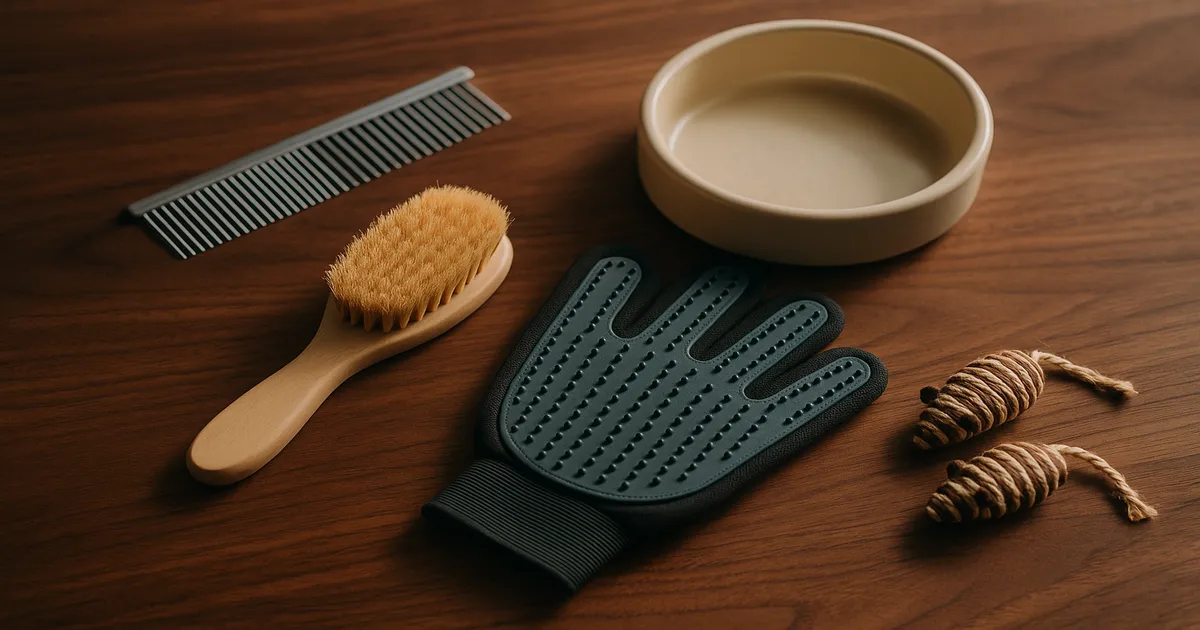
The Maine Coon’s semi-longhaired coat needs brushing 2–3 times per week, and daily during spring and fall shedding seasons. A wide-toothed stainless steel comb like the Chris Christensen Butter Comb works well for the undercoat, followed by a slicker brush for the outer coat.
Regular grooming sessions do double duty: they maintain coat health and give you a hands-on health check. Running your hands through the coat lets you notice lumps, skin changes, ear issues, or weight shifts early — often before they’d be visible in a routine exam. That kind of attentive, consistent care is quietly one of the best longevity tools available.
Frequently Asked Questions
Do Maine Coons have a shorter lifespan than other cats?
Slightly, on average. Maine Coons average 12–15 years compared to 12–18 years for indoor domestic mixed-breed cats. However, a health-screened Maine Coon kept indoors can realistically live 15–18+ years, overlapping significantly with the domestic cat range. The gap is less about breed and more about whether genetic health risks have been identified and managed.
What is the most common cause of death in Maine Coons?
Hypertrophic cardiomyopathy (HCM) is the leading breed-specific cause of premature death. It can cause sudden cardiac death, congestive heart failure, or aortic thromboembolism — often with little warning. Annual echocardiograms from age 2 and DNA testing for the MYBPC3 A31P mutation are the most effective tools for early detection and risk assessment.
How do I know if my Maine Coon has HCM?
HCM typically shows no obvious symptoms in its early stages, which is what makes it dangerous. The only reliable detection methods are DNA testing for the MYBPC3 mutation (which identifies genetic carriers) and annual echocardiograms performed by a veterinary cardiologist starting at age 2. If your cat shows laboured breathing, lethargy, or sudden hind-limb paralysis, seek emergency veterinary care immediately — these can indicate advanced cardiac disease.
Do indoor Maine Coons live longer than outdoor ones?
Yes, significantly. Indoor Maine Coons can live 15–18+ years, while outdoor or indoor-outdoor cats face dramatically higher risks from traffic, predators, infectious disease, and toxins. The indoor lifestyle is one of the most impactful longevity factors for any cat, regardless of breed.
Is a Maine Coon or a domestic mixed-breed cat a better choice for longevity?
It depends on your circumstances. A domestic mixed-breed cat carries fewer concentrated genetic disease risks, requires no specialised cardiac screening, and typically costs less to maintain medically. A Maine Coon from health-tested parents, kept indoors with consistent veterinary care, can match or exceed that lifespan — but it requires more proactive management. If you can’t access or afford regular echocardiograms, a mixed-breed cat may genuinely be the lower-risk choice.