Quick Answer: The key to getting your puppy to be good at the groomers is starting early — ideally before 14 weeks — with consistent, positive handling at home, gradual exposure to grooming tools, and a well-chosen first professional appointment. Pair daily touch sessions with high-value treats, and you’ll build a dog who steps onto the grooming table with confidence rather than fear.
Getting your puppy to be good at the groomers isn’t about luck or breed — it’s about preparation. The good news is that with a simple week-by-week plan, almost any puppy can learn to tolerate (and even enjoy) grooming. This guide covers everything: why some puppies struggle, how to desensitize them at home, what to look for in a groomer, and how diet factors into the equation.
Why Some Puppies Struggle at the Groomers
Breed History and Coat Type
When a puppy squirms, trembles, or snaps on the grooming table, it’s tempting to assume they’re being difficult. Usually, they’re just unprepared — and sometimes their breed history is working against them. Dogs bred for centuries of close human contact, like Cavalier King Charles Spaniels or Bichon Frises, tend to adapt to handling more readily. Working breeds, guardian breeds, and terriers — selectively bred for independence — often need more patient, deliberate desensitization.
Coat type also determines how often a dog needs professional grooming and how complex those sessions are:
- High-maintenance coats (Poodles, Shih Tzus, Bichon Frises, Yorkshire Terriers): Daily brushing, professional grooming every 6–8 weeks
- Moderate-maintenance coats (Golden Retrievers, Border Collies, Cocker Spaniels): Brushing 3–4 times per week, professional grooming every 8–12 weeks
- Lower-maintenance coats (Beagles, Boxers, Vizslas): Weekly brushing, professional grooming as needed
Doodle hybrids deserve a special mention. Their coats are unpredictable and often require professional grooming every 6–8 weeks from puppyhood onward — yet many owners don’t realize this until the coat has already matted.
The Socialization Window: Why Timing Matters
The American Veterinary Society of Animal Behavior (AVSAB) identifies the period between 3 and 14 weeks as the primary socialization window — the phase when puppies are most receptive to new experiences. Positive exposure to grooming tools and handling during this window produces dramatically better long-term outcomes than trying to desensitize an adult dog who has already learned to be afraid.
Missing the window isn’t a disaster, but the earlier you start, the easier the process will be.
The Step-by-Step Plan to Get Your Puppy Good at the Groomers
Week-by-Week Desensitization Protocol (8–16 Weeks)
Think of this as building a bank account of positive experiences before the first professional appointment. Each week adds a small deposit.
- Weeks 1–2 (8–10 weeks old): Touch paws, ears, mouth, and tail daily for about 30 seconds at a time. Give a high-value treat immediately after each touch. Keep sessions short and cheerful.
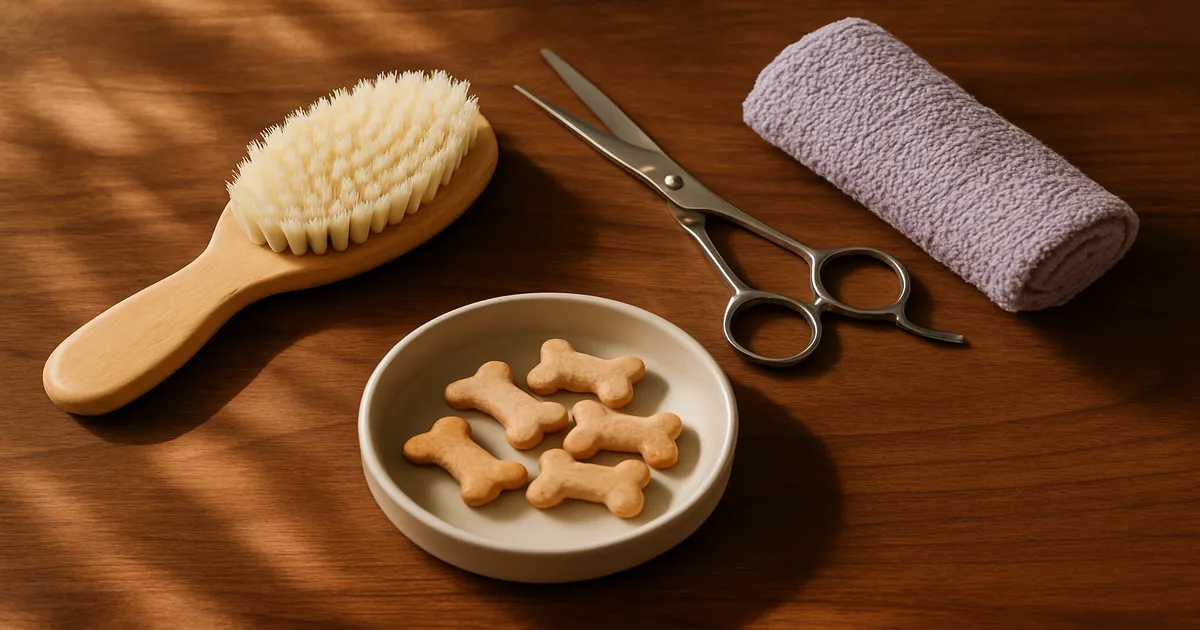
- Weeks 3–4: Introduce a brush on the body — gentle strokes, lots of praise. Place a turned-off clipper near the puppy while treating, so the object itself becomes associated with good things.
- Weeks 5–6: Turn the clippers on nearby without touching your puppy. Let them hear the buzz while eating treats. Introduce a hair dryer on the lowest setting from across the room.
- Weeks 7–8: Book a professional puppy intro appointment — bath, blow dry, brush, and nail trim only. No full haircut yet.
- Ongoing: Maintain professional grooming every 6–8 weeks and continue daily at-home handling between appointments.
Introducing Tools at Home
Start with the tool sitting on the floor near your puppy’s food bowl and let them investigate on their own terms. Then progress to holding it near the puppy, touching them with it while it’s off, and finally using it. Each stage should feel completely comfortable before you move to the next. Rushing this process is the most common mistake owners make.
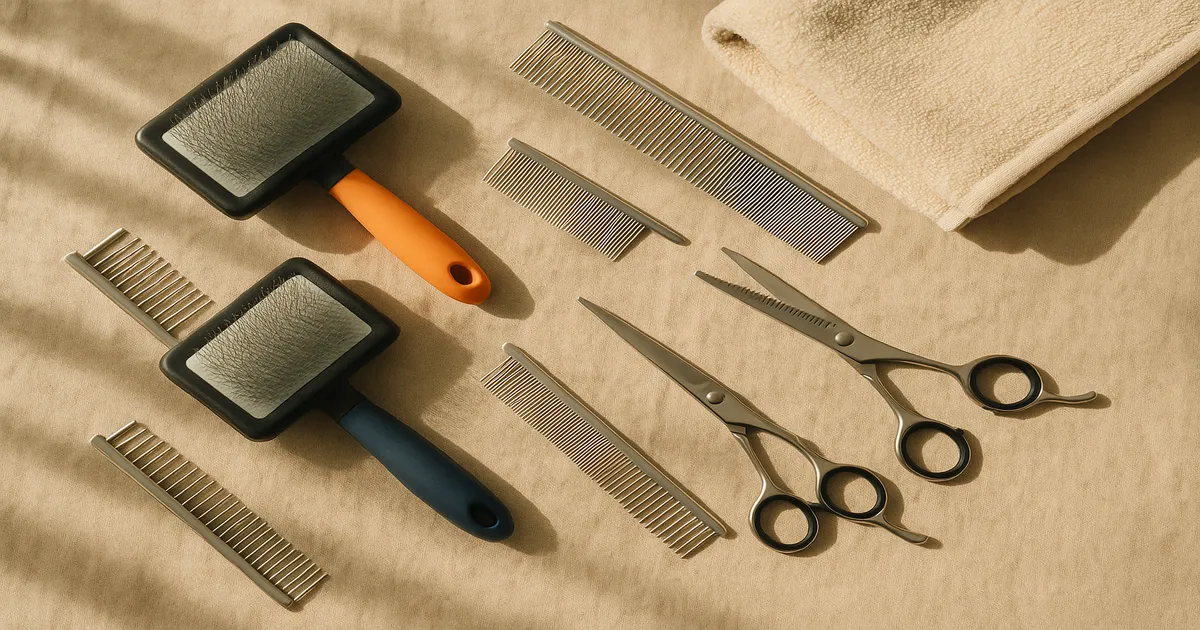
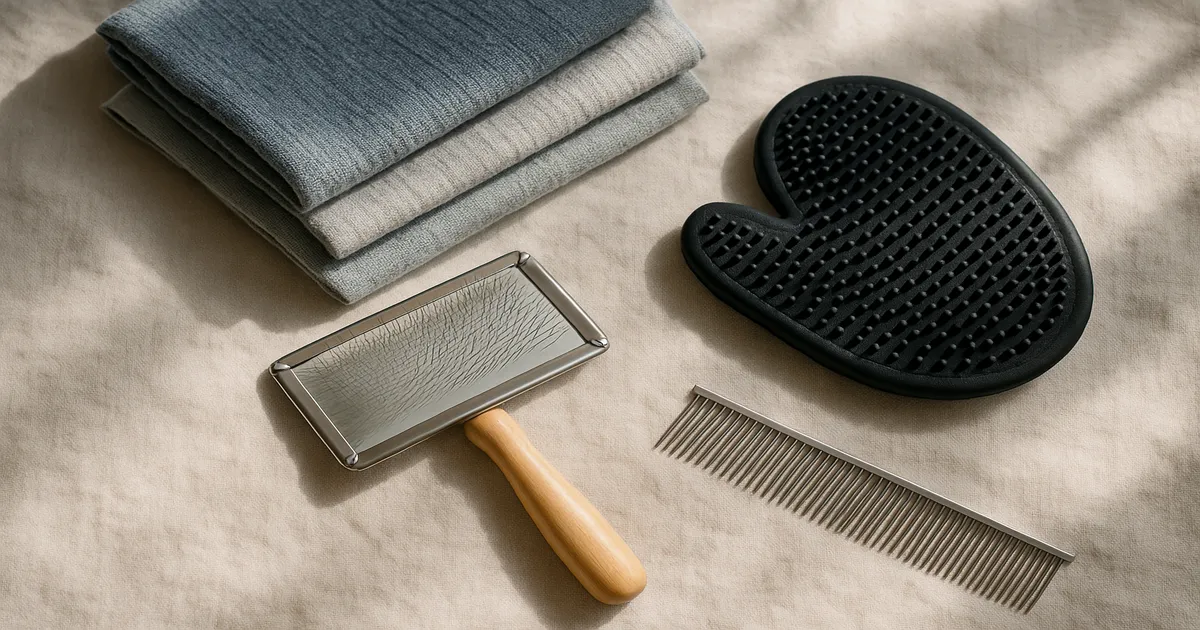
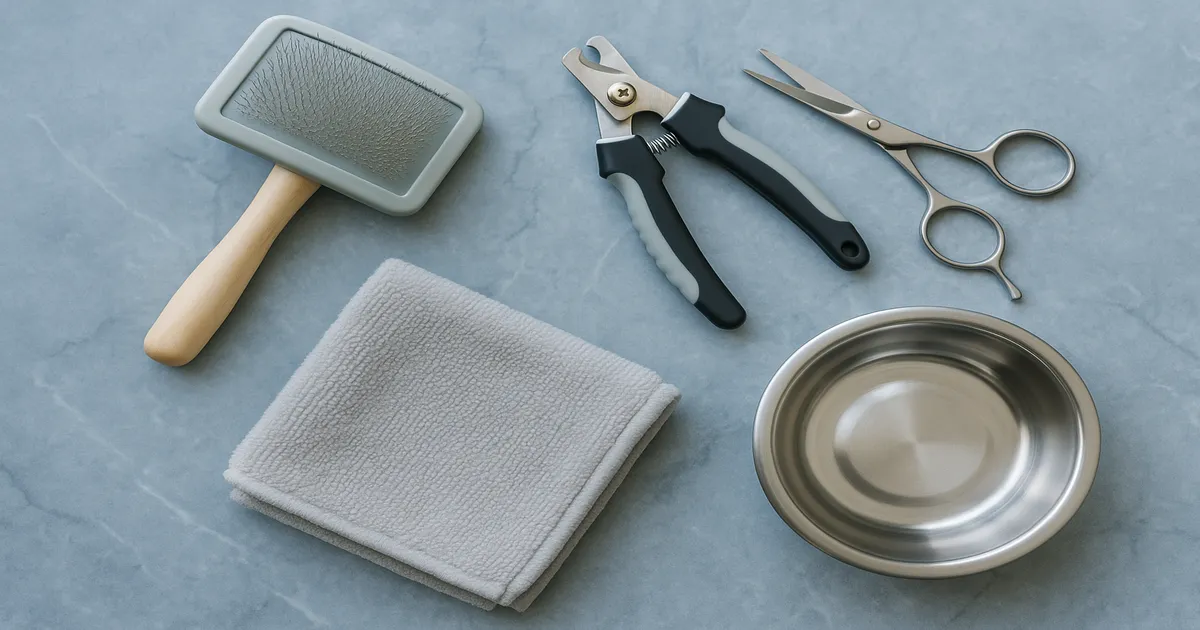
A good slicker brush handles most coat types well. For double-coated breeds, a deshedding tool is invaluable between appointments. For sound-sensitive puppies, a rotary nail grinder can be a gentler introduction to nail care than scissor clippers.
Using Treats and Lick Mats Effectively
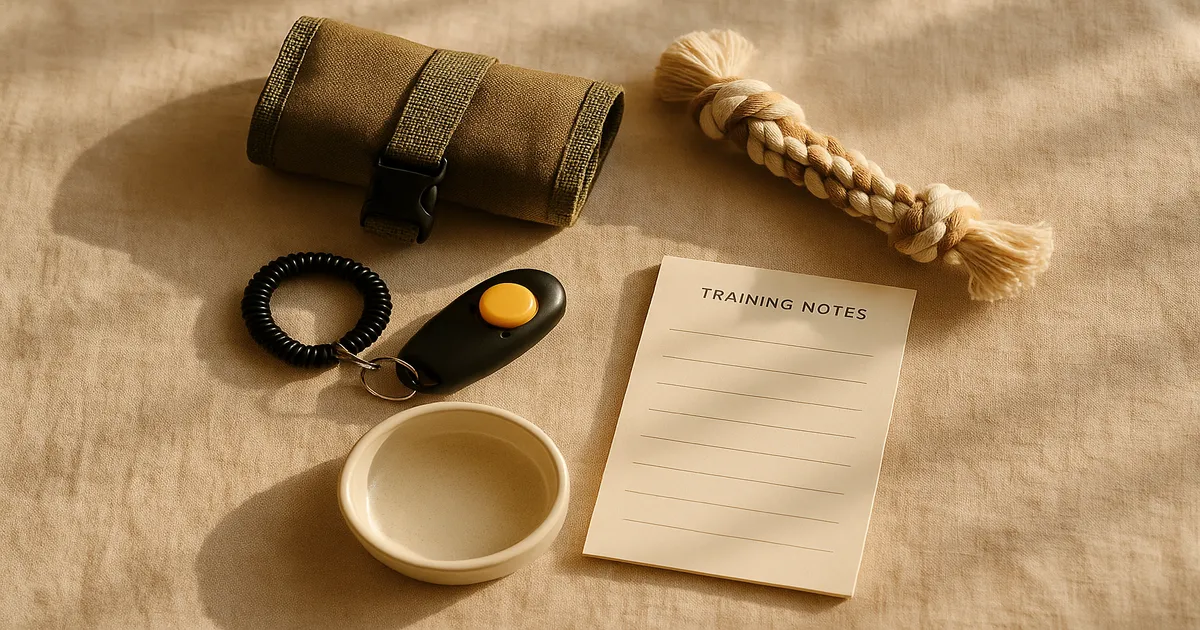
High-value treats mean something your puppy doesn’t get any other time — small pieces of chicken, cheese, or soft training treats work well. A lick mat smeared with peanut butter or plain yogurt is particularly effective because it keeps the puppy occupied and calm for longer than a single treat. (LickiMat Soother) The goal is simple: every time a brush, clipper, or dryer appears, something wonderful happens.
What to Expect at a Puppy Intro Appointment
A good puppy intro appointment is short, gentle, and focused on building trust — not on achieving a perfect haircut. Your puppy should receive a bath, a blow dry on a low setting, a brush-out, and a nail trim. Most reputable groomers will use treats throughout and keep the session under an hour.
When you book, ask specifically for a “puppy introduction” or “puppy’s first groom.” Not every salon lists this as a distinct service, but any groomer worth their salt will know exactly what you mean.
At-Home Grooming Basics
Brushing, Bathing, and Nail Care
Regular brushing at home is the single most effective way to prepare your puppy for professional grooming. It builds tolerance for handling and keeps the coat in good condition between appointments. Brush daily for long and curly coats, three to four times a week for medium coats, and weekly for short double coats.
Don’t bathe puppies under 8 weeks — they can’t reliably regulate their body temperature yet. After that, every 4–6 weeks suits most breeds. Bathing more often strips the skin’s natural oils and can cause dryness and increased shedding. Always use a pH-balanced, dog-specific shampoo, since dog skin (pH 6.2–7.4) is less acidic than human skin and human shampoos can cause irritation over time.
Handle your puppy’s paws from day one. The more comfortable they are with paw handling, the less they’ll resist nail trims for the rest of their life. Aim to trim nails every 3–4 weeks. In light-colored nails, the quick (the pink blood vessel) is clearly visible — stay well behind it. In dark nails, trim in tiny increments and look for a dark dot in the center of the cut surface, which signals you’re getting close.
Ear Cleaning
Clean ears every 2–4 weeks for most breeds, and more frequently for floppy-eared dogs like Cocker Spaniels, Basset Hounds, and Doodles, which are prone to moisture retention and infection. Use a veterinarian-approved ear cleaning solution and never insert a cotton swab deeper than the visible canal. Signs of infection — odor, discharge, redness, head shaking, or frequent scratching — mean a vet visit, not a home cleaning.
Choosing the Right Groomer for Your Puppy
Questions to Ask Before Booking
Don’t just book the nearest salon. Call first and ask:
- Do you offer puppy introduction appointments?
- Do you use treats and positive reinforcement during grooming?
- What restraint methods do you use?
- Are you Fear Free Certified or trained in low-stress handling?
- Can I observe part of the session or meet you beforehand?
Fear Free Certified Professionals have completed specific training in reducing anxiety during pet care. You can search for certified groomers at fearfreepets.com.
Red Flags to Watch Out For
Walk away if a groomer refuses to let you observe any part of the appointment, uses excessive restraint as a default, mentions sedation without veterinary involvement, or dismisses your concerns about your puppy’s anxiety. A reputable groomer will also welcome a brief meet-and-greet before the first appointment — it lets your puppy sniff the environment and leave on a positive note without the stress of a full session.
Managing Energy and Anxiety Before Appointments
A moderate walk or gentle play session 30–60 minutes before grooming can take the edge off a high-energy puppy. The key word is moderate — an overtired or overheated puppy can become irritable and harder to handle. A short training session or puzzle feeder before leaving the house can also tire a puppy’s brain without wearing out their body. Mental fatigue often does more for cooperation than physical fatigue.
Some puppies have anxiety that goes beyond normal nervousness. A 2020 University of Helsinki study of over 13,700 dogs found that noise sensitivity affects approximately 32% of dogs and generalized anxiety affects 14–17%. If your puppy shows extreme distress — not just mild fidgeting — talk to your veterinarian. Adaptil pheromone products, which mimic the calming pheromones produced by mother dogs, can help in mild to moderate cases. In more severe cases, your vet may recommend prescription support. Never use over-the-counter sedatives without veterinary guidance.
How Diet Affects Your Puppy’s Coat and Grooming Experience
A dull, brittle, or excessively shedding coat is often the first visible sign of a nutritional gap. The coat is approximately 95% protein (keratin), so what your puppy eats has a direct impact on what your groomer has to work with. Key nutrients include omega-3 and omega-6 fatty acids for shine and reduced shedding, biotin for keratin production, zinc for skin barrier function, and adequate protein — AAFCO guidelines require a minimum of 22% protein for puppies.
Feed puppies a puppy-formulated food three to four times daily until about 6 months, then transition to twice daily. Large and giant breed puppies need large-breed specific formulas to control calcium and phosphorus ratios and support healthy bone development.
Fish oil is the most well-supported supplement for coat quality. The general recommendation is 20 mg of combined EPA/DHA per pound of body weight daily — start low and increase gradually to avoid digestive upset. If your puppy scratches constantly, has recurring hot spots, or their coat looks poor despite a good diet, ask your vet about food allergies. The most common triggers are beef, dairy, wheat, chicken, and egg, and identifying the culprit can transform both your puppy’s comfort and coat quality.
Frequently Asked Questions About Getting Your Puppy Good at the Groomers
What age should a puppy have their first grooming appointment?
Most puppies are ready between 10 and 16 weeks, provided they’ve completed their initial vaccinations or your vet has cleared them. The earlier the better — positive experiences during the socialization window (3–14 weeks) produce significantly better long-term outcomes. Start with a puppy intro appointment: bath, brush, blow dry, and nail trim only.
How do I get my puppy to stop moving at the groomers?
The most effective approach is desensitization before the appointment, not correction during it. Practice daily handling at home — paws, ears, mouth, tail — while rewarding with treats or a lick mat. A short walk 30–60 minutes before the appointment can also reduce fidgeting. If your puppy is very wriggly, let your groomer know — experienced groomers have safe techniques for managing active puppies without force.
How often should a puppy be professionally groomed?
It depends on coat type. High-maintenance breeds like Poodles, Doodles, and Shih Tzus typically need professional grooming every 6–8 weeks from their first appointment. Medium-coated breeds may go every 8–12 weeks. Short-coated breeds may only need occasional visits for nail trims and baths. When in doubt, ask your groomer what they recommend for your specific dog.
Is it normal for puppies to be scared at the groomers?
Yes, and it’s very common. Research suggests up to 26% of dogs show fear-related behaviors during grooming or veterinary visits. Some nervousness on a first appointment is completely normal. What you want to avoid is repeated stressful experiences that reinforce fear over time. Choose a groomer who uses positive reinforcement and low-stress handling, and invest time in at-home preparation before the first visit.
Can an older puppy still learn to be good at the groomers?
Absolutely. While the socialization window closes around 14 weeks, dogs can learn new associations at any age — it just takes more time and consistency. Use the same desensitization steps outlined above, go at your puppy’s pace, and consider working with a certified professional dog trainer if anxiety is significant. Progress is very achievable with patience and positive reinforcement.