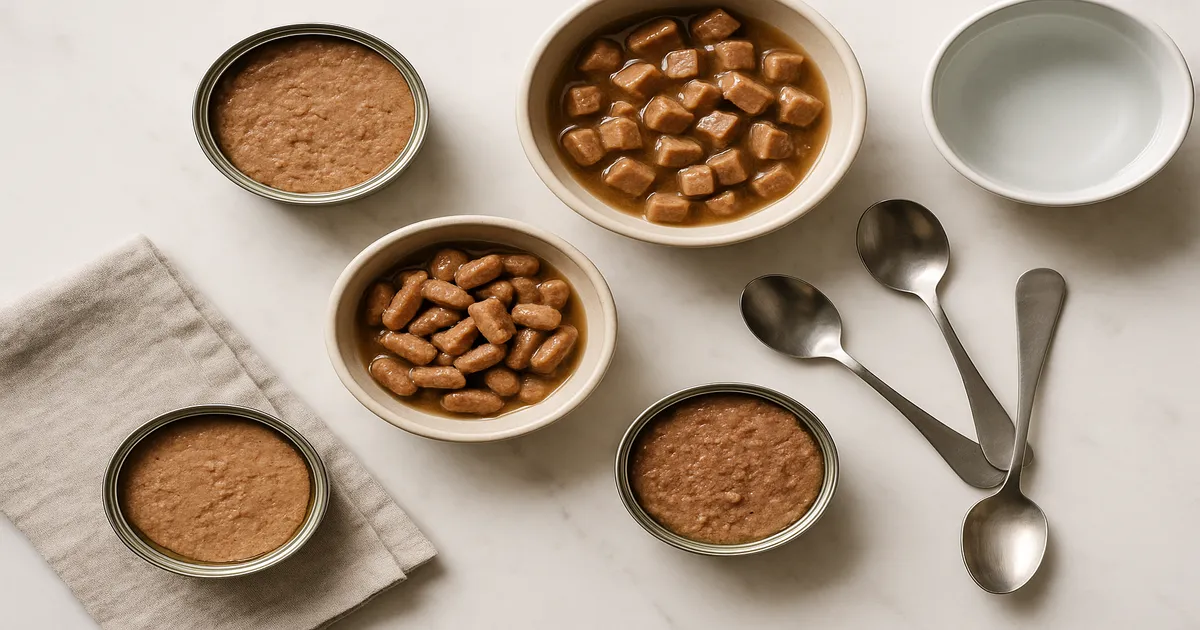
Quick Answer: To start wet food, introduce it gradually over 7–10 days by mixing increasing amounts with your pet’s current food — starting at 25% wet and working up to 100%. Wet food contains 75–82% moisture, making it biologically appropriate for both cats and dogs. Most pets transition smoothly with patience, the right formula, and attention to portion sizes.
Knowing how to start wet food the right way can make the difference between a smooth transition and a week of turned-up noses or upset stomachs. Whether you’re switching from dry kibble, starting a kitten on solids, or managing a health condition that demands more moisture in the diet, wet food is one of the most impactful nutritional changes you can make for your pet.
How to Start Wet Food: Choosing the Right Formula
How to Read a Wet Food Label
The AAFCO nutritional adequacy statement is the single most important line on the label. Look for “complete and balanced for [life stage]” — that’s your green light. The ingredient list should lead with a named protein source: chicken, salmon, turkey, or beef. Generic “meat by-products” as the first ingredient is worth noting, though not all by-products are nutritionally poor. If the label says “for supplemental feeding only,” the food should not serve as your pet’s sole diet.
Life-Stage Formulas: Kittens, Adults, and Seniors
- Kittens and puppies: Need higher protein, fat, DHA, and calcium. Look for “growth” or “all life stages” on the AAFCO statement.
- Adults: Maintenance formulas with balanced macronutrients work well for healthy, active pets.
- Seniors (7+ years for cats and small dogs; 5+ years for large dogs): Benefit from reduced phosphorus, higher digestibility, and added joint support like glucosamine and chondroitin.
Key Ingredients to Prioritize and Avoid
Named proteins should come first. Fillers should be minimal. For cats especially, avoid high-carbohydrate ingredients like corn syrup or potato starch — cats are obligate carnivores with a limited ability to process carbohydrates efficiently. Quality wet foods typically deliver 3–8% carbohydrates on a dry matter basis, compared to 30–50% in many dry kibbles.
Breed-Specific Considerations
Brachycephalic breeds — Bulldogs, Pugs, and Persian cats — often find wet food physically easier to eat given their shortened facial structure. Large-breed dogs like Great Danes and Mastiffs may need wet food blended with calorie-dense kibble to meet energy needs without feeding impractically large volumes. A large-breed formula such as Purina Pro Plan Large Breed Adult can complement wet food well in these cases.
How to Start Wet Food: Step-by-Step Transition Guide
The 7–10 Day Transition Protocol
Abrupt food changes are a common cause of vomiting, diarrhea, and refusal to eat. A gradual approach gives the gut microbiome time to adjust.
| Days | Current Food | New Wet Food |
|---|---|---|
| 1–2 | 75% | 25% |
| 3–4 | 50% | 50% |
| 5–6 | 25% | 75% |
| 7–10 | 0% | 100% |
Mix the foods thoroughly at each stage — pets are expert at eating around the new addition if you don’t.
Portion Sizes by Pet Weight
| Pet Type | Weight | Approximate Daily Amount |
|---|---|---|
| Adult cat | 8–10 lbs (3.6–4.5 kg) | 3–4 oz (85–113g) across 2 meals |
| Adult small dog | 10–20 lbs (4.5–9 kg) | 4–6 oz (113–170g) across 2 meals |
| Adult medium dog | 20–50 lbs (9–23 kg) | 8–16 oz (227–454g) across 2 meals |
| Adult large dog | 50–90 lbs (23–41 kg) | 16–28 oz (454–794g) across 2 meals |
These are starting points. Caloric density varies between brands, so always cross-reference with the product’s feeding guide and your vet’s recommendation.
Tips for Picky Eaters and Food-Neophobic Cats
Cats can be deeply imprinted on the textures and flavors they encountered as kittens, and roughly 15–20% show significant resistance to dietary change. If your cat walks away, don’t panic — and don’t force it. Extend the transition to 3–4 weeks, slow the ratio changes, and try a different texture. Pâté versus chunks in gravy are genuinely different experiences for many cats.
A puzzle feeder or lick mat can make wet food feel more engaging for hesitant pets. The Catit Senses 2.0 Digger is a popular option that slows eating and adds mental stimulation at the same time.
Serving Temperature and Texture
Cold wet food straight from the refrigerator is a hard sell. Serve it at room temperature, or warm it slightly to around 101°F (38.3°C) — roughly body temperature — to release the aroma. A few seconds in the microwave works, but stir thoroughly and check for hot spots before serving.
Starting Kittens, Puppies, and Senior Pets on Wet Food
Introducing Wet Food to Kittens and Puppies
Kittens and puppies can begin transitioning from milk to wet food at 3–4 weeks of age. Start with a gruel: wet food mixed with warm water or a kitten or puppy milk replacer — PetAg KMR Kitten Milk Replacer is a widely available option — thinned to a soupy consistency. By 6–8 weeks, most young animals can handle wet food without the extra liquid.
Feeding schedules by life stage:
- Under 6 months: 3–4 small meals per day
- 6 months to adult: Transition to twice daily
- Adults: Twice daily is the standard recommendation for most cats and dogs
Special Considerations for Senior Pets
Seniors benefit from wet food perhaps more than any other life stage. Decreased kidney function, dental pain, reduced thirst sensation, and muscle wasting (sarcopenia) are all common in pets over 7 years old — and wet food addresses several of these at once. Pâté-style textures work best for pets with significant dental disease or missing teeth. Weigh your senior pet monthly; both obesity and weight loss can creep up quietly.
Health Conditions That Make Wet Food Essential
Urinary Tract Disease and Kidney Health
Feline lower urinary tract disease (FLUTD) affects 1–3% of cats annually, and increased dietary moisture is the primary veterinary tool for prevention and management. Wet food increases urine volume and dilutes the mineral concentrations that form crystals and stones. For cats with chronic kidney disease — which affects an estimated 30–40% of cats over age 10 — veterinary renal diets such as Hill’s Prescription Diet k/d Kidney Care are often prescribed.
Diabetes, Obesity, and Weight Management
Up to 68% of diabetic cats may achieve remission on a low-carbohydrate wet food diet — a striking figure that reflects how poorly cats metabolize high-carb dry food. Obesity affects an estimated 59.5% of cats and 55.8% of dogs in the US. Wet food’s high water content increases satiety per calorie, making it a practical tool in any weight management plan.
Digestive Disorders and Food Sensitivities
Pets with inflammatory bowel disease (IBD) or food-responsive enteropathy often do well on wet foods featuring novel proteins — rabbit, venison, or duck — or hydrolyzed protein formulations. The most common food allergens in dogs are beef, dairy, and chicken; in cats, beef, fish, and chicken top the list.
Dental Disease: Separating Myth from Fact
Wet food does not cause dental disease. That myth persists, but the Veterinary Oral Health Council (VOHC) is clear: most dry kibble provides minimal dental benefit unless specifically VOHC-approved. Pets on wet food diets should receive daily tooth brushing with a pet-safe enzymatic toothpaste such as Virbac CET Enzymatic Toothpaste and regular professional dental cleanings every 1–3 years.
Wet Food Safety, Storage, and Feeding Best Practices
How Long Can Wet Food Sit Out?
Never leave wet food out for more than 2 hours at room temperature. Bacterial growth accelerates above 40°F (4.4°C), and wet food is far more perishable than kibble. In hot climates or warm kitchens, that window shrinks further.
Refrigerating and Reheating Leftovers
Store unused portions in a sealed container in the refrigerator for up to 3–5 days. A dedicated can cover such as the Prepara Orka Pet Food Can Cover keeps portions airtight and odor-contained. Always bring refrigerated food back to room temperature or slightly warmer before serving — cold food is less palatable and can cause stomach upset in sensitive animals.
Bowl Hygiene and Feeding Station Setup
Wash your pet’s bowl after every wet food meal. Wet food residue creates bacterial biofilm quickly. Stainless steel or ceramic bowls are far easier to clean thoroughly than plastic. Long-eared dogs like Basset Hounds and Cocker Spaniels do better with shallow, wide bowls that keep their ears clear of the food.
In multi-pet households, cats should have feeding stations at least 3–6 feet apart — they’re solitary hunters by nature and don’t enjoy eating shoulder to shoulder. Dogs with resource-guarding tendencies should be fed in separate rooms entirely.
Calculating Calories and Combining Wet and Dry Food
The baseline calorie calculation for dogs and cats is the Resting Energy Requirement: RER = 70 × (body weight in kg)^0.75. Activity multipliers are applied from there. As a rough guide:
- Indoor/sedentary cats: 180–280 calories/day
- Active outdoor cats: 280–400+ calories/day
- Small dogs under 20 lbs (9 kg): 200–400 calories/day
- Medium dogs 20–50 lbs (9–23 kg): 400–900 calories/day
- Large dogs 50–100 lbs (23–45 kg): 900–1,600 calories/day
A typical 5.5 oz (156g) can of cat food contains roughly 150–200 calories. A 13 oz (369g) can of dog food delivers approximately 350–550 calories.
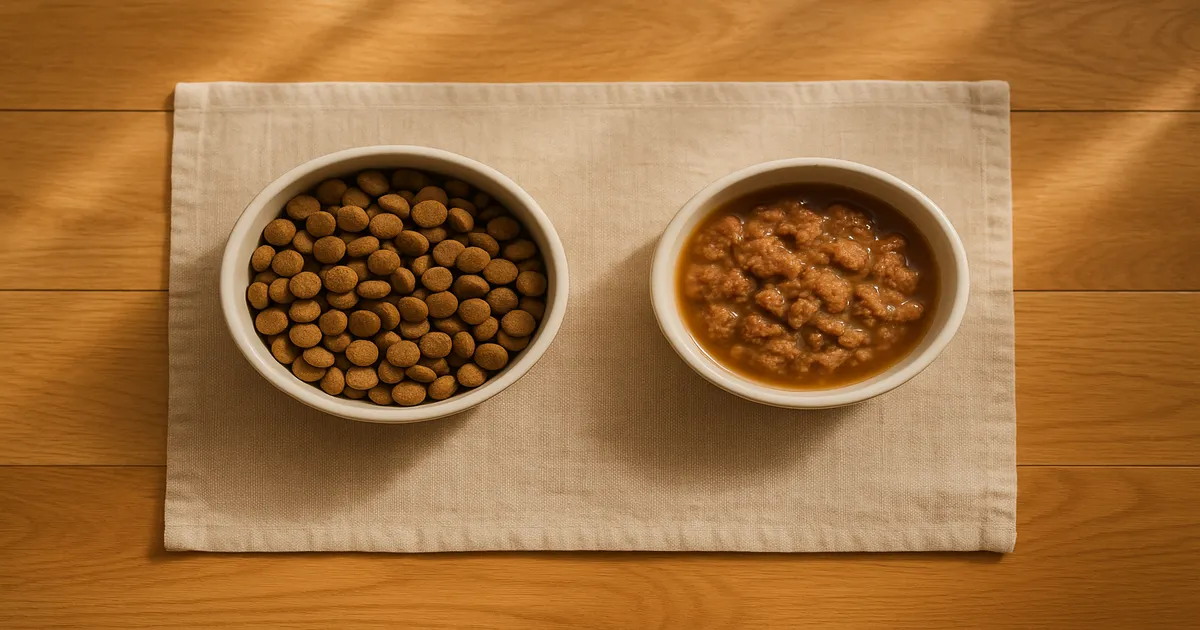
Working dogs, sporting breeds, and highly active pets may need wet food supplemented with calorie-dense kibble to meet energy demands. A mixed feeding approach — wet food for palatability and hydration, kibble for caloric density — is practical and nutritionally sound for many dogs.
A note on specific health conditions:
- Kidney disease: Look for phosphorus under 0.5% on a dry matter basis
- Heart disease or hypertension: Sodium should be under 0.3% dry matter
- Thiamine deficiency: A historical concern with fish-based foods; reputable commercial wet foods are thiamine-supplemented, so this is rarely an issue with established brands
Frequently Asked Questions About How to Start Wet Food
How long does it take to transition a cat or dog to wet food?
Most pets transition comfortably over 7–10 days using a gradual ratio schedule — starting at 25% wet food and increasing every few days. Cats with strong food preferences or sensitive stomachs may need 3–4 weeks. Rushing the transition is the most common cause of digestive upset.
Can I mix wet food and dry food together?
Yes, and for many pets it’s an excellent approach. Mixing provides the hydration and palatability benefits of wet food alongside the caloric density of kibble — particularly useful for active or large-breed dogs. Just account for the combined calories to avoid overfeeding.
How long can wet food sit out before it goes bad?
No more than 2 hours at room temperature. Wet food is highly perishable, and bacterial growth accelerates quickly in warm conditions. When in doubt, throw it out.
When can kittens and puppies start eating wet food?
Kittens and puppies can begin trying wet food as a gruel — mixed with warm water or milk replacer — at around 3–4 weeks of age. By 6–8 weeks, most can eat wet food without added liquid. Always use a life-stage appropriate formula labeled for “growth” or “all life stages.”
Is wet food better than dry food for cats and dogs?
For cats especially, wet food is closer to what their biology demands — high moisture, high protein, low carbohydrates. For dogs, the answer depends on the individual animal’s health, activity level, and preferences. Many pets thrive on a combination of both. If your pet has urinary disease, kidney disease, diabetes, or obesity, wet food is often the stronger choice and worth discussing with your veterinarian.