Quick Answer: Normal behaviour for kittens playing includes pouncing, stalking, wrestling, biting, chasing, the sideways hop, and zoomies — all healthy expressions of predatory instinct, not aggression. Kittens sleep 16–20 hours a day and play in short, intense bursts rather than long continuous sessions. If your kitten suddenly stops playing or shows distress signals during play, call your vet within 24–48 hours.
If you’ve ever watched a kitten launch itself sideways across the room for no apparent reason, you’ve witnessed what is normal behaviour for kittens playing — and it can look pretty alarming if you don’t know what you’re seeing. The good news is that almost everything kittens do during play has a purpose rooted in millions of years of predatory evolution. This guide walks you through what’s normal, what’s not, and how to support your kitten’s development at every stage.
What Is Normal Behaviour for Kittens Playing?
Kittens play to rehearse hunting. Every pounce, ambush, bite, and wrestling match is a dry run for the stalk–pounce–grab–bite–kick–release sequence their wild ancestors used to survive. Play isn’t random chaos — it’s a developmental necessity.
At 8–12 weeks, expect intense 5–10 minute bursts of activity followed by sudden, deep sleep. Kittens this age sleep 16–20 hours a day, so short and frequent is the natural rhythm. By 6–12 months, sessions get longer and energy peaks before gradually settling into adult patterns after 12–18 months.
Normal vs. Concerning Play Behaviour at a Glance
| Normal Play | Concerning Signs |
|---|---|
| Pouncing, stalking, ambushing | Bites that break skin |
| Wrestling with alternating roles | One kitten consistently fleeing and hiding |
| Inhibited bites (no skin breaking) | Sustained hissing, growling, or screaming |
| Sideways hop / crab walk | Ears pinned flat during contact |
| Zoomies (FRAP) | Piloerection that doesn’t resolve between bouts |
| Relaxed body between bouts | Sudden, complete loss of interest in play |
The Evolutionary Roots of Kitten Play
Domestic cats descended from the Near Eastern wildcat (Felis silvestris lybica), first domesticated around 10,000 years ago. Despite thousands of years living alongside humans, the predatory wiring is fully intact. When your kitten attacks a feather toy, it isn’t playing pretend — it’s running a genuine neural programme.
Research published in Animal Behaviour (Caro, 1981) confirmed that both object play and social play in kittens are functionally linked to prey-capture techniques seen in adult cats. The ASPCA and Cat Fanciers’ Association both recognise active play as a core welfare indicator for young cats.
The Hunting Sequence Hidden Inside Every Play Session
Watch closely and you’ll see it every time: stalk → pounce → grab → bite → kick → release. The low crouch with wiggling hindquarters before a pounce? That’s the stalk phase. The bunny kick with the back legs when they grab a toy? That’s the kill sequence. Each play session runs through this sequence repeatedly, building muscle memory and coordination.
How Breed Affects Play Intensity
All domestic cat breeds share the same fundamental play repertoire — the difference is volume and intensity.
- High-intensity breeds: Bengal, Abyssinian, Siamese, Devon Rex, Burmese — expect longer sessions, more acrobatics, and a kitten that demands engagement
- Moderate-intensity breeds: Maine Coon, Ragdoll, British Shorthair — playful and active but generally calmer in style
- Lower-intensity breeds: Persian, Exotic Shorthair — play is present but shorter and less athletic
Intensity affects how much structured playtime you need to provide, but the behaviours themselves look the same across all breeds.
Kitten Play Milestones by Age
Birth to 16 Weeks
| Age | Stage | What You’ll See |
|---|---|---|
| 2–3 weeks | Neonatal transition | First social contact with littermates |
| 3–7 weeks | Socialisation onset | Batting, mouthing, social play begins |
| 4–5 weeks | Peak social play | Chasing, wrestling, pouncing on siblings |
| 7–8 weeks | Object play emerges | Toys treated as prey; solo hunting play begins |
| 8–16 weeks | Prime play window | Maximum play frequency and variety |
The 8–16 week window is the single most important period for socialisation and learning. Kittens who receive varied, positive play experiences here develop better bite inhibition, greater confidence, and stronger bonds with humans.
6 to 12 Months: Adolescence
Between 3–6 months, play becomes more coordinated and purposeful — less flailing, more precision. Then adolescence hits. From 6–12 months, energy peaks again and the risk of play-aggression increases, particularly in single-kitten households where there’s no feline playmate to provide feedback. This is the age where redirecting energy toward appropriate toys matters most.
After 12 months, most cats gradually shift toward adult play patterns — still active, but less frenetic. A gradual reduction is normal; a sudden drop is not.
Normal Kitten Play Behaviours Explained
Pouncing, Stalking, and Ambushing
The classic low crouch, tail twitching, and wiggling hindquarters before a launch — this is textbook predatory rehearsal and completely normal at any age. Kittens will ambush feet, toys, siblings, and occasionally thin air. Tail chasing is also normal in younger kittens who haven’t yet figured out that it’s attached to them. It typically fades as coordination improves.
Wrestling, Tumbling, and Mouthing
Littermates provide the best possible play partners because they give immediate, honest feedback. When a bite is too hard, the other kitten yelps and disengages — that’s how bite inhibition is learned. Wrestling that involves neck biting, tumbling, and role reversal (the chaser becomes the chased) is completely normal. Concern is warranted only if one kitten vocalises in distress, consistently tries to escape without re-engaging, or if bites are drawing blood.
The Sideways Hop and Zoomies
The sideways hop — arched back, puffed tail, bouncing sideways — looks like fear but is actually play solicitation. It’s an invitation to engage, not a sign your kitten is scared. You’ll often see it directed at another cat, a toy, or your ankles.
Zoomies, technically called Frenetic Random Activity Periods (FRAPs), are sudden bursts of high-speed running, leaping, and ricocheting off furniture. They’re completely normal, most common in the evening, and serve as a release valve for built-up predatory energy. If your kitten hasn’t had enough interactive play during the day, expect more intense zoomies at night.
Play vs. Aggression: How to Tell the Difference
Normal play has a loose, bouncy quality even when it looks rough. The body relaxes between bouts, roles alternate, and bites stay inhibited. Escalation looks different: the body stays tense, vocalisation becomes sustained, one animal stops re-engaging, and fur stays raised between rounds. A simple test — does the kitten who just “lost” a wrestle come back willingly? If yes, it’s play. If they hide and won’t return, something went wrong.
How Much Play Do Kittens Need Each Day?
Daily Play by Age Group
| Age | Total Daily Play | Session Length | Sessions Per Day |
|---|---|---|---|
| 8–12 weeks | 30–45 min | 5–10 min | 6–8 |
| 3–6 months | 45–60 min | 10–15 min | 4–6 |
| 6–12 months | 60–90 min | 15–20 min | 3–5 |
| 12+ months | 30–60 min | 10–15 min | 2–4 |
Multiple short sessions suit kittens far better than one long session. Their attention spans are short by design, and frequent engagement throughout the day more closely mirrors natural hunting behaviour.
Best Toys for Normal Kitten Play Behaviour
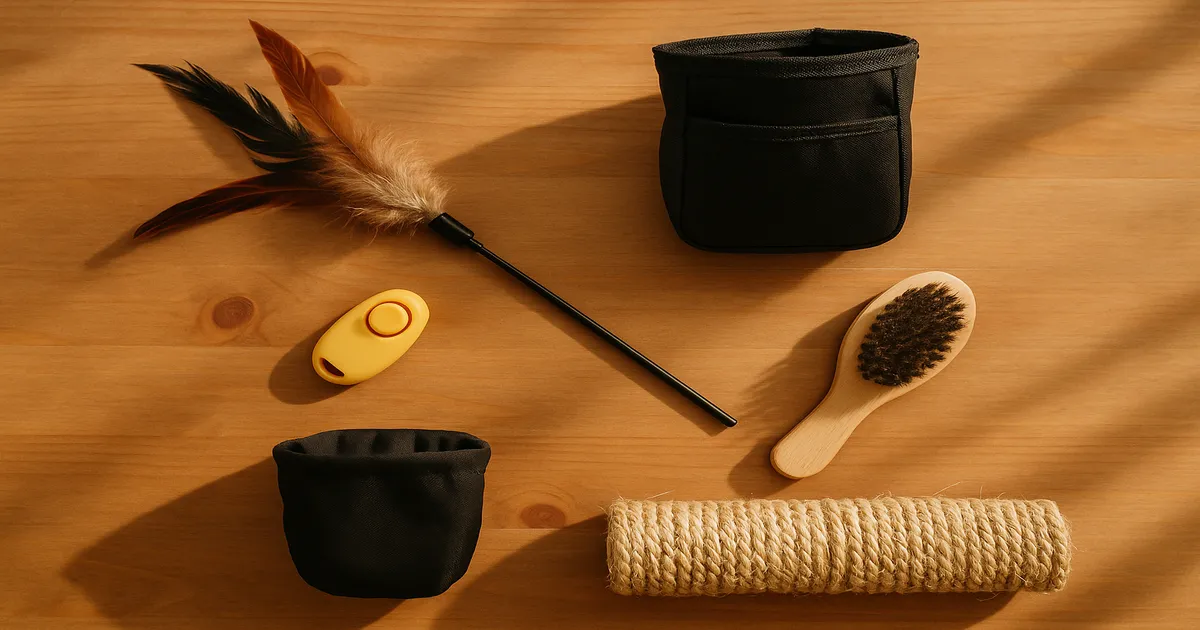
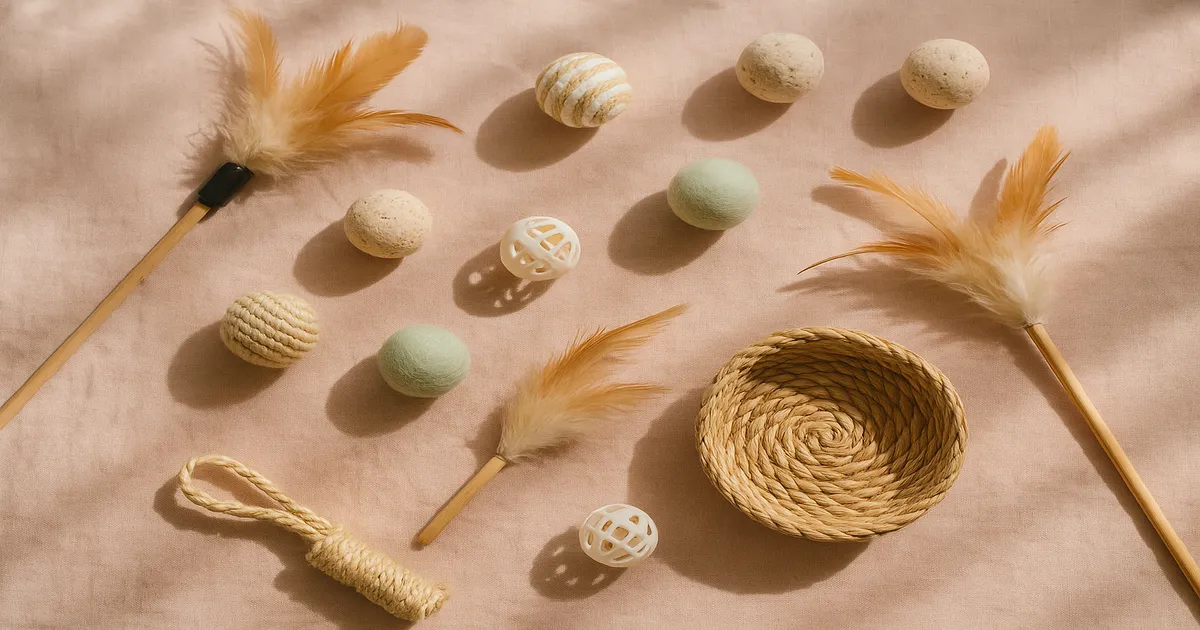
- Wand and feather toys that mimic bird flight are consistently the highest-value interactive option
- Small furry toys that mimic rodent movement
- Crinkle balls and foil balls for batting and solo chasing
- Laser pointers — always end the session with a physical toy the kitten can catch to complete the predatory sequence
- Cat trees and climbing structures — the AAFP specifically recommends vertical enrichment for feline welfare
- Puzzle feeders and food-dispensing toys — feline enrichment studies suggest these can reduce play-related behaviour problems by up to 30% (Doc & Phoebe’s Indoor Hunting Cat Feeder)
How to Play With Your Kitten the Right Way
Always move toys away from the kitten — prey doesn’t run toward predators. Allow periodic catches; a kitten that never catches anything gets frustrated and may redirect that frustration toward hands, feet, or other pets. End every session by letting the kitten catch and hold the toy, completing the predatory sequence and reducing post-play agitation. Never use fingers or toes as play objects — this teaches bite habits that are very hard to undo.
Health Issues That Affect Normal Kitten Play Behaviour
When Reduced Play Is a Red Flag
Play is one of the earliest and most reliable indicators of a kitten’s health. A sudden, marked drop in play interest — especially paired with lethargy, reduced appetite, or hiding — warrants a vet call within 24–48 hours. Don’t wait to see if it resolves on its own.
Common Parasites and Infections
Intestinal worms (roundworms and hookworms) affect up to 45% of kittens in some populations and cause lethargy and reduced play. Ear mites cause head shaking and ear scratching during and after play sessions. Fleas trigger excessive grooming and interrupted play, and also transmit tapeworms.
Key infectious diseases to know:
- Feline Herpesvirus and Calicivirus — upper respiratory infections causing sneezing, eye discharge, and reduced play
- Feline Panleukopenia — highly serious; complete cessation of play is a hallmark sign; vaccination is critical
- Ringworm — a fungal infection causing circular hair loss patches; highly contagious to humans
Developmental and Orthopaedic Conditions
- Hip dysplasia — seen across breeds but with higher prevalence in Maine Coon; affected kittens may be reluctant to jump or land awkwardly
- Patellar luxation — seen in Devon Rex and Abyssinian; causes intermittent limping during or after activity
- Hypertrophic Cardiomyopathy (HCM) — genetic predisposition in Maine Coon and Ragdoll; exercise intolerance during play can be an early sign
- Cerebellar Hypoplasia — causes wobbly, uncoordinated play; kittens can live full, happy lives with appropriate management
- Feline Hyperesthesia Syndrome — skin rippling, sudden aggression during play, and excessive tail chasing; often first noticed during play sessions
Vaccination Schedule and Safe Play Opportunities
| Age | Core Vaccines |
|---|---|
| 6–8 weeks | FVRCP (first dose) |
| 10–12 weeks | FVRCP (second dose) |
| 14–16 weeks | FVRCP (third dose) + Rabies |
| 12–16 months | FVRCP booster + Rabies booster |
Kittens should not be introduced to unknown cats or outdoor environments until fully vaccinated. This directly limits safe socialised play opportunities — something to plan around when arranging playdates or multi-cat introductions.
Frequently Asked Questions About Normal Kitten Play Behaviour
Is it normal for kittens to bite and scratch during play?
Yes. Biting and scratching during play are completely normal and serve an important developmental purpose. Kittens learn bite inhibition through play, discovering how much pressure is too much based on feedback from littermates and humans. Always redirect bites toward toys rather than hands, and never use fingers as play objects.
How do I know if my kittens are playing or actually fighting?
Watch for role reversal, relaxed body language between bouts, and inhibited bites. Playing kittens take turns being the chaser and the chased, and both re-engage willingly after a tumble. Fighting looks different: sustained hissing, growling, or screaming, one animal consistently fleeing without returning, and bites that draw blood all signal genuine conflict rather than play.
Why does my kitten have zoomies at night?
Evening zoomies are a normal expression of built-up predatory energy — especially if your kitten hasn’t had enough interactive play during the day. Scheduling one or two structured play sessions in the late afternoon or early evening can significantly reduce the intensity of nighttime zoomies.
My kitten plays very roughly. Is that a problem?
Rough play is normal, especially in adolescent kittens between 6–12 months. The key question is whether both animals are willing participants. If bites stay inhibited, roles alternate, and both kittens re-engage after a tumble, rough play is healthy. If one kitten is consistently overwhelmed, separate them during play and reintroduce gradually with supervised sessions.
When should I be worried that my kitten isn’t playing enough?
A gradual reduction in play as your kitten approaches 12 months is completely normal. A sudden, marked drop — particularly if paired with hiding, reduced appetite, or lethargy — is not. Any abrupt change in play behaviour warrants a vet call within 24–48 hours rather than a wait-and-see approach.